
Hard-Ons’ Ray Ahn is the oldest Korean punk. But does he care?
Written by Jon Dunbar (@jonghyundunbar)
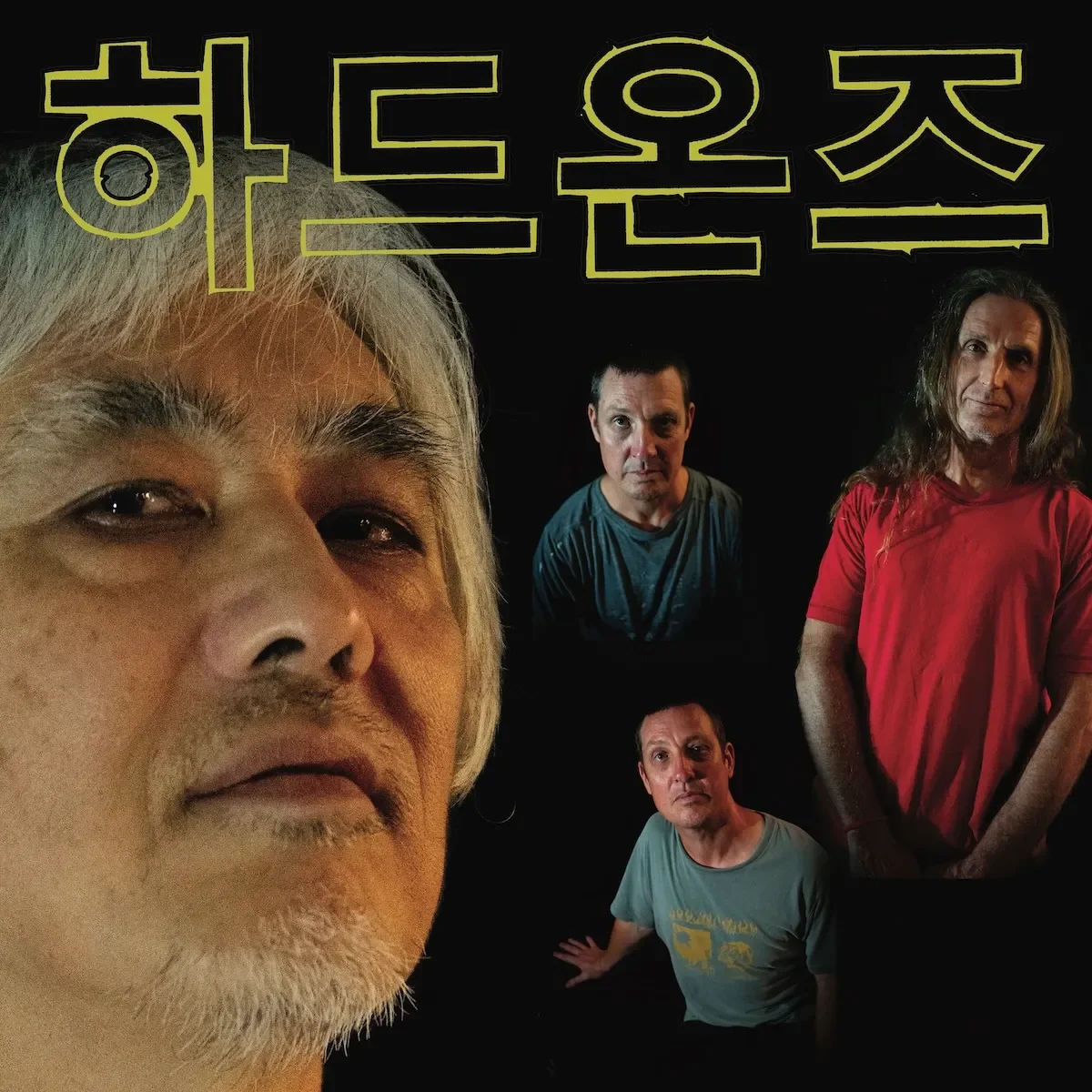
Ray Ahn has spent over four decades as a member of Australian band Hard-Ons. Having left Korea at age nine, he brings his band to Seoul this September for performances at Block Party, Baby Doll, and HQ Busan, alongside a Korean-language mini album and a screening of the documentary charting their unlikely 40-something-year run. Ahead of the shows, Ray spoke to Debaser about racism in the 1980s Australian scene, his complicated relationship to Korean identity, and why he thinks age is one of music's more meaningless obsessions.
There's a hard ceiling on the age pyramid of Korea's punk scene. The oldest member is 51. He was 20 when his band, Crying Nut, played their first show in 1995, and he was probably one of the oldest in the room even then. Look any earlier and there's simply no history to speak of, not in this country, not in this scene.
I've always been curious whether there could be earlier traces of Korean punk. Maybe scenes that formed and dissolved before anyone documented them, or foreign kids at Seoul American High School running bands in the 1980s. I've found no evidence of any of it. Maybe there was Korean diaspora active in overseas punk scenes instead.
Emerging more than a decade before the first "Chosun Punk" band, one answer might be Ray Ahn, bassist and vocalist of Australian punk band the Hard-Ons, who was 17 or 18 when the band started in 1982. A Korean emigrant who left the country at age nine, he might not have had a traditional Korean hwangap (60th birthday) celebration, but he passed that milestone last year.
So when I got the chance to interview him, I asked if he might be one of the world's oldest Korean punks, if not the oldest.
"I never considered myself a punk, let alone a Korean punk," Ray said. "I have always been a music lover, but I do like punk music very much. But I am not a punk at all. I don't know what it means, the word 'punk'. There are so many different interpretations that I have no idea."
At first the answer threw me, but I couldn't deny its logic. Ray grew up in a different era, one where the punk scene was rougher round the edges and hadn't yet calcified into some hallowed half-century-old tradition.
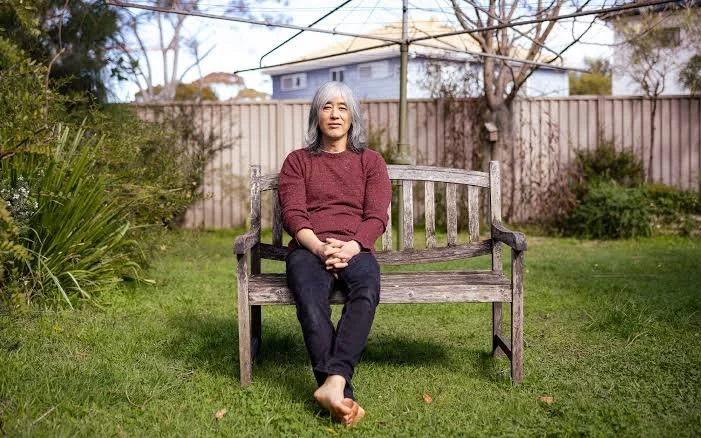
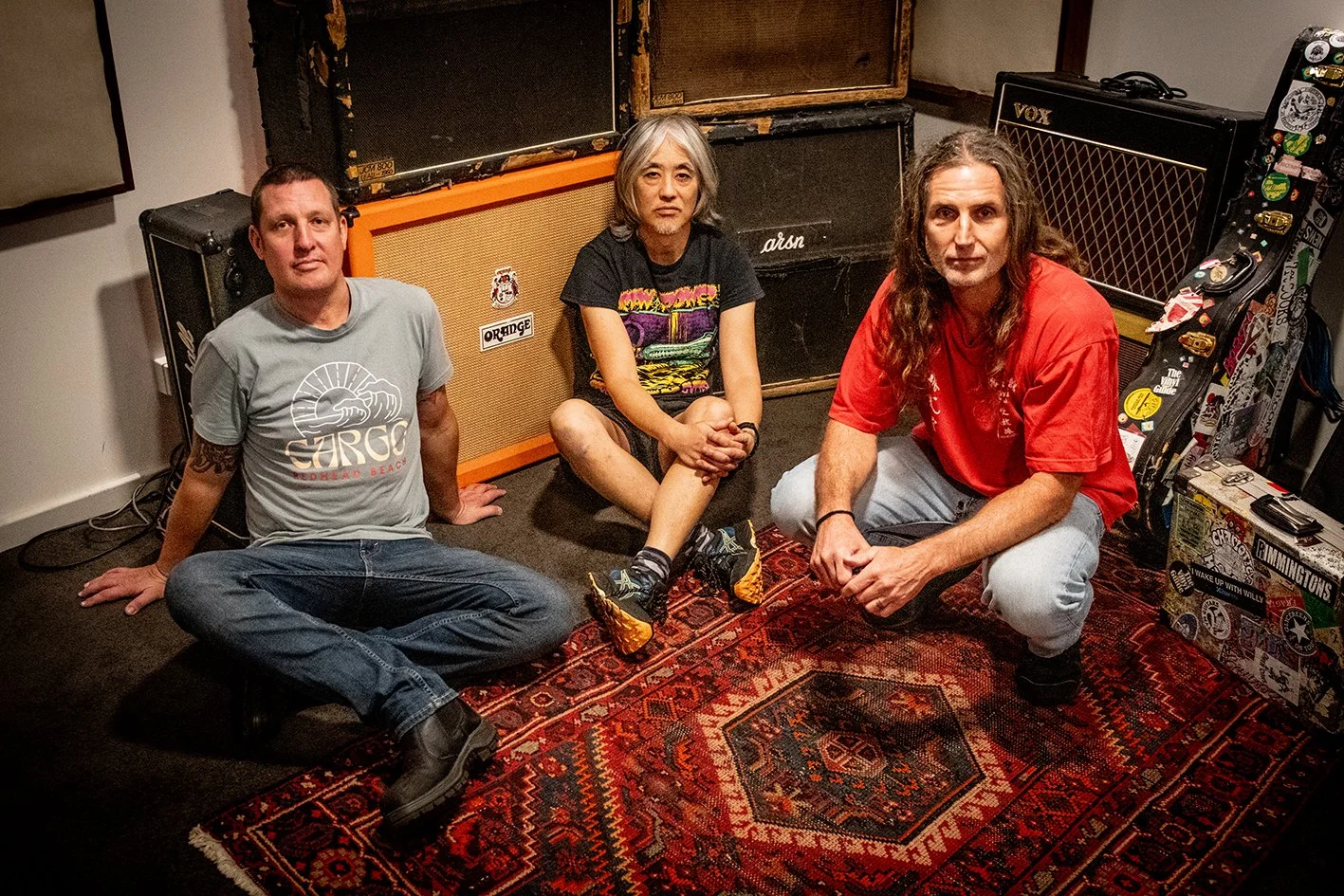
As a visible minority in 1980s Australia, Ray stood out whether he liked it or not, something the 2024 documentary The Most Australian Band Ever! lays out in full. He fell in with fellow immigrants Peter "Blackie" Black (originally from Yugoslavia, now Croatia) and Keish de Silva, whose family hails from Sri Lanka.
"I don't even feel that I am Korean anymore," Ray continued. "My family is just my mum, father (he is dead now) and my brother. I don't feel particularly Korean. I certainly don't feel particularly Australian. I don't feel like I belong anywhere. I never felt the need for any tribe or anything like that."
Racism had an ugly, ubiquitous presence in the 1980s Australian scene, and racist skinheads were a regular fixture at shows.
"My presence ticked a lot of people off in the early days," he said. "Australia accepted and often embraced casual racism. Nobody seemed to care. In that environment, minorities started using racist terms at one another. It would help to disarm the real racists."
Ray said his band was one of only three that stood up against the fascists in the scene, adding that "we had no choice." It must have been exhausting fending off hardcore racists, but the real ordeal, it seems, was watching supposed non-racists sit on the fence, unwilling to pick a side, especially inside a scene that claimed to stand for something.
"You know, you can wear as many anarchy symbols as you want, but if you don't stand up for your belief, it means nothing," Ray said.
"A friend who lived with neo-Nazis used to come to all our shows and even played in an anarchist band. A few years back he admitted he'd befriended neo-Nazis so they'd leave him alone at punk shows. This stunned me. He was saying that a need to attend a punk show was more important than his own sense of right and wrong. And from what I know, nothing is more important than one's sense of right and wrong. I could not believe his indifference. I thanked the stars I did not have the luxury of white privilege to show me moral loopholes so I could go watch a band in peace."
Maybe this is what's left Ray a little jaded on punk, at least as an ideal or a community, rather than simply as music.
"I was told that punks were free to express themselves in the way they dress. But there is so much conformity. I was told that punks go against society's rules. But I see so many rules within punk. It is a baffling subculture. I will not pretend to understand it," he said. "But there is some tremendous music that is presented as 'punk'. I am simply interested in the music."
However life played out for them, the Hard-Ons certainly nailed the music. I wouldn't call them a household name, but nearly every Gen X friend I asked from Australia had a memory of catching the band live.
Over the course of the 1980s, they reached legendary status, even as greater fame and fortune stayed out of reach. The band name itself caused controversy, and the documentary digs into the debate over whether it held them back. But it was entirely on brand, and if it hadn't been the name "Hard-Ons," it would have been something else just as provocative.
"Our rudeness was wielded as performance art," Ray said. "It served a purpose at the time. We loved waging a war against censorship. We had absolutely nothing to lose as we did not care about being popular or anything. When we discovered how fun it was, we kept going, till about 1990 when we started not worrying about that kind of stuff. It certainly is great being absolutely unshackled by a need to say and do the right things for the sake of a music career within the music industry."
The documentary asks whether the Hard-Ons could have been something much bigger, with comparisons to Nirvana-level renown floated more than once. It didn't happen, for whatever reason: the band name, the racism baked into the industry, punk's limited mass appeal, take your pick. All the "what could have been" comes from friends and fans. Ray, for his part, seems entirely at peace with what the band achieved.
"We probably got as popular as we could ever have been, you know?" he says in the documentary. "And in fact it's a miracle that we actually got to that many people, playing the music we did, the way we looked, with the band's name. It's a miracle."
"Everyone in the Australian underground music scene knew Hard-Ons, even if they didn't like it. Doing it on your own terms, but also doing it well, is what matters," said Jonathan Sequeira, director of the documentary.
Ahead of the Korea run, the band released a Korean Language Mini Album, four classic Hard-Ons songs performed with Ray on vocals, entirely in Korean. They'll be touring the country and playing this year's Block Party. The Most Australian Band Ever! screens at ArtNine Cinema on 11 September. On Friday 18th of September, they’ll head down to Busan for a performance at HQ Gwangan with Little Boys and Vastards. Finally, they’ll also be playing the Sinchon venue Baby Doll on September 19th with Whatever That Means…, Oysters, Find The Spot, and Sweet Gasoline.
It might matter less to him than to anyone else, but I suspect Ray's Korean heritage will draw plenty of attention while he's here. It may intrigue people who can't quite square the idea of Korean punk. And it might redraw the edges of Korean punk history. This will be the first time a Korean punk musician in his 60s has performed here. After that, we'll have to wait another decade for that Crying Nut member to catch up.
Ray probably won't care, of course.
"I think rock music and ageing is all myth-making," he said. "We seem to hold tremendous value in being young. All I know is, if somebody is 70 and they want to spike their hair and wear bondage pants, it is not my concern. If anybody wants to play music or be immersed in art, age is irrelevant; in fact, there are many advantages in being skilful due to being experienced when it comes to music. I could not care less. I think a lot of people are fixated on meaningless things. Age. Race. Sex. Sexuality. All I want to know is, does it sound good to me or not?"