
Kimbanourke looks beyond absence
Written by Sam Dougherty (@samtdougherty)
Kimbanourke never set out to make a concept album. He just followed whatever melody turned up. "I didn't decide on any big theme from the beginning," he says. "I just thought, let's make whatever comes to mind." That's how Absence happened. Eight folk songs, released through Poclanos in March 2024, built on fingerpicked guitar, understated vocals and arrangements that never crowd the melody. It's quietly made him one of the more distinctive voices in Korea's independent folk scene. Funny, then, that he almost wasn't a musician at all.
Kimbanourke has spent his whole life in Mungyeong, a small city in North Gyeongsang Province, and people in Seoul still clock his accent the moment he opens his mouth. Before music, he was a science student grinding towards the Suneung, Korea's university entrance exam. "Just a few months before the exam, I suddenly told my parents I wanted to make music."
He'd messed around on piano as a kid and picked up guitar briefly in middle school. Years later he taught himself again from scratch, and that's where the intricate fingerpicking that now runs through nearly everything he writes came from.
His songwriting process is shockingly simple. "I turn on the voice recorder on my phone, hum randomly, and play whatever comes to mind on the guitar. Later I listen back, save the melodies I like, and import them into Logic Pro. A 20-second melody becomes a one-minute verse, and eventually a five-minute song."
You can hear that in Absence. Nothing feels engineered. Each song grows out of a single idea, patiently, with piano, keys, percussion, bass and the odd flash of electric guitar filling in around the acoustic core without ever taking over.
The recording setup was just as unfussy. "I just recorded everything in a small room with a 200,000-won microphone," he says. "I didn't really think much about producing or engineering. I didn't have the knowledge, I was too lazy to learn it, and I just did whatever sounded right to my ears."
Somehow it still holds together. A Portrait From Memory and Mirage both bloom out of fingerpicked guitar into something shimmering, while Vague slips in jazz harmonies that hint there's more going on under the album's quiet surface than you'd first think.
Ask him about influences and two names come straight out: Mid-Air Thief and Sufjan Stevens. The Stevens influence is obvious on record, that warmth in the acoustic guitar, the layered vocals, the reflective lyric writing. Ask which Stevens album shaped him most and he doesn't hesitate.
"First would be Illinois, and second would also be Illinois." "I had a lot of doubts about the atmosphere and direction of my own music, but that album gave me confidence." He credits other Stevens records too, as company while he was writing. "Listening to those albums became a catalyst that helped me bring out more personal and intimate stories in my own music."
There's a less obvious influence lurking as well: prog rock. "I used to listen to an enormous amount of progressive rock," he says. "I think I've borrowed a lot of its musical grammar." Which might explain why these deceptively gentle songs keep dodging the structures you'd expect.
He's had a complicated relationship with the record since it came out. "When the album came out, I kept criticising it in interviews because I thought there were so many flaws." Two years on, that's softened. "It's become part of my history. In the end, it created countless connections and opportunities for me."
Fitting, for an album so preoccupied with memory and moving on. The closing track, "Fixing My Gaze Ahead," ends by choosing to look forward rather than stay stuck in the past, a line that could just as easily describe how Kimbanourke talks about the record now.
Live, it's a different story. "If I focus on the guitar and let my guard down for even a moment, my vocal pitch easily goes off. By the time the performance ends, I don't even know what I did. It feels like I was in a trance." He plays solo, almost always, just him and the Gopherwood guitar he picked up back home years ago. Catch him doing exactly that at Block Party on September 12th.
Between his own releases, he's been busy with session work, production and commissioned songwriting, work he's grateful for even if it eats into time for his own material. Balancing the two matters to him. "Ultimately it's my own music that brought me to where I am today," he says. "I have to keep developing my own musical world without neglecting it. It's daunting, but I'm sure I can do both."
The next album, he reckons, is already over halfway done. "The title is similar to my first album, and I think the sound is similar too. But I want to create a world that's more solid and more expansive." He's hoping to bring in orchestral instruments he couldn't manage on Absence, this time with other musicians lending both their instruments and their support.
For all that, he doesn't see himself as part of Korea's folk scene. "I'm an outsider," he says. "I don't really know any folk artists personally." That doesn't stop him pushing artists he thinks deserve more attention. He points to khc's 2025 album 아침놀 (achimnol), Morning Glow, as "an album that reaches an astonishing level in terms of its sound," and says there's even more experimental work coming from that artist. He also recommends Jenny Choi's 나원래웃긴사람인데 (I used to be funny) from last year.
As for what's next, Kimbanourke seems happy to keep doing exactly what he's always done: start with a melody, build around it patiently, trust his instincts over any push for perfection. The same quiet process that made Absence, a debut he once picked apart in every interview and now recognises as something else entirely: not just an album, but the start of his own musical history.
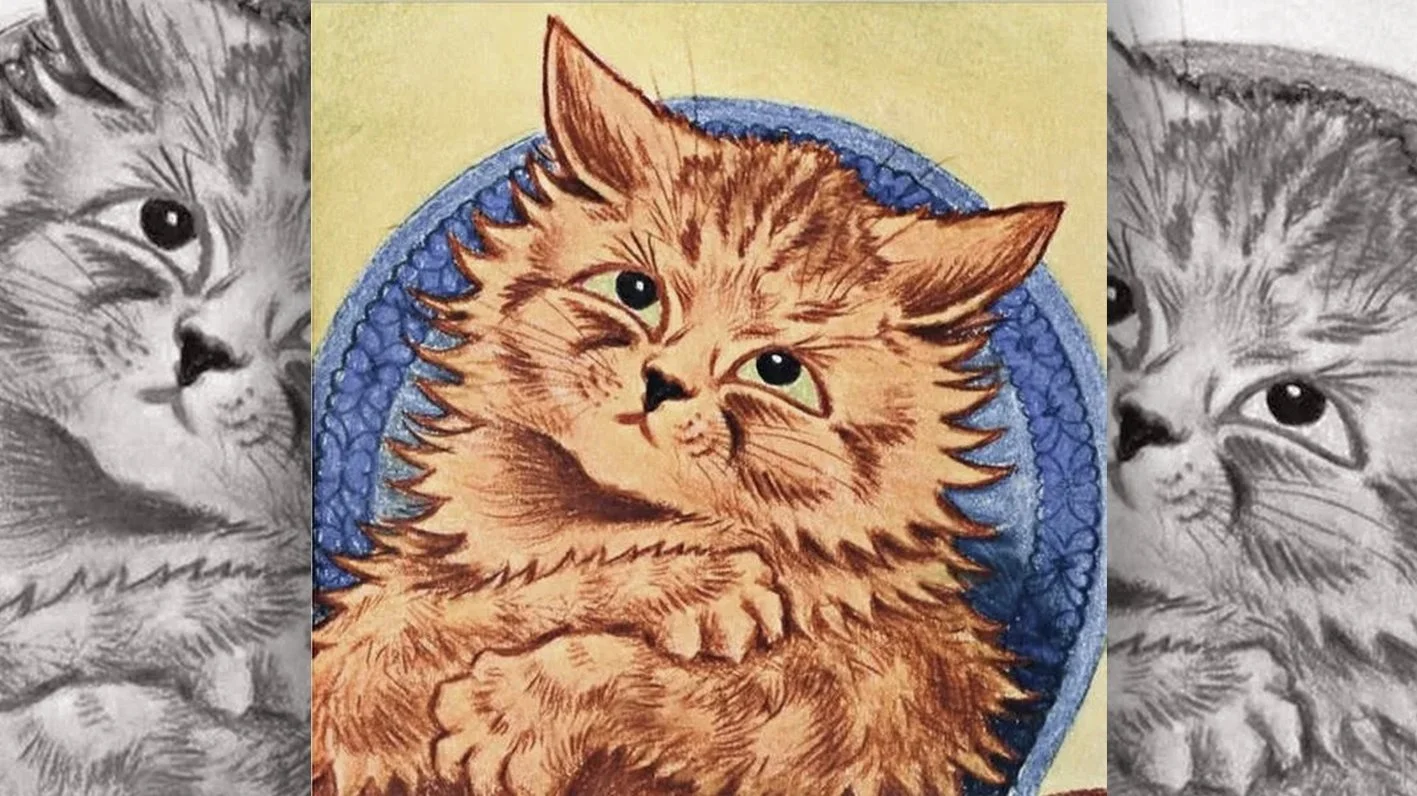
Kimbanourke did not want his image used for this story, so he sent us a photo of his cat instead.