
The rootlessness of Ureuk and the Gypsies
Written by Ethan Kim (@count.kim)
Pictures by Christian 이수 Mata (@chris_isu_m)
How do you even begin to define Ureuk and the Gypsies? Their starting point may be fusion gugak, but the direction their music can take feels limitless. Spiritual jazz, free music, noise—eight people pulling at the melody without much interest in rules. From a distance, it might seem like everything sways without roots. Up close, you realise the ‘rootlessness’ is precisely what lets them keep rebalancing themselves, turning each member’s different influences into a new kind of centre.
The group’s “first Ureuk”, Jo Seokhyeong, compares the band to a Bollywood movie: when one person starts speaking, everyone else instinctively jumps in, and the music takes shape in the overlap. He calls Ureuk and the Gypsies ‘a mixture of B-movie sensibility, gugak, free music and avant-garde,’.
Son Heejoon frames the band’s internal method more practically. Between the two of them, they try to control the ratio of ‘Ureuk’ and ‘the Gypsies’, keeping the band’s many personalities from tipping into pure confusion.
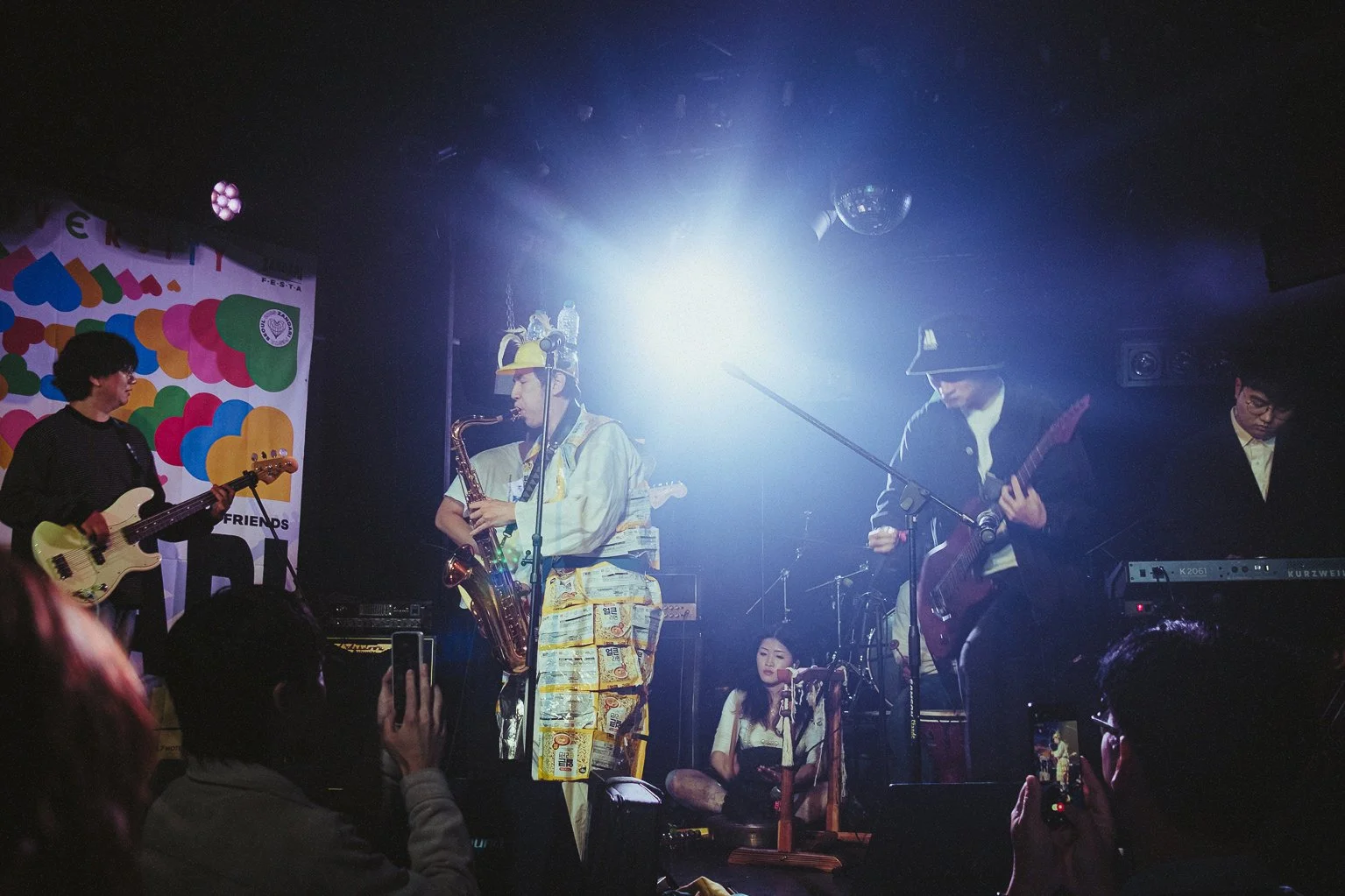
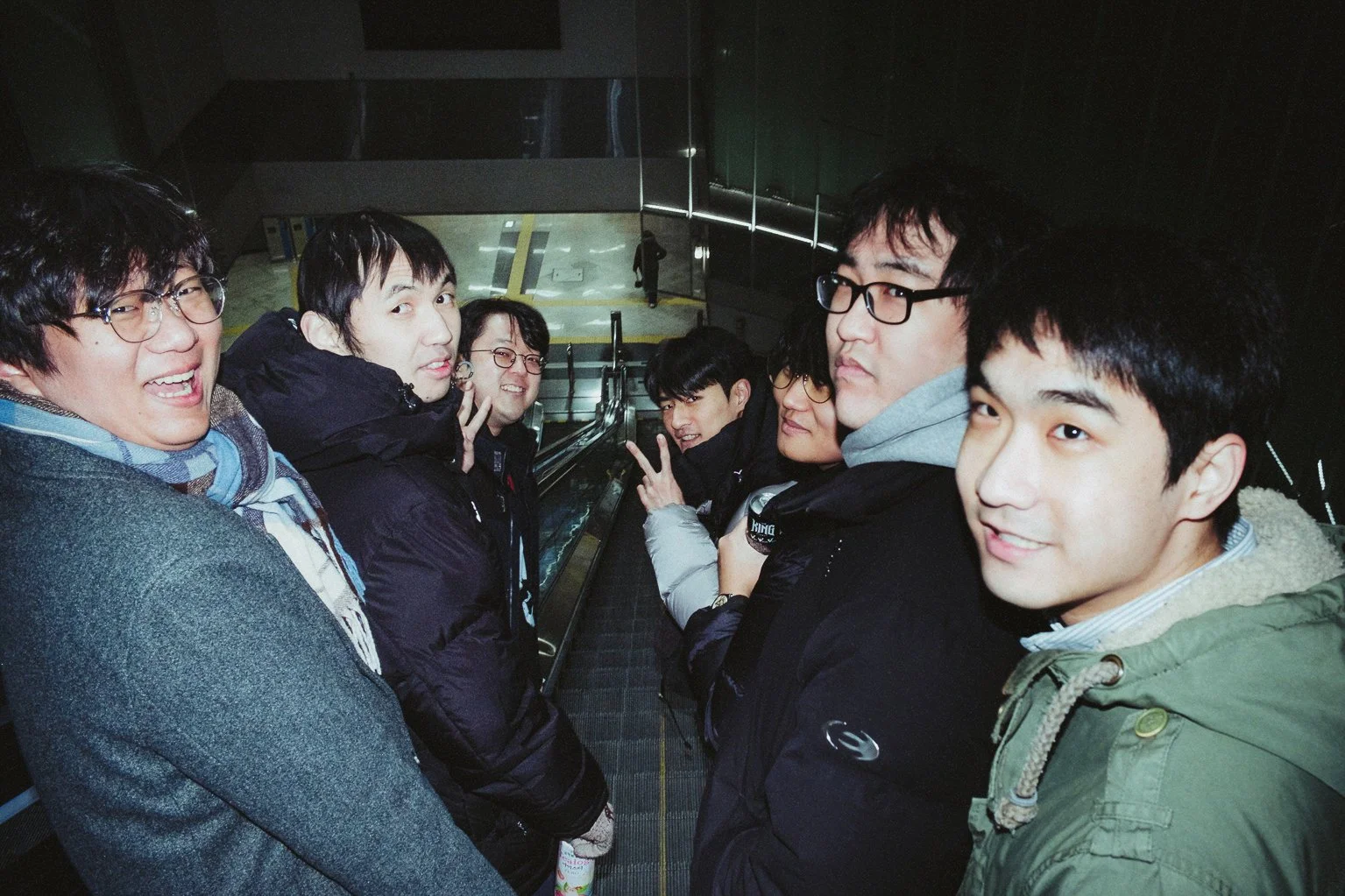
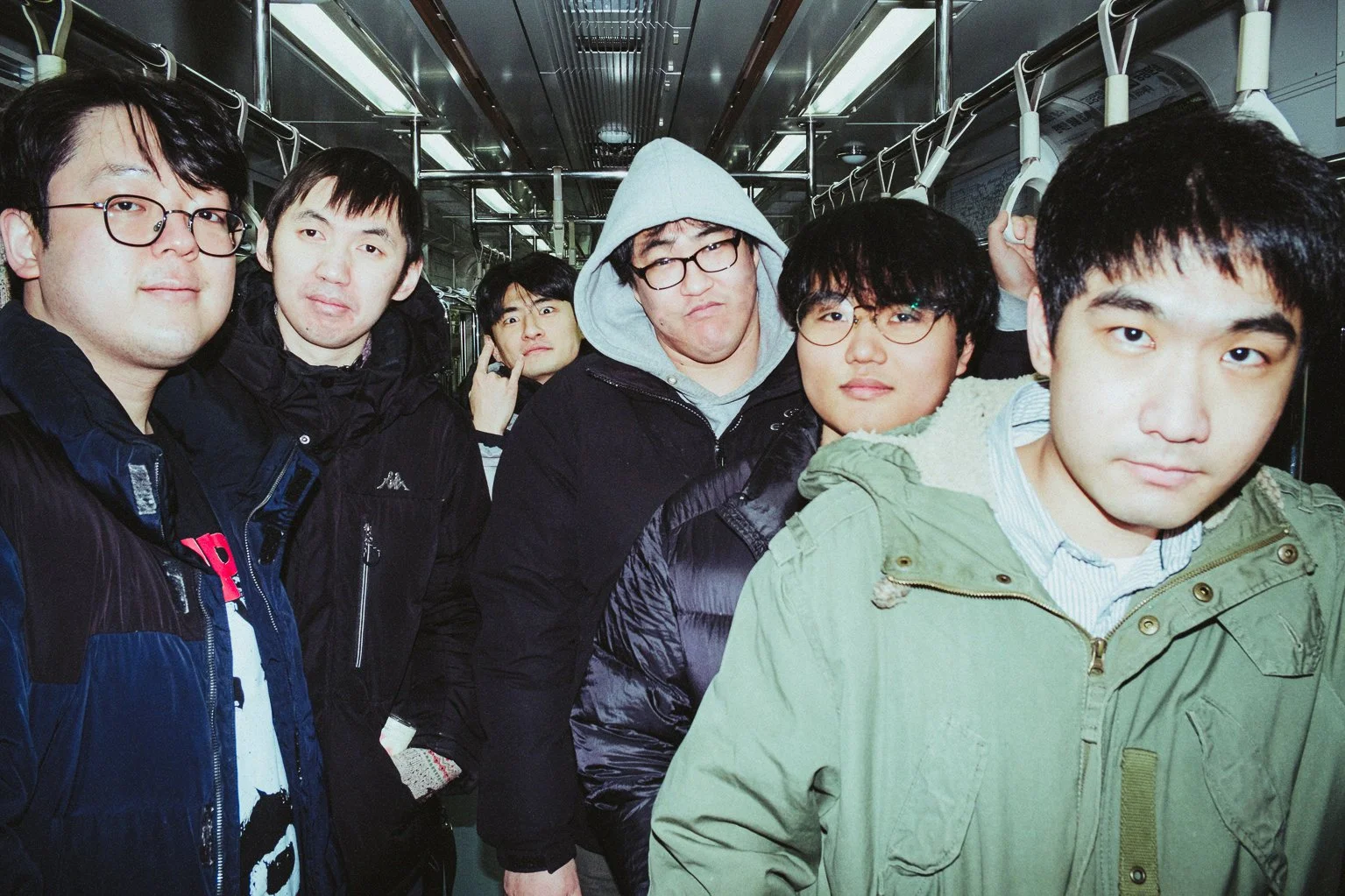
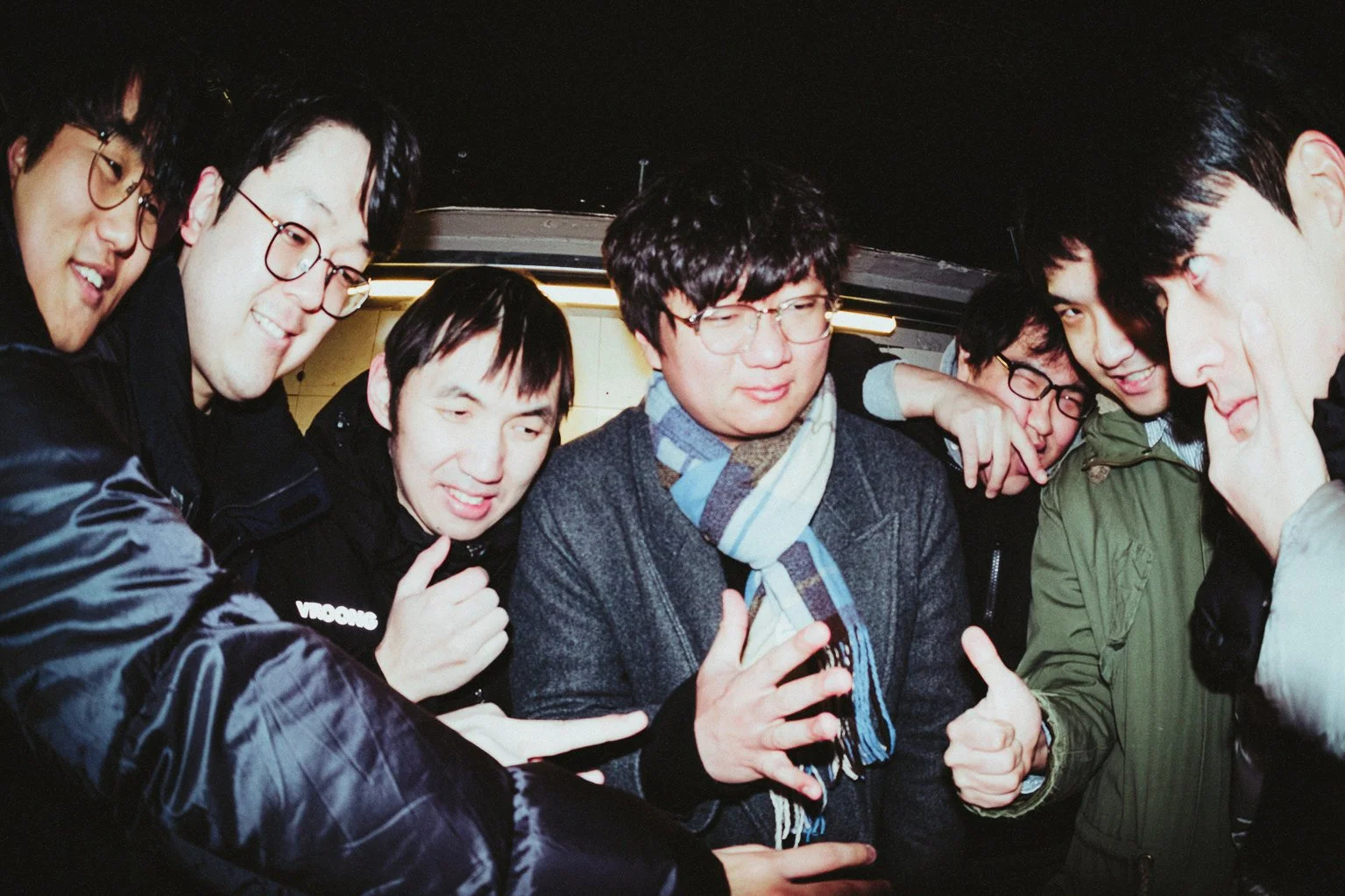
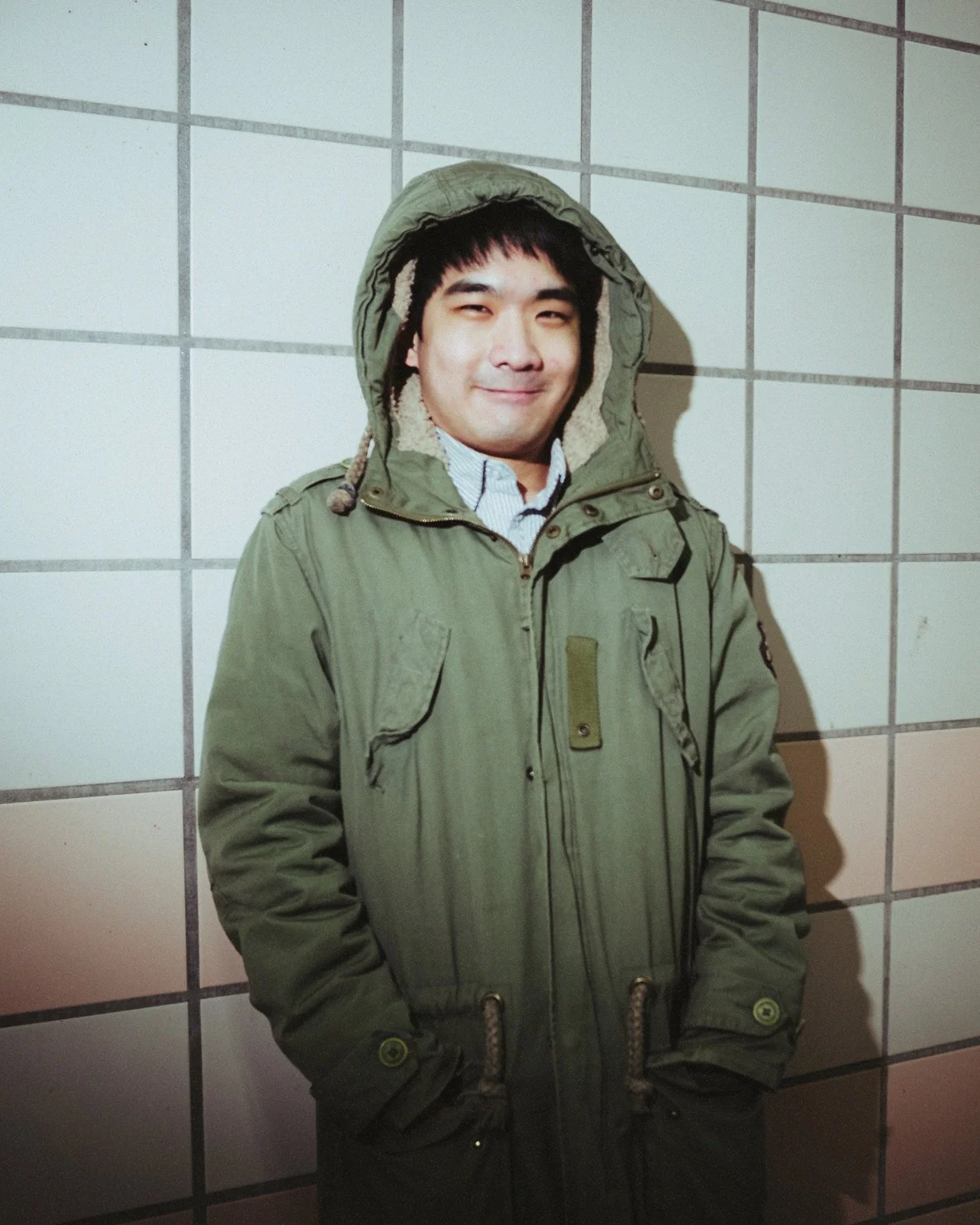
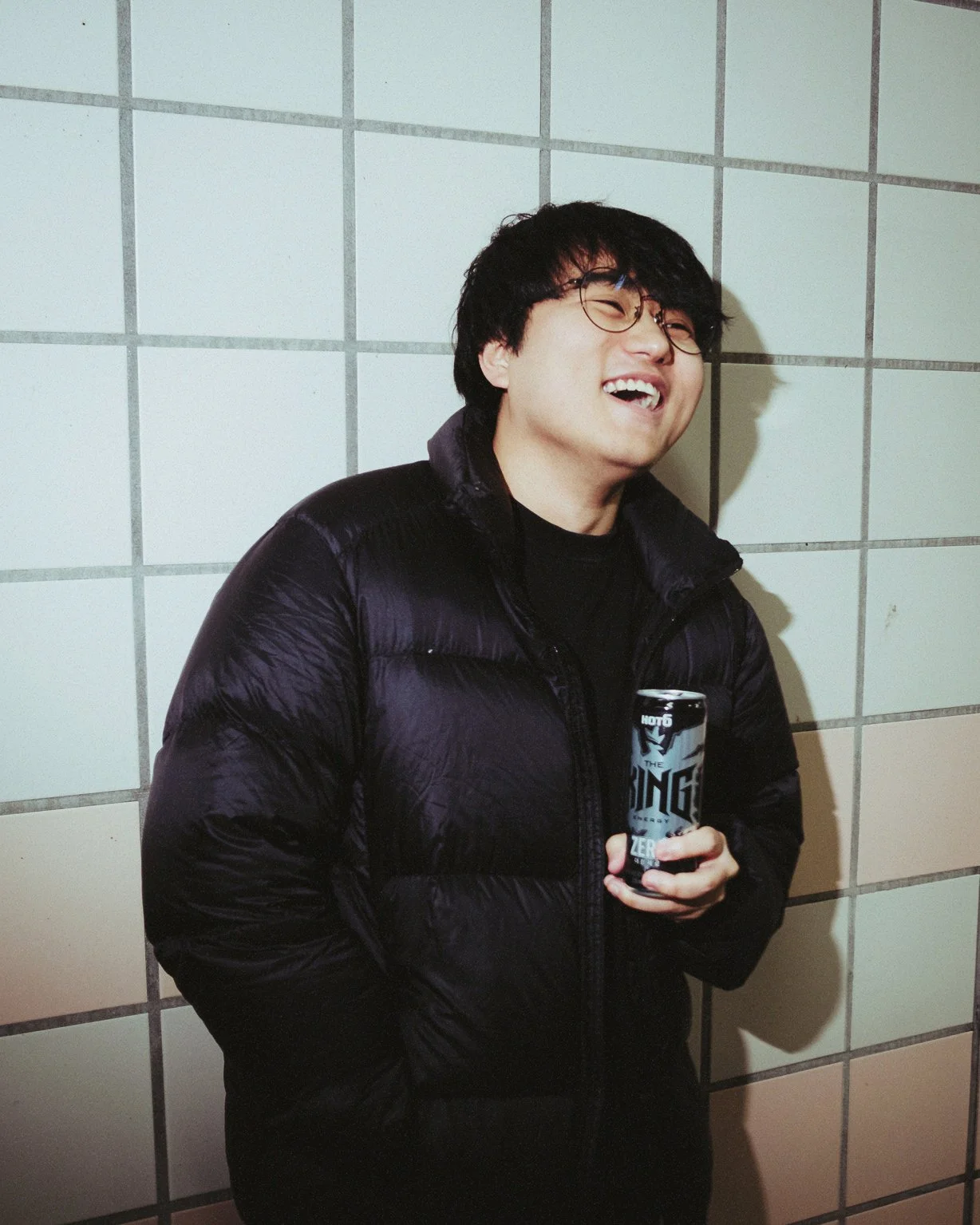
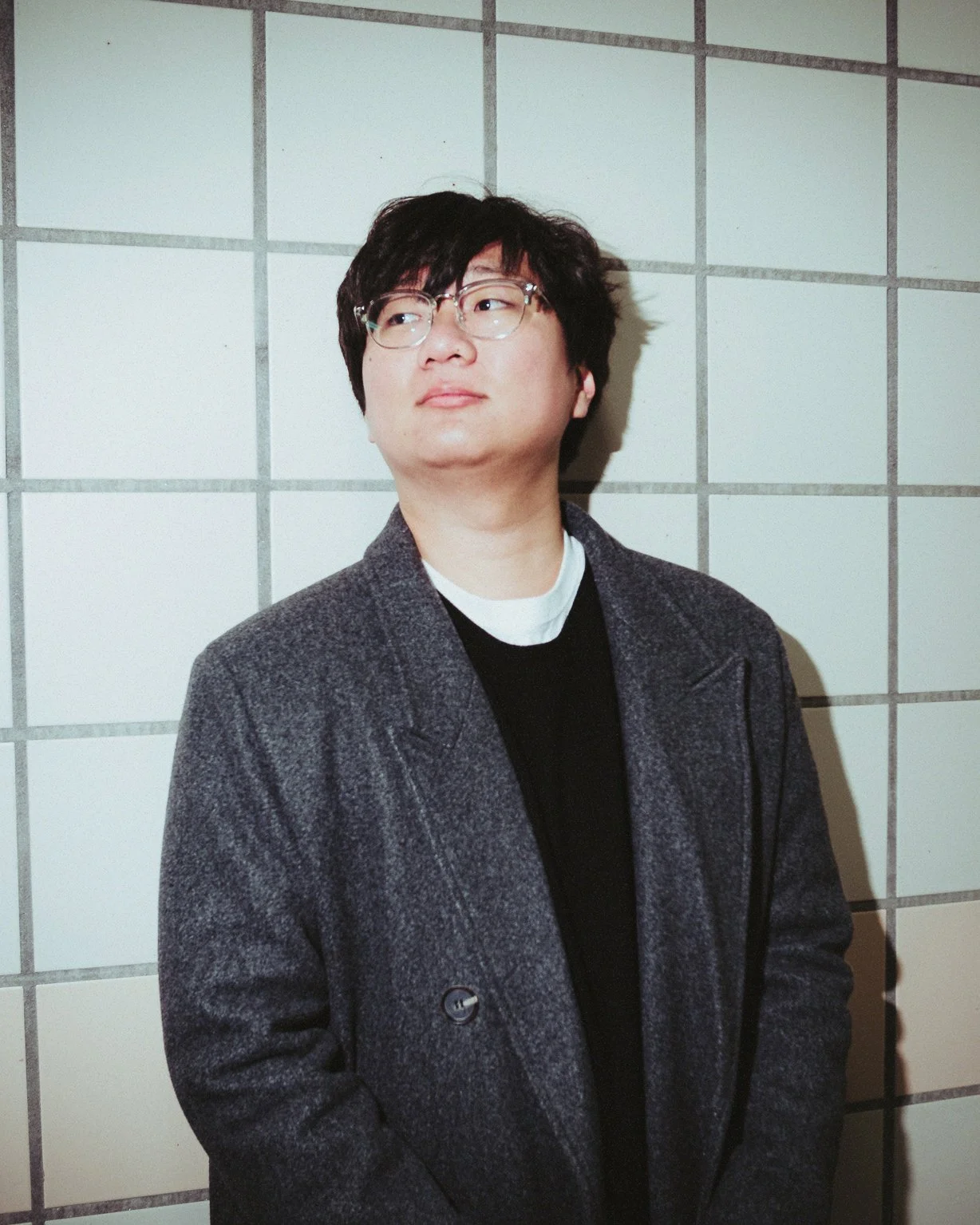
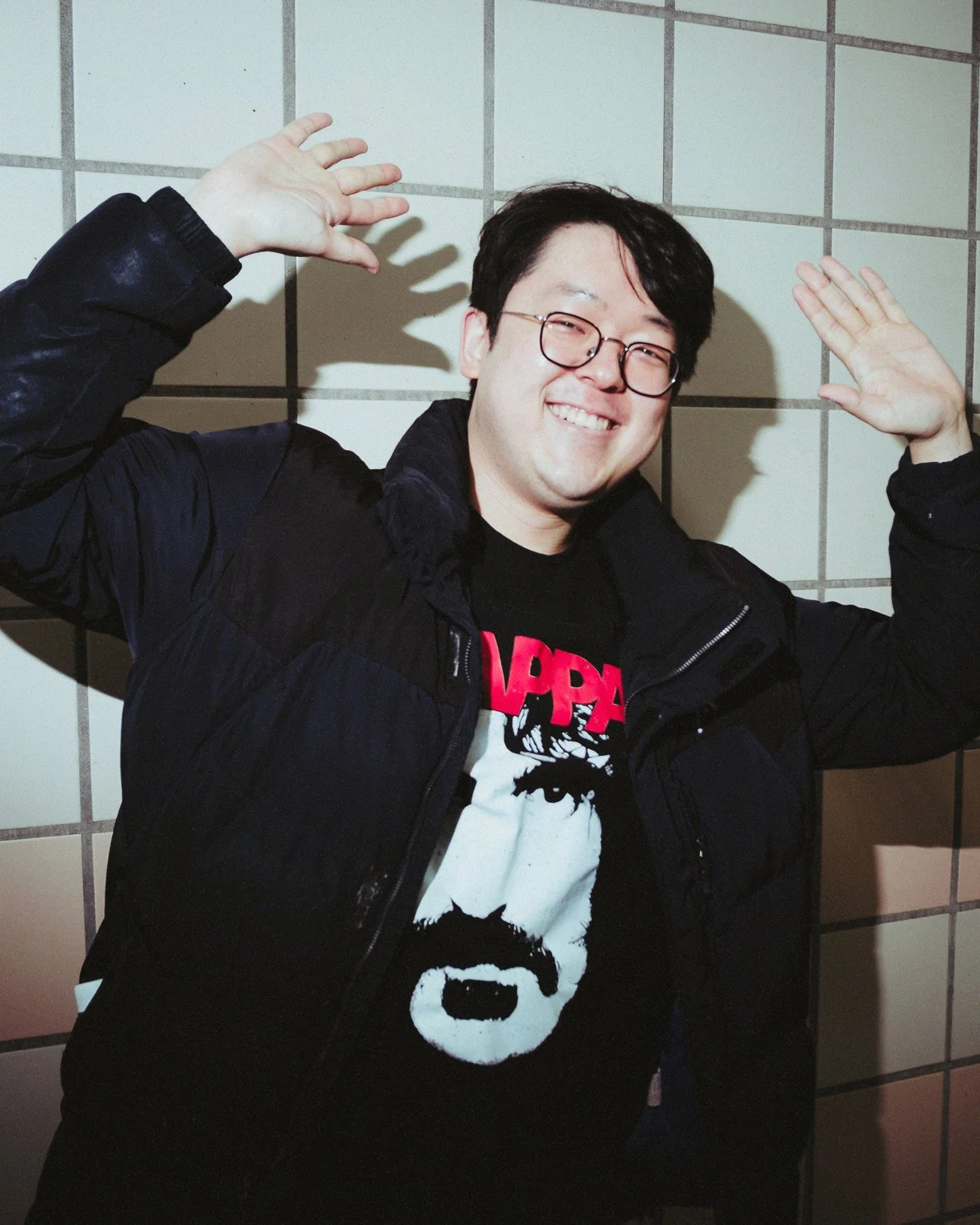
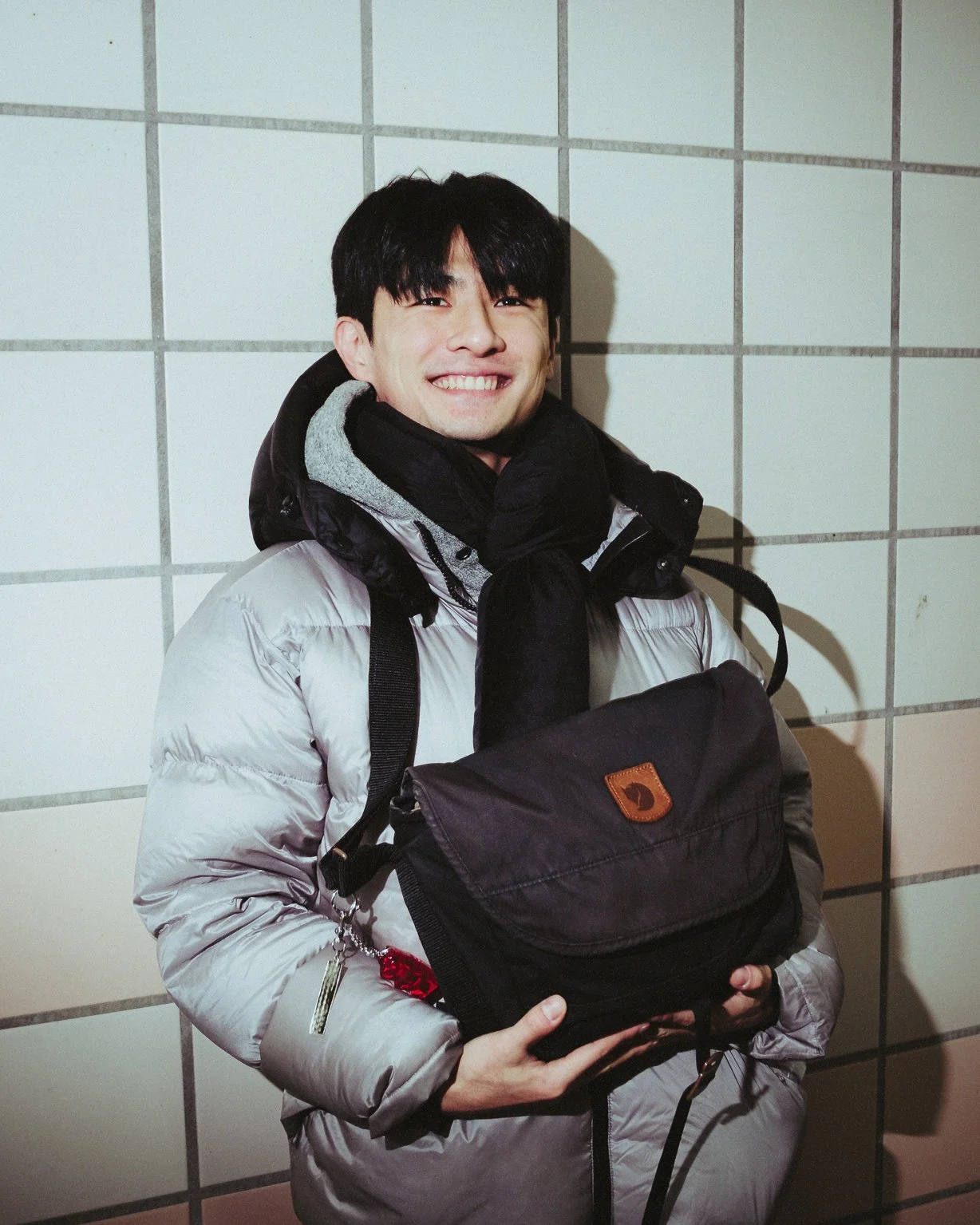
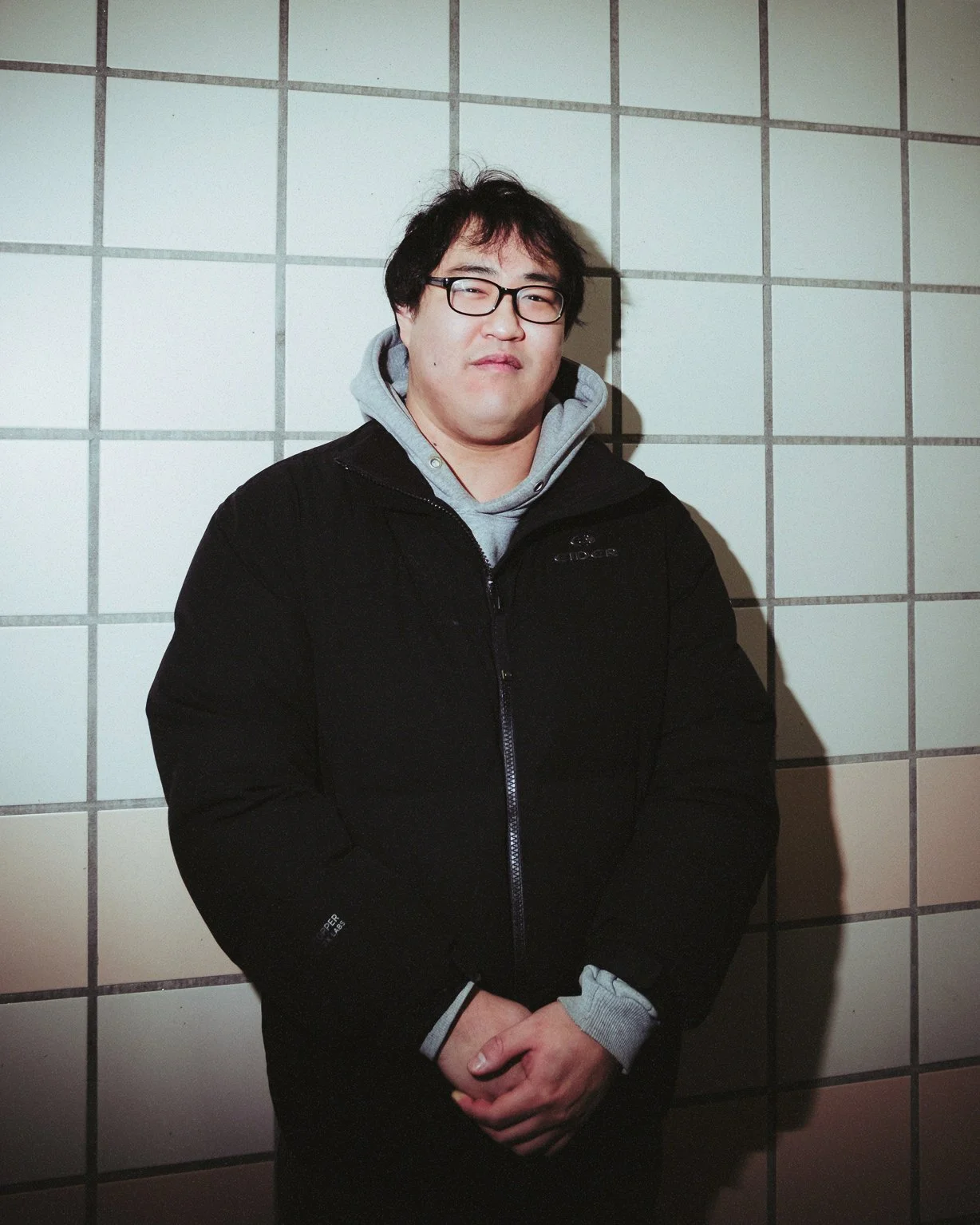
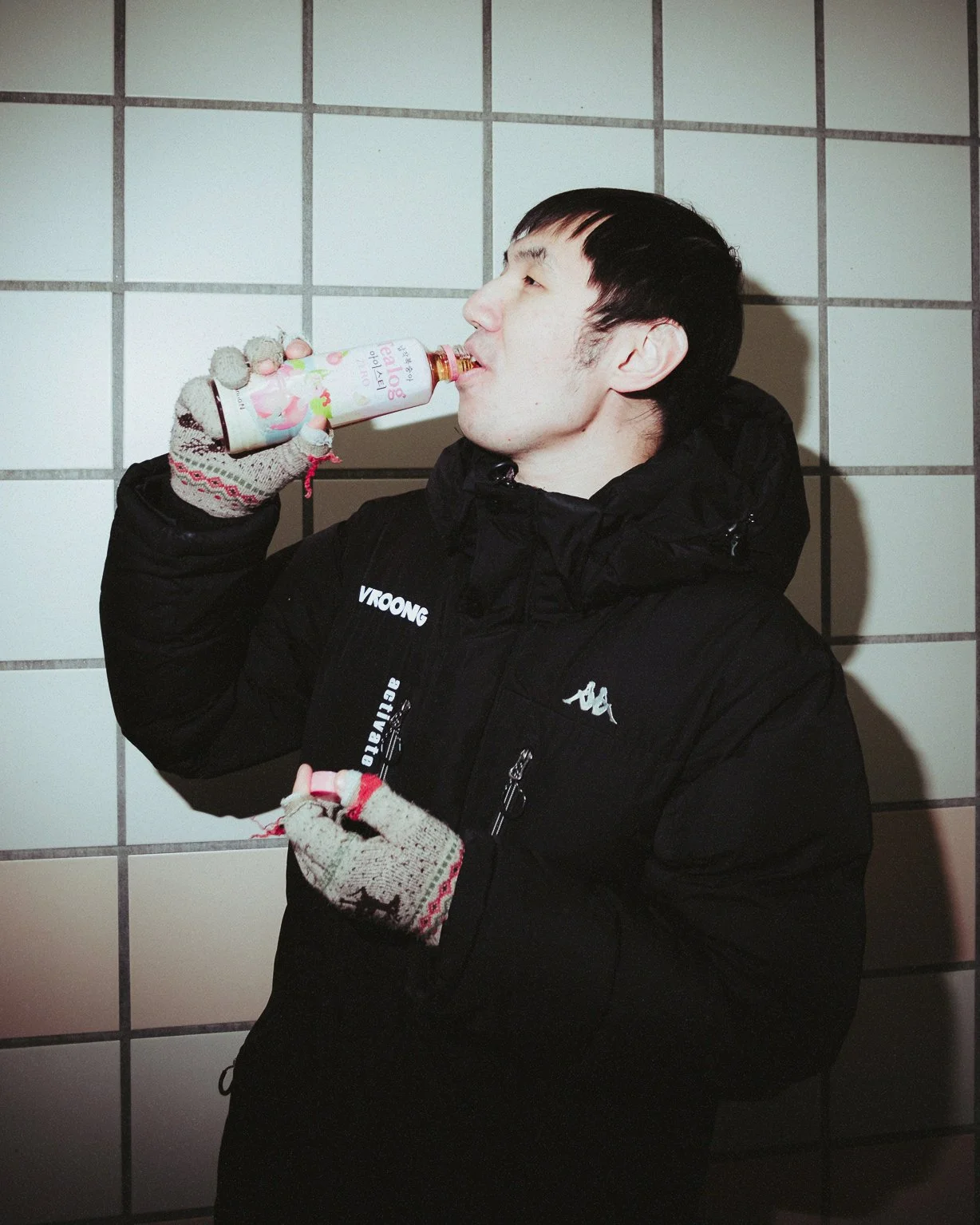
The line-up speaks for itself. Bassist Oh Joonyoung says their music is ‘rootless’ and jokes that this rootlessness has become their root. Kim Jihong joined in October last year on saxophone; Lee Seungmoon plays tenor saxophone and taepyeongso and often attracts attention with his unique stage outfits; Lee Joonha (also known for his solo project Fin Fior) switches between trumpet and guitar; Kim Jihoo joined on keyboard as soon as he completed his military service. Finally, Lee Sanna is a percussionist. Each member’s personality is expressed in a distinctive style.
That room is always full of instruments. A kkwaenggwari is never far away, and swapping parts is almost habitual—the quickest way to keep things loose, to keep the music from settling into predictable roles. Even their name holds the same tension: Ureuk is a historical figure from the Gaya kingdom, revered like a saint in gugak history, whilst ‘the Gypsies (풍각쟁이, punggakjaengi)’ carries the image of wandering buskers with a certain unruly swagger. The contradiction isn’t a bug, it’s a portrait. Seokhyeong says they went through other band name ideas (including ‘Ureuk and the One-Day Puppies’), but nothing fit them like ‘the Gypsies’.
Trying to list their influences doesn’t really solve anything—it only expands the map. Post-rock, gugak, avant-garde, free jazz, a touch of the Grateful Dead, and so much more. At one point, they compare their music to a gut-pan (a Korean shamanistic ritual)—not a formal, traditional ritual, but their own ‘rootless’ version. They also describe it as farmers gathering once a year to celebrate the harvest: together, disorderly, but with a shared sense of timing that somehow holds.
The timing that prevails within rulelessness is the real core. For an improvisation-driven band, the most important skill isn’t virtuosity or proficiency - it’s listening. Joonha sums it up with one word: ‘reading the room.’ Joonyoung adds another principle: restraint. ‘The old sages were not wrong,’ he says. ‘If you don’t have self-control, it’s hard to maintain balance.’ With eight people, balance becomes about philosophy and logistics. Someone comes up with an idea, and everyone else has to be quick enough to follow along or hold back enough not to ruin it.
You can hear that tension particularly clearly on their album Spirits Unbound, which they describe as a shift in method more than intention. This time, they recorded properly with real equipment in Kuang Program member Choi Taehyeon’s studio. Previous releases were recorded in a much more primitive way. When asked what they used, Heejoon replies with a laugh: ‘LG V50, iPhone 11.’ There’s a practical limit in that choice, but also affection. The iPhone’s clipping, peak and distortion became a cult-like texture they leaned into—something they genuinely liked rather than just tolerated.
Even with the improved recording equipment, Spirits Unbound retains its lively energy. The album was originally recorded as a one-take document, and the band treated it as a space where they could cram in references and little impulses: a melody from Gong Gong Gong that slips into ‘Cascade of Chaos’; a fragment of ‘Red Light, Green Light’ because Squid Game was everywhere at the time; and a moment that Joonyoung still remembers vividly, when he saw someone wearing a Nirvana T-shirt during a concert and suddenly played the bass line from ‘Come As You Are’ in the set. Joonha calls the approach ‘plunderphonics, but with live playing mixed in’, whilst Jihoo puts it more bluntly: because everything is improvised, what comes out is ‘honestly rootless—and that’s our root.’
Their ‘proper studio’ session had its own chaos, too. It was hot because the air conditioning had to be turned off. The room was so cramped that some members recorded from the corridor. Heejoon remembers playing the saxophone outside, then running in to switch to guitar. At one point, a cat appeared out of nowhere, startling everyone badly enough that they had to stop recording.
When asked to describe the three tracks on Spirits Unbound as characters, the answers come immediately. ‘Goblin Rumblin’ is an immigrant living in Itaewon - ‘mixed race,’ they add, ‘Korean-Jamaican,’ because of the reggae rhythm. ‘Spiritual Outburst’ also feels like an in-between figure: rooted in gugak, but with ‘a bit of Coltrane’ audible in the spirit of it. And ‘Cascade of Chaos’ gets an instant group verdict: ‘ADHD.’ They explain that this is because the song stretches three to five key motifs into a long chain reaction without a fixed rhythmic cycle—a title that literally points to successive chaos.
If the music seems like pure chaos, the visual expression is just as deliberate. Seungmoon insists that his costumes are ‘probably the cheapest of all,’ which only makes them more fun. His most famous look, a costume made from ramen packets, started as a practical problem. He’d wanted to buy the red robe-like garment associated with court music, but it was too expensive. Then he noticed the stack of red instant noodle packets at home and decided to make his own. He says he’s already imagining more ramen-related designs, including a lion dance costume one day. The reactions have been so genuine that musician Minhwi Lee even asked him if he’d studied fashion. Could a collaboration between the band and MMCA be possible in the future?
Their live approach is built the same way: structured chaos. Seokhyeong says they try to treat performances as Frank Zappa did - always different, even when it’s ‘the same song,’ rearranged on the spot. Joonyoung points out that with eight people, unexpected things always happen, so stage talk becomes a functional tool to keep the set going. Seokhyeong admits some elements are scripted - and that during breaks he plays a role where he deliberately ‘gets angry’, shouting things like ‘Tune your instruments’ or ‘Stop playing already.’ The deeper reference, he says, is Bongsan Talchum, although he notes that most of the audience still hasn’t figured that out.
However, what they most want listeners to notice is not the chaos - it’s the groove underneath. Seokhyeong describes groove as one of the most important elements in what they do, especially the attempt to produce a gugak feeling from Western instruments. But the goal is not simply ‘gugak groove on saxophone and guitar.’ The challenge, they say, is to create a third path, something that is neither collage for collage’s sake, nor tradition disguised as experimentation. It’s the conversation they continue to have both on and off stage.
In that sense, 2025 gave them a few moments that made the third path feel concrete. Heejoon mentions their Hong Kong show and their Zandari Festa set. Joonyoung still sounds surprised, remembering a detail from Hong Kong: someone travelled from mainland China to see them, a Parannoul fan who’d become curious enough to show up in person. ‘Just knowing there are people abroad who know us at all—that was shocking,’ he says.
When asked to imagine a fantasy scenario with unlimited funds and a studio perfectly designed for Ureuk and the Gypsies, they default back to reality. Seungmoon says he’d like to live there, which leads to jokes about cornflakes boxes and kettles. Then the truth emerges: ‘About 80% of our equipment is from AliExpress.’ Their saxophone is from Ali. Their kkwaenggwari is cracked. If they’re allowed one serious wish, Heejoon answers instantly: a Fender Twin Reverb. And as a shared dream, a car—something simple that would make it easier for eight people and their instruments to move around the world.
Their next step sounds almost simple. Seokhyeong wants shorter songs: still unmistakably Ureuk and the Gypsies, but easier to digest. They know compression is hard, but they’re drawn to the paradox of ‘mainstream free jazz’: not pop, exactly, but a deliberate provocation, a way of testing how far their music can travel without smoothing itself out.
There are other horizons too. Heejoon talks about Coltrane’s shift to the spiritual realm and says he hopes the band will explore something similar one day. When the conversation turns to dream performances, they start mentioning festivals like Glastonbury, Fuji Rock and NPR Tiny Desk. They’re waiting for the call.
And asked what kind of music they want to try next, the first answer is unexpectedly clear: shoegaze. But as Joonyoung points out, if Ureuk and the Gypsies make shoegaze, it won’t remain shoegaze - it’ll become something like ‘gutgaze’ (gut pan + shoegaze), built up of drones, noise and everything else they can shape to their own taste. Joonha says he’d love to attempt something in the spirit of Tom Waits. Seokhyeong goes widest: one day, he wants to write a symphony and an opera.
Maybe their spirit really is ‘rootlessness’. But the way they listen, the way they endure, the way they rush forward and hold back at exactly the right moments—it creates a colour that is unmistakably theirs. Even without a single clear root, Ureuk and the Gypsies keep finding harmony inside the mess.