
Monkey Business with Oysters
Written by Ethan Kim (@count.kim)
Photos by Blair Kitchener (@blairkitchener)
"Be with history" is the aggressive catchphrase of the band Oysters, and it’s one they run with. Their 2025 had that sense of momentum snapping into focus: signing with DooRooDooRoo, releasing their first full-length album, Monkey Business, and spending the year ricocheting between clubs and festivals on barely containable energy. In 2026, as they step into legal adulthood, and become more sincere and more confident.
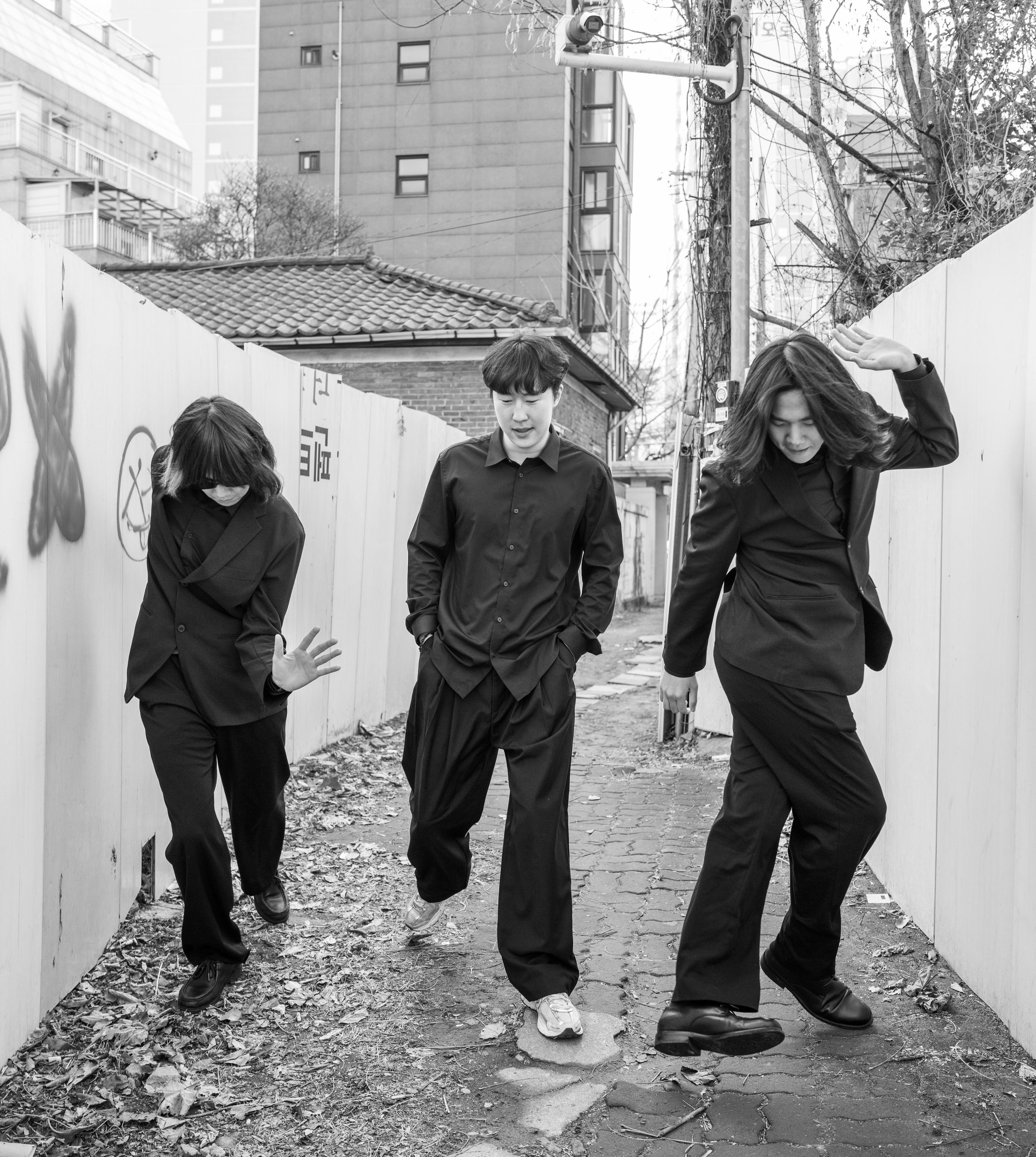
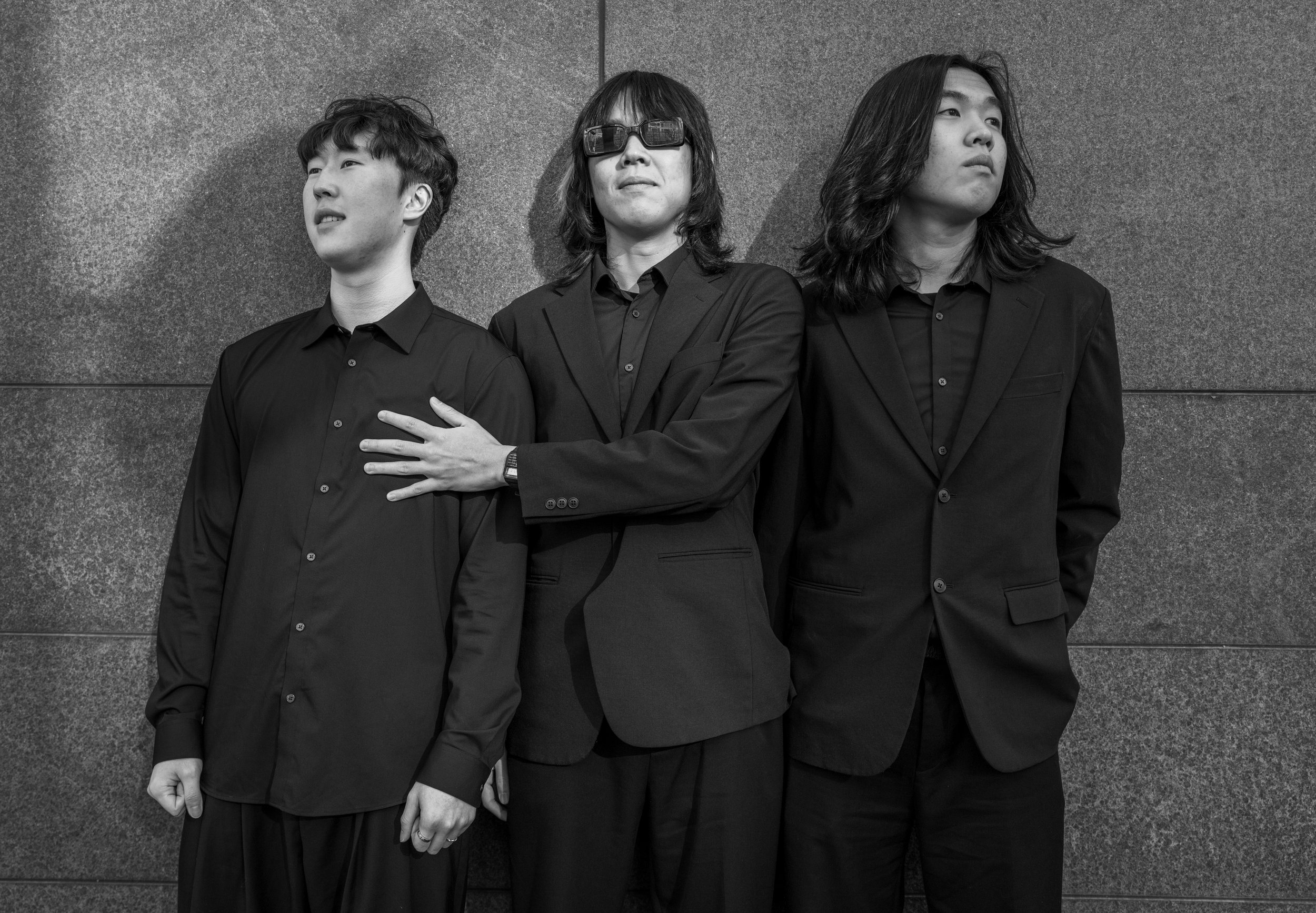
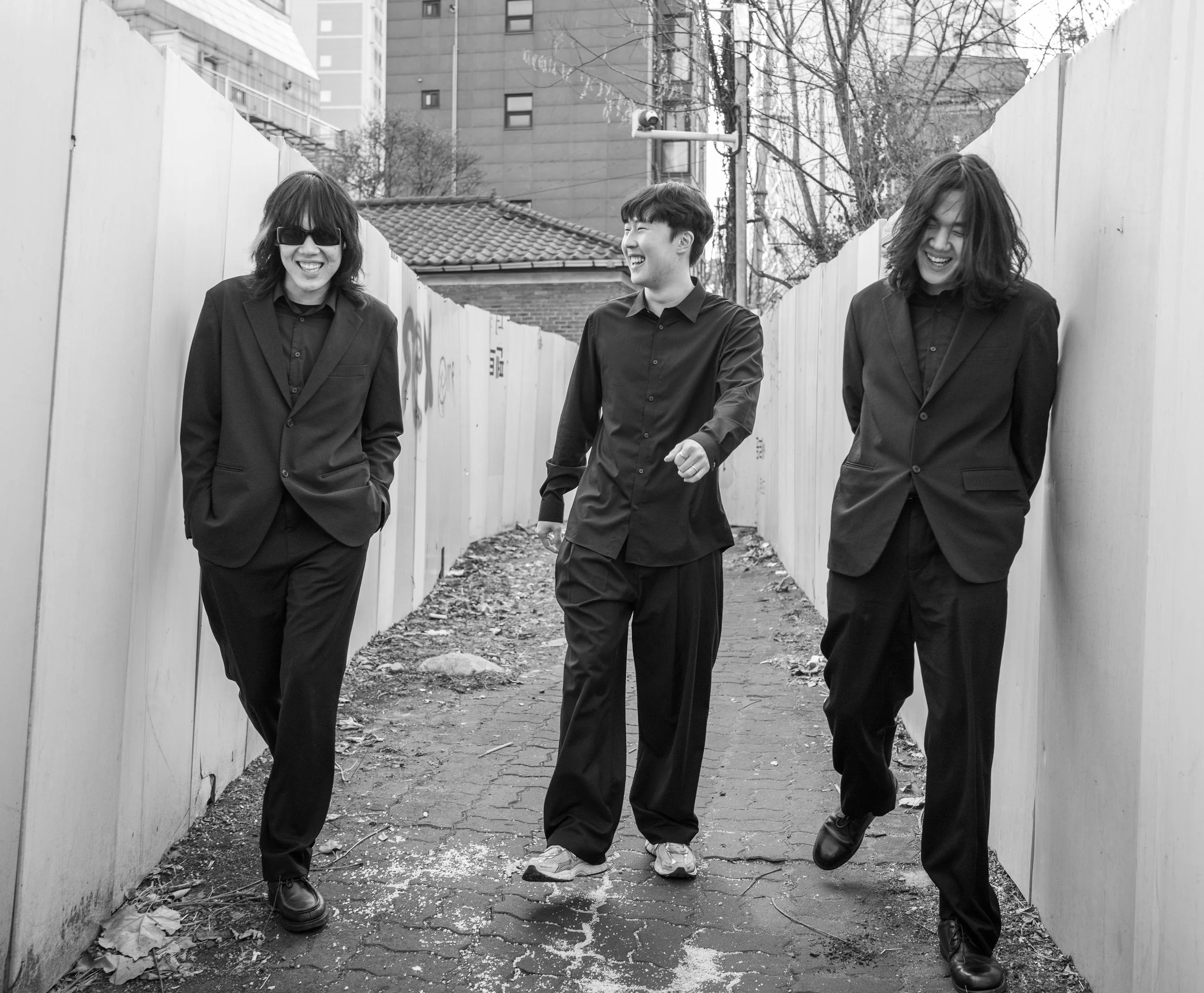
Oysters are made up of highly individual twins, Jeonggyeol and Jeonggeum, and drummer Ryu Taeyoung, who often plays a quiet mediator both behind the kit and off it.
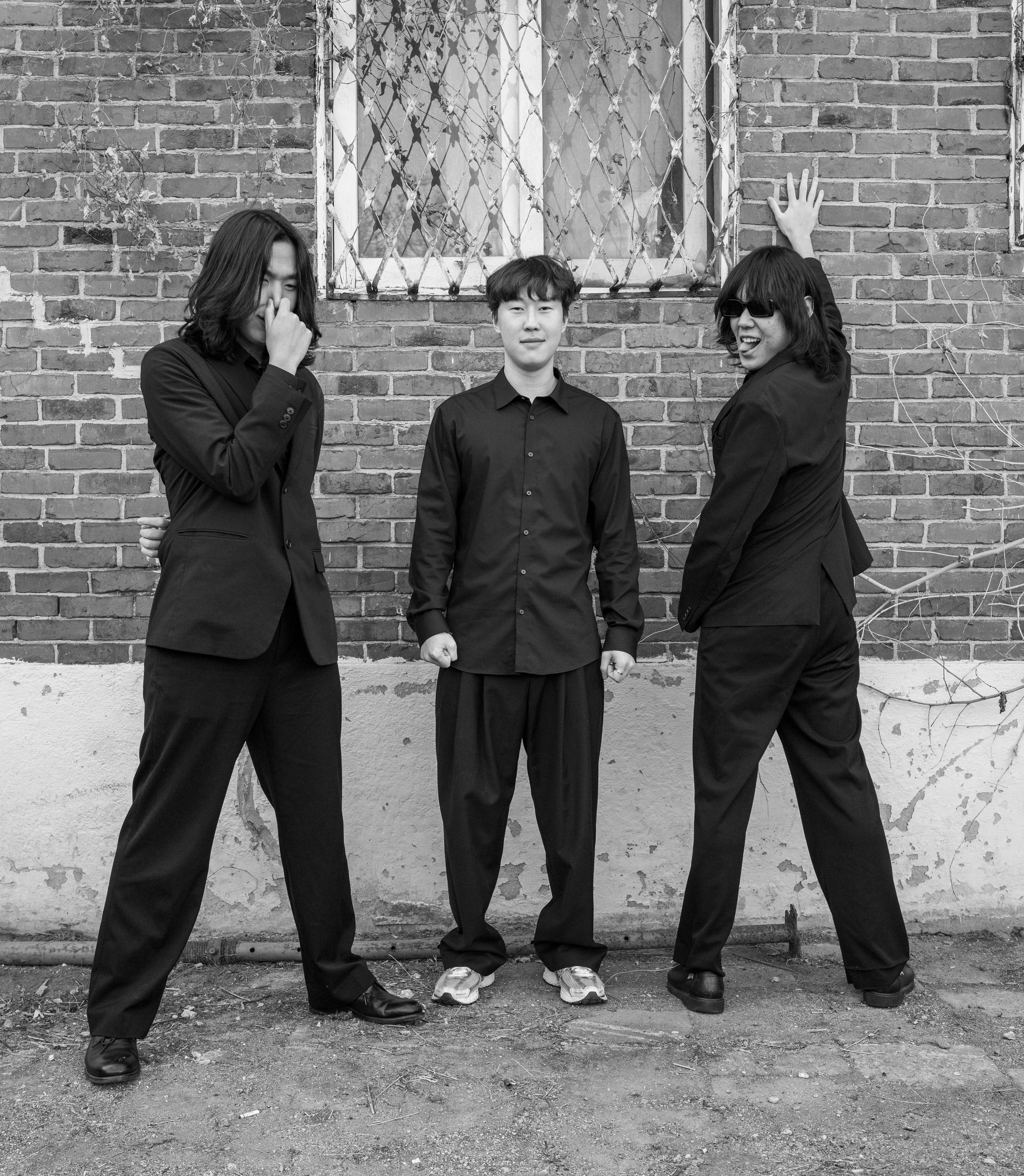
To understand Oysters, you have to go back to a memory Jeonggeum has from his school days: he wanted to join the school band club, but there were already too many members. "So instead, I started a band with a friend," he says. The name of that first project was almost crude in its simplicity — 'Rock Band.' It didn't take long before they needed a change, though. One day, Jeonggeum threw a spiky sea urchin-shaped ball at his friend, went home, started searching, and ended up with the English word 'oyster'.
There was already a band in Korea called Oyster, and the overlap could easily have become a hassle. But Jeonggeum insists the name was not chosen with any great seriousness. "Honestly, it wasn't like we named ourselves thinking, 'Right, we're going to do music properly,'" he says. It was more like a typical school band. Later, Oyster changed its name to 9001, though have since returned to their original name. Oysters simply carried on.
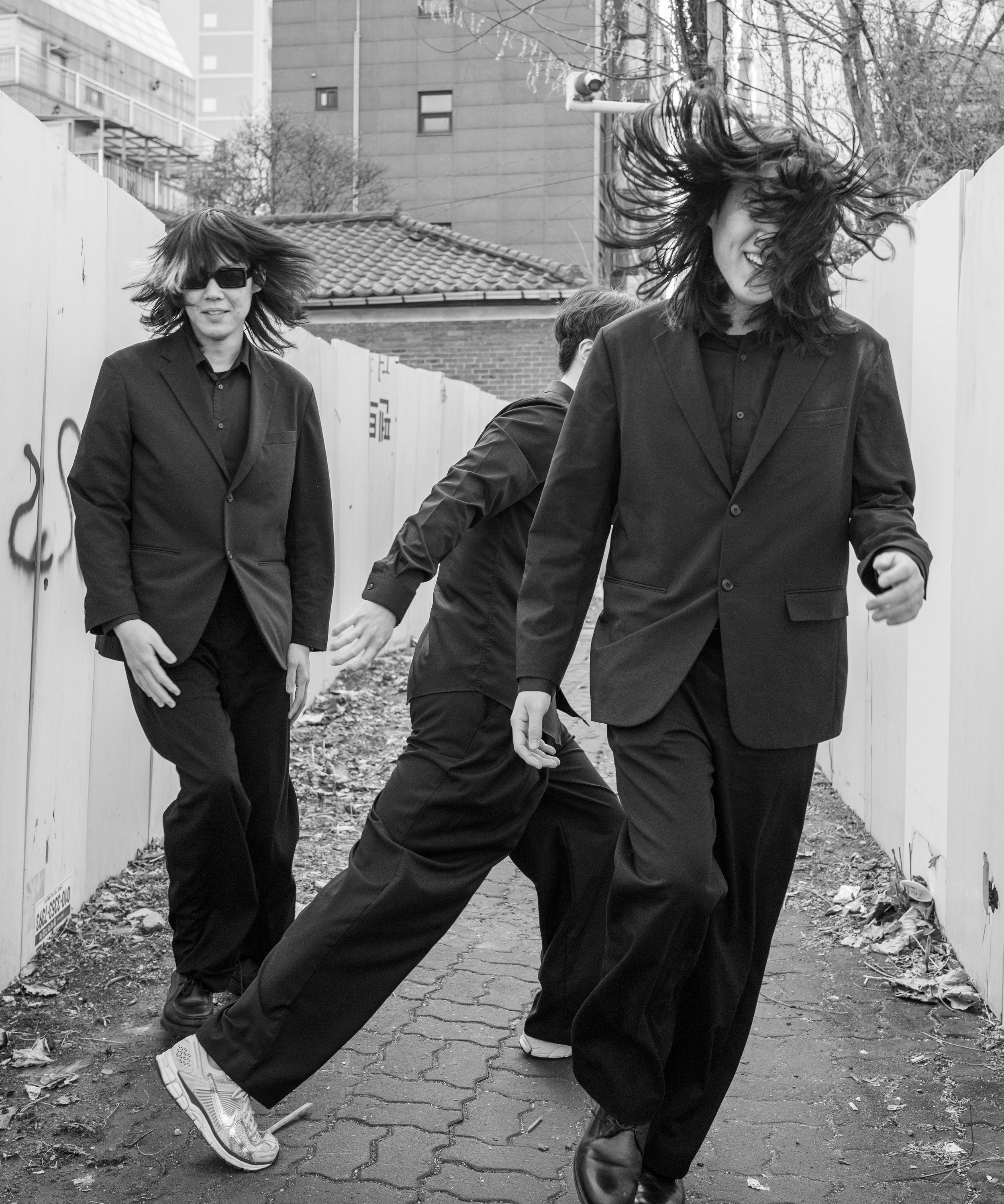
If the band name is the origin story, then "Be with history" is the strategy. Jeonggyeol talks about studying how social algorithms work, how repetitive lines stick in short videos. He drew inspiration from Oasis' live shows — the way they hammer the mantra of “This is history" until it feels like a manifestation. Oysters built their own version, and the phrase bounced back through the internet in different forms until it became their signature. It can be read as an exaggeration. It can also be read as a prophecy.
Even the twins' identities have become part of the band's language. The easiest way to tell them apart is by their sunglasses: Jeonggyeol first wore them in an early music video, which is how he became known as the 'sunglasses character'. Jeonggeum tried to wear them in the next video, but was stopped. Jeonggyeol has a fringe; Jeonggeum does not. They are always trying to invent new ways to tell the difference.
Within the group, the roles are less romantic and more practical. Jeonggyeol calls himself the manager: he orders equipment, collects money, responds to messages — or did, until he stopped using Instagram entirely — and handled most of their posts. Jeonggeum describes himself with something closer to a job title: "I'm basically the producer and also the vision." Then he points to Taeyoung: because the twins rarely agree on anything and neither likes losing, Taeyoung ends up mediating. The casting vote. Taeyoung accepts this without complaint.
Musically, they are just as specific. Jeonggyeol calls Oysters garage rock: noisy in a decent way, with a British sensibility. But he draws a clear line around the punk label: "We're not that close to punk." Jeonggeum offers a slight adjustment — “maybe not punk as a sound, but the attitude definitely loves in Oysters.”
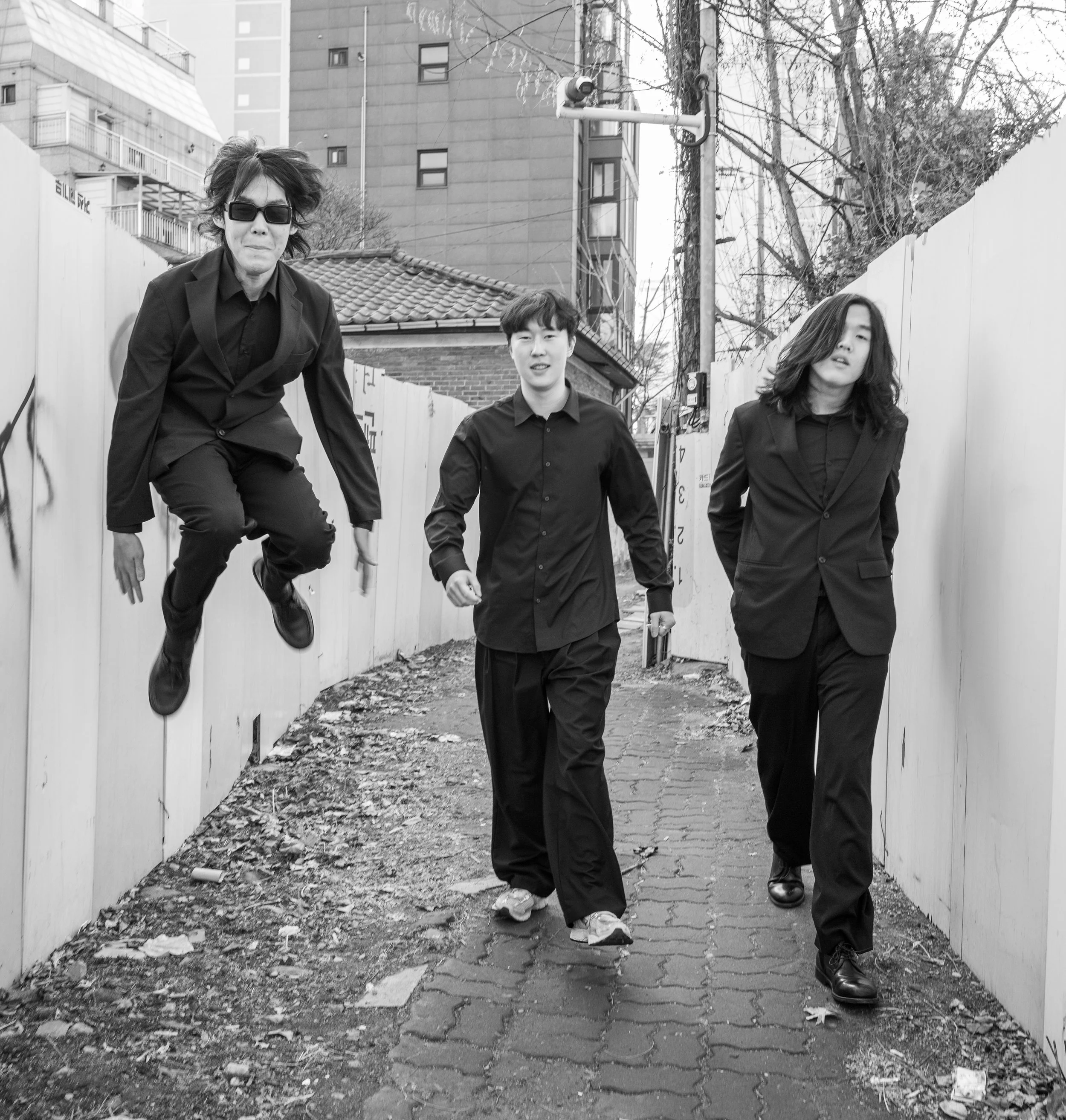
Jeonggeum says DooRooDooRoo first made contact at the end of 2024 about making an album. The band was excited, and then nothing happened for several months. They assumed it had fallen through until the CEO got in touch again. The reason was almost absurdly simple: both parties had been waiting, each assuming the other would send the first message.
Their debut album Monkey Business carries the same sense of chaos, nowhere more so than in the cover art. They tossed around ideas for a long time — illustrations, various concepts — but nothing clicked. Then they came across a photo of Kanye West on a roller coaster, and the idea landed immediately. A proper shoot would mean paying a photographer, but roller coaster photos are taken automatically. So they ordered monkey masks, went to Seoul Land, and were lucky to find the park unusually empty that day. They took both a daytime and a nighttime version: arms outstretched in one, quieter and more eerie in the other.
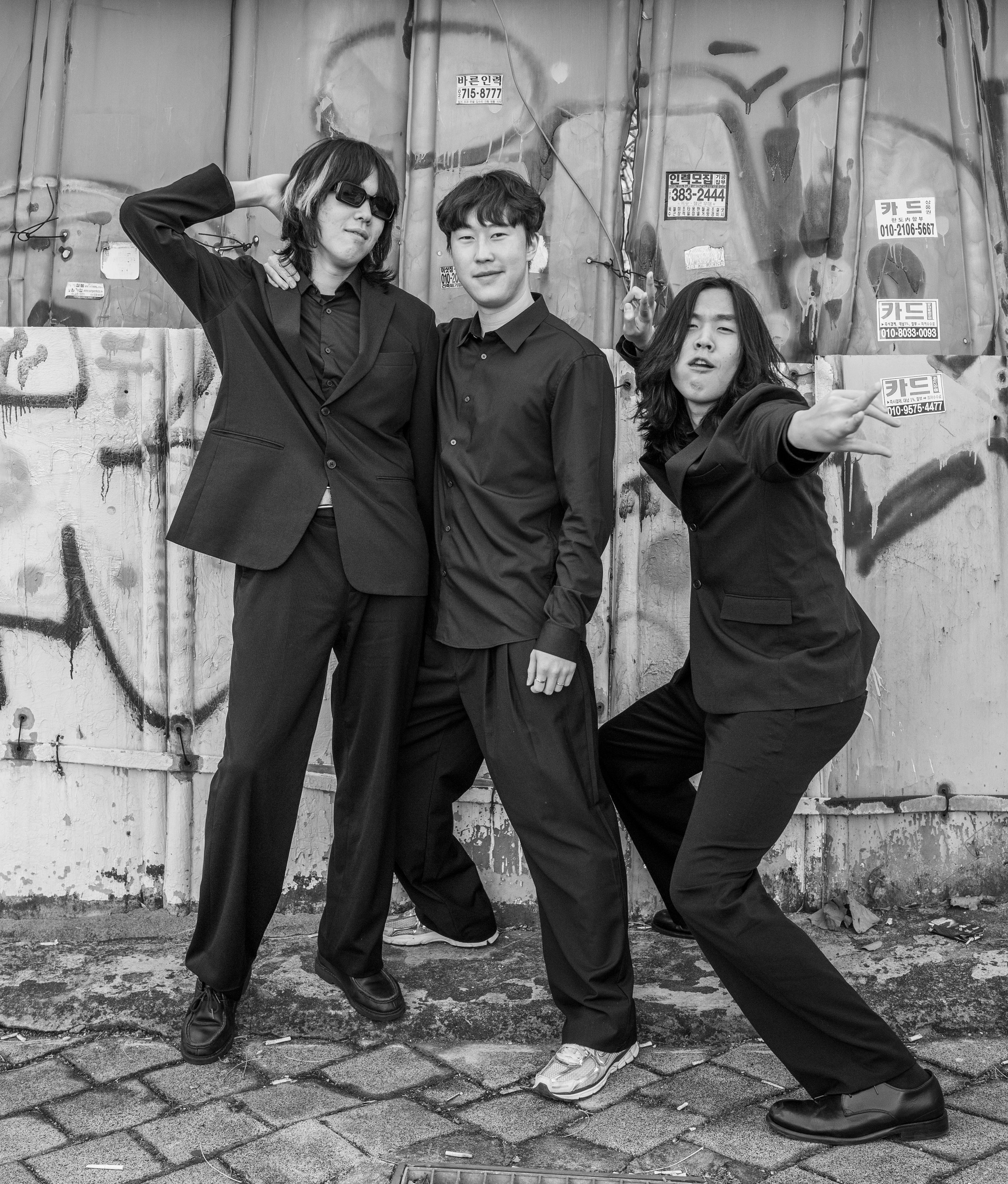
The night version won the internal vote, but Jeonggyeol couldn't stand the mood — too unsettling, not cheerful enough. He held his position, and eventually the CEO conceded that the night version did feel "a little scary." The band noted that if a special edition is released, they plan to use it.
When asked about their favourite tracks, you get a live demonstration of how the band works. Jeonggyeol chooses WEEK, though he still regrets setting the guitar drive too low in the recording. Jeonggeum chooses Fade Away, but Jeonggyeol immediately pushes back: “I hate playing it, hate the song, and I don’t want it on the album at all.” A surprising reaction considering that he wrote it. "I said I would never include it. We have argued about this.” It made it in regardless. Jeonggeum says it was the right call. Taeyoung picks SGT. SALT, the one he keeps returning to lately.
If there is one song that has drawn the most attention from listeners, it is Those Were the Days, so I asked them what "the good old days" actually means to them. Jeonggeum talks about a school trip to Jeju in the 9th grade as an especially vivid memory. Same for Jeonggyeol, who reminisces on middle school. Neither of them went to high school, which is part of why those years keep coming back to them. Jeonggyeol adds a detail that reframes the track entirely: the song was written by their father, and they asked him to give it to them.
Taeyoung's answer goes in the opposite direction. “I remember childhood as a long stretch of following instructions, studying, and practising hard to get into university, but I feel good now”
Growing up take an interesting role in their lyrics, something which manifested itself at their year-end show at Channel 1969. The band became of legal drinking age at midnight on December 31st, and they drank on the spot. Their transition to adulthood became an instant anecdote. Jeonggyeol discovered that his booze tolerance is "really low" — it was the first time he had felt properly drunk, and his instinct was to go home before he caused any trouble. Still, the night remained special: Galaxy Express bought them drinks, and at one point played Jeonggyeol's bass. As big fans of the band, this felt like a milestone. "When I saw them playing my bass, I was really moved."
When asked about concerts that have made an impression, they respond as though placing memories on a timeline. Jeonggeum cannot forget the first show at Club FF: they had spread the word through short clips, the venue was packed, and it was his first real club concert. "It was a Thursday, but everyone came — even old friends from long ago," he says.
Then he brings up the other kind of memory: a Tuesday gig with barely anyone there, a flat reaction, the atmosphere swallowing them whole. The details are painfully specific — an effects pedal that fell out, the bass absurdly loud, the sound a mess. Taeyoung points to Wonderlivet, his first festival, for the scale and the crowd. Jeonggyeol remembers the Japcho Show in December and the strange excitement of Zandari evenings: jumping between venues, constantly running into people you know.
The shot clips mentioned are what brought Oysters to a lot of people’s attention, but the band are increasingly wary of becoming a 'marketing band.' “I want people to forget the viral moment — not out of embarrassment, but because I don't want the music pushed into the background.” He wants Oysters to be seen first and foremost as an indie band: people who write, rehearse, and play concerts constantly. Taeyoung says he understands the frustration; when people talk to him, he often hears "you're good at marketing" or "that's what matters now," and not enough about the songs.
Jeonggeum says they even filmed the album recording process for short-form content, but kept asking themselves whether it was really the right thing to do — and in the end, they chose not to post it.
As for the future, Jeonggeum talks about more singles and another EP; “there is still so much to build,” he says, “and so much room for improvement”. Jeonggyeol wants to apply for Fuji Rock Rookie in 2026. Taeyoung talks about mindset: the more festivals and shows they play, the more important it becomes not to lose sight of where they started.
And when the conversation shifts to things they want to try, Oysters retreat to their favourite territory — the romantic fantasy that still sounds like a plan. Jeonggyeol wants a venue that isn't a venue: a scrapyard, a campaign car, somewhere that has no business hosting a gig. Jeonggeum talks about a legendary farewell concert — not because they are breaking up, but because he loves the idea of becoming a truly great band and ending it in the most glorious way possible. Taeyoung's dream is smaller and more peculiar: he has seen videos of drummers spinning 360 degrees mid-song, and he would like to try it once, purely for the fun.
"Be with history" might have started as a line designed for an algorithm. Now it reads more like a self-issued instruction: don't underestimate how far this can go, and don't waste the moment while it's happening. Oysters' history is moving slowly — but it's moving with intent. That's exactly why it feels worth watching.
For more information on Oysters, follow them here.