
Finding Truth in the Personal: Hiperson's Journey Through Sound and Self
Written by Shin Hyunjoon (@hyunjoon.s)
Hiperson is a five-member rock band based in Chengdu. Chengdu is the capital of Sichuan Province in southwestern China. It's famous for Sichuan cuisine, known for its spiciness. To those familiar with Chinese history, Chengdu is remembered as the capital of Shu in the Romance of the Three Kingdoms. In modern China, Chengdu is known for "city branding" through music—indie music being one component. The story of Chengdu as a local music scene is not a short one.
Hiperson debuted 10 years ago. When they released their first full-length album, No Need for Another History (2015) and began appearing at festivals, their unstable yet strangely balanced sound was captivating. Chen Sijiang’s voice and the guitar sounds of Ji Yinan and Liu Zetong are hard to forget once heard. They followed up with the EPs She Came Back from the Square (2018) and Four Seasons (2019), during which time two members reportedly studied in the UK. At the end of 2019, they released a joint single, Day and Night with the Xi’an-based band Fazi.
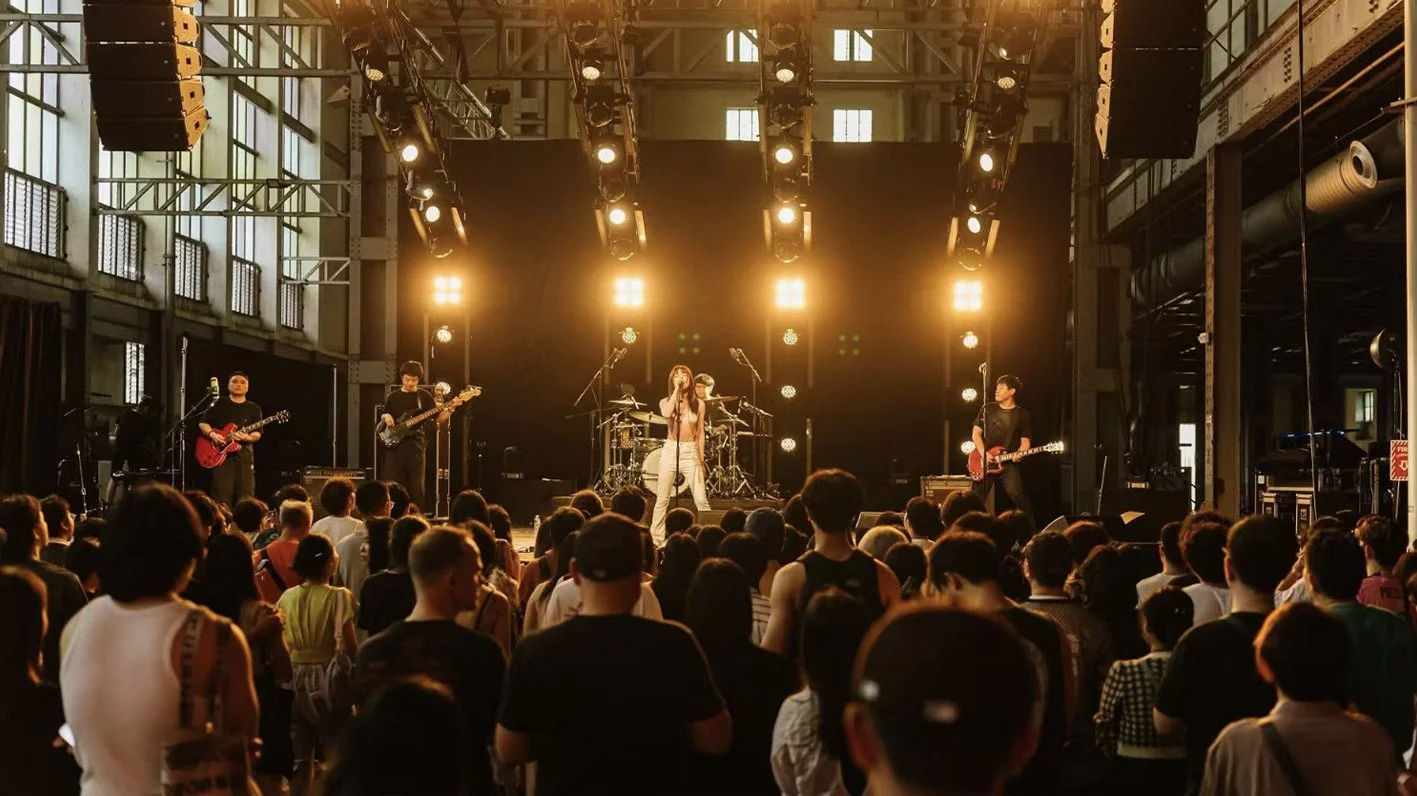
Then came the COVID-19 pandemic. In the summer of 2020, during the pandemic, they released their second full-length album, Bildungsroman. It was recorded at the legendary Hansa Tonstudio in Berlin, prior to the pandemic. This album was officially licensed and released in Japan in the winter of 2021. Then the thought occurred to them, “If we’re recognised in Japan, we might get to perform in Korea too.”
It took a bit longer than expected. Even during their 2024 Asia tour, they were unable to come to Korea due to various circumstances. Perhaps it was because their sound didn’t quite align with what Koreans usually associate with “Asian indie music” (you’ll see what this means in the interview). Now that they’re finally coming, it’s time to say “Hi, person!” and meet each other - individual to individual, human to human. Just as their songs say: “We don’t need some grand history separate from the personal histories we experience.”
Hiperson's approach to songwriting deliberately sidesteps grand narratives in favour of intimate observation. Their track "Xindu People" opens with the haunting question "Did you forget, or are you afraid to recall?" and weaves together images of nation, square, flag, and young people lost in garden conversations. When asked about the song's connection to the post-global financial crisis, vocalist Chen Sijiang reflects: "That song was written based on personal life, observations, and thoughts in Xindu. As for the economic downturn, I didn't really feel it until later. It wasn't until sometime in the 2010s that I started to hear about bankruptcies or economic hardship."
This focus on the personal over the political extends to how Sijiang approaches concepts often attached to youth culture. "Probably, I never truly understood concepts like rebellion and coolness during my teenage years," she admits. "Once I asked an interviewer, 'What do you mean by youth culture?' I mean, I understand teenagers might have different values from older generations, and they might take actions that require courage to rebel, but I can't sing about it without a specific context or an embodied trigger. So I sing about life in a 'personal' way."
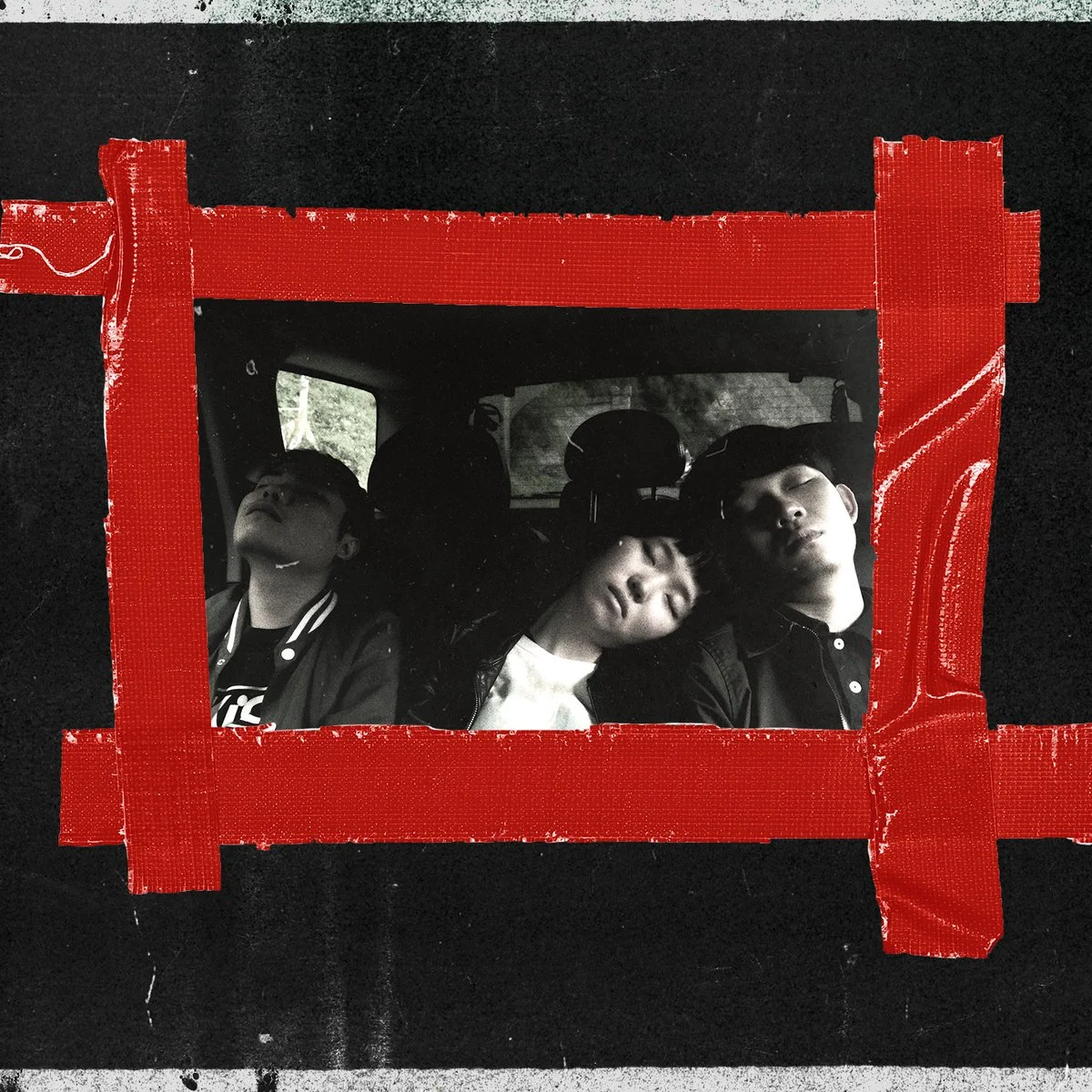
Hiperson's lyrics often feel like fragmented poems—suggestive rather than explanatory, presenting images that break off or disappear before resolution. When asked about her writing process, Sijiang reveals a philosophy of restraint: "Interestingly, I have never found any of my lyrics 'too much.' Maybe that's because I tend to write briefly. I read what I write, and if I hear a vague voice in my mind that wants to speak as I stop—when the lyrics stop—then I notice that I need more."
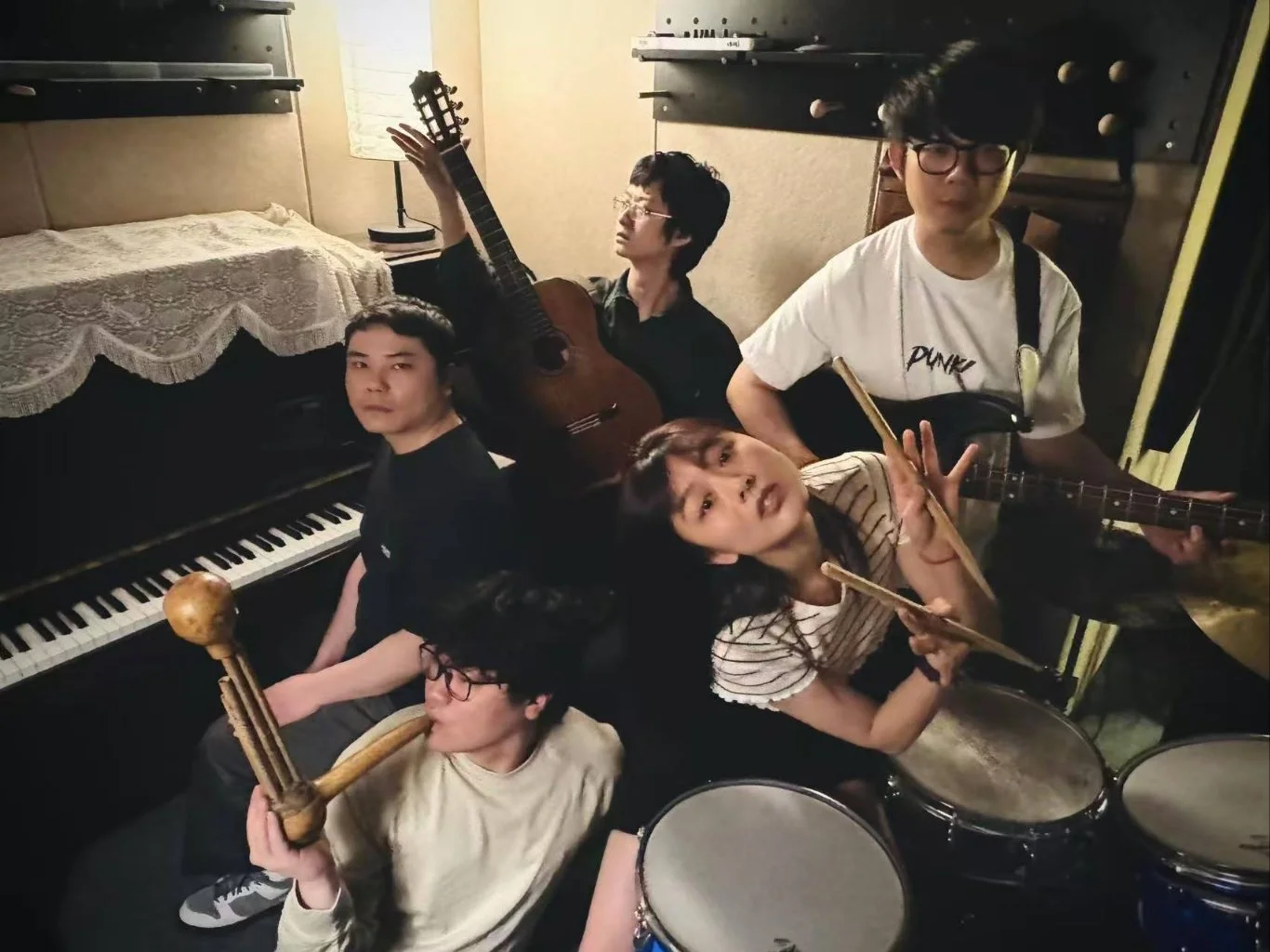
This approach extends to the band's collaborative process. "We spend time together in the band room and just jam. More often, Sijiang prepares her lyrics first. The process hasn't changed much. But these days, each member spends more time on their own motifs and segments before we gather and jam."
Despite frequent commentary about Sijiang's distinctive vocal style—described as "soft and delicate, yet firm and sharp"—the band resists being categorised through a gendered lens. "Personally, I've never really thought about this," Sijiang explains. "I feel like my band is backing me up just like they would back up any singer, and they are always my first listeners. They've never mentioned gender, actually. I love the way we make music together, just as human beings. But since you mentioned it, I suspect we're lucky and did something right. As for feminists, we support them. But I'm not familiar with the term 'female-fronted,' so I don't really know about that."
The band's trajectory from their 2014 Abilu Newcomer Award through their pandemic-era second album reflects both artistic growth and practical concerns. "I think Bildungroman (the second album) was a breakthrough because we were able to support ourselves economically after that album and tour," Sijiang notes, marking a crucial transition from passion project to sustainable career.
Their touring experiences across Chinese cities have complicated rather than clarified their sense of local identity. "Cities are strange places because they are huge and similar when you travel around China," Sijiang observes. "I have this very weird local identity as a Chengdu resident. I'm very proud and happy to know about good events, restaurants, parks, and corners around the city, but I don't feel like I understand the people enough. There are just a lot of people and a lot of different lives. It's like I know too little to own my local identity."
The EP "She Returned from the Square" drew inspiration from conversations with taxi drivers, delivery workers, and security guards—an approach that reflects the band's commitment to finding meaning in everyday encounters. When presented with the interpretation that their lyrics sometimes sound like "You're not okay. We aren't either. Let's stop pretending we are," Sijiang responds with characteristic simplicity: "I smiled when I saw your comment. I don't mind that. I am an ordinary person who writes songs, and I hope that answers your question."
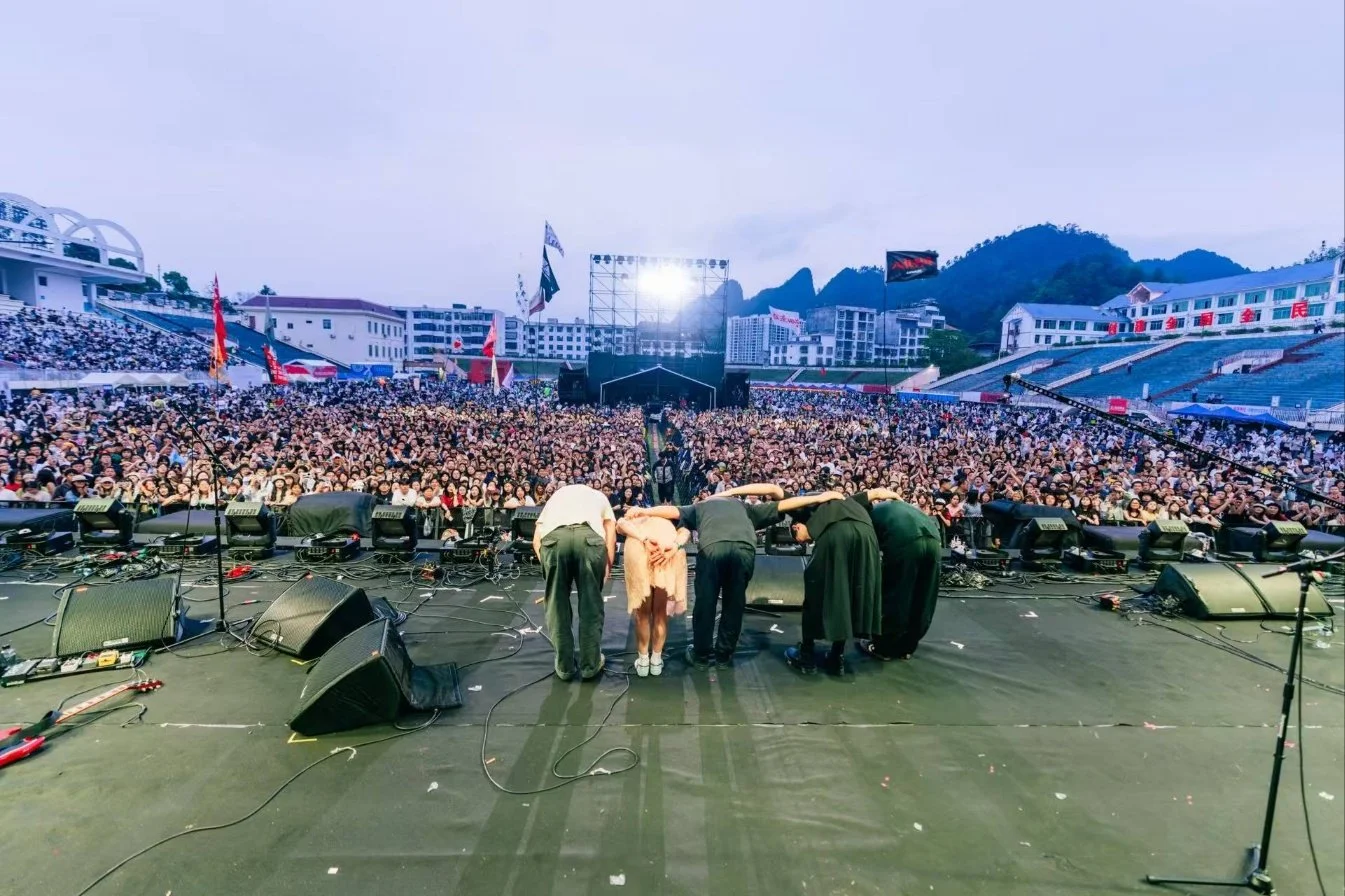
After touring Europe in 2016, the pandemic delayed Hiperson's Asian tour until 2024. The experience revealed unexpected connections across cultural boundaries. "To us, Asian audiences are surprisingly similar," Sijiang notes. "We love the dynamic attitude in Malaysia."
This international perspective doesn't diminish their commitment to authenticity. When asked about their raw, fragmented sound in contrast to the refined post-city pop dominating festivals, and whether it expresses life in "a society that is fast, surveilled, and soulless," Sijiang deflects: "About the first question, not much, but an interesting question. About the second, the next album is really, really good."
Each Hiperson song operates as its own universe of meaning. Their opening track "Paradise" uses math rock's disorienting structure to express "a vanishing childhood life and an opaque, coming-true adulthood dream." The devastating "We, These Translucent Models" refers to models as "closer to 'ideals and forms' than 'models on display.' Still fragile."
Their album title "No Need for Another History" comes from the song "History," which argues for personal over collective narrative. "Strangely, I believe there is one true personal history for each of us, but almost no one can grasp one true grand history of societies," Sijiang explains.
The obsessive "Strawberry" remains deliberately ambiguous. "For me, 'Strawberry' is a pure image. But people interpret it differently—they project different objects onto that word." Meanwhile, "Summer Air" juxtaposes domestic and cosmic imagery in what Sijiang acknowledges as apocalyptic: "I did feel something apocalyptic when I wrote 'Lightning strikes lightning.'"
Even traditional symbols get recontextualized in Hiperson's work. "Spring Breeze" subverts seasonal metaphors of renewal: "I've always seen the spring breeze as separate from human feeling. This song is about a broken love, but it insists on reaching a wider view of life—with passion and compassion."
Their use of historical imagery in "Our Ballad" stems from "curiosity—an impulse to connect historical symbols with the present" rather than nostalgia. When asked about "Daily March" in relation to Chinese rock's trajectory from Cui Jian's "Rock 'n' Roll on the New Long March" in 1989, Sijiang offers characteristic honesty: "Never thought about this and no clever answer at all😊. But I guess it could be a continuous modernisation march. I am pro-modernisation, but it is always ambivalent."
Hiperson welcomes the ambiguity that allows for multiple interpretations of their work. "Yes, we've been surprised several times, and we didn't try to correct any of those. We just explained when someone asked us specific questions," Sijiang says about unexpected readings of their songs.
This openness to misreading reflects a deeper philosophy about art's function. Rather than delivering messages, Hiperson creates spaces for listeners to project their own experiences and meanings. In a cultural moment often dominated by explicit political statements and clear positioning, their commitment to the personal, the ambiguous, and the genuinely felt offers a different kind of resistance—one that trusts audiences to find their own truths in the spaces between words and sounds.
Through their refusal to be easily categorised and their commitment to authentic expression over commercial appeal, Hiperson continues to carve out a unique space in the contemporary music landscape, proving that sometimes the most powerful statements come not from shouting, but from the quiet insistence on remaining true to one's own experience.