
The Music That Made Me - DANPYUNSUN
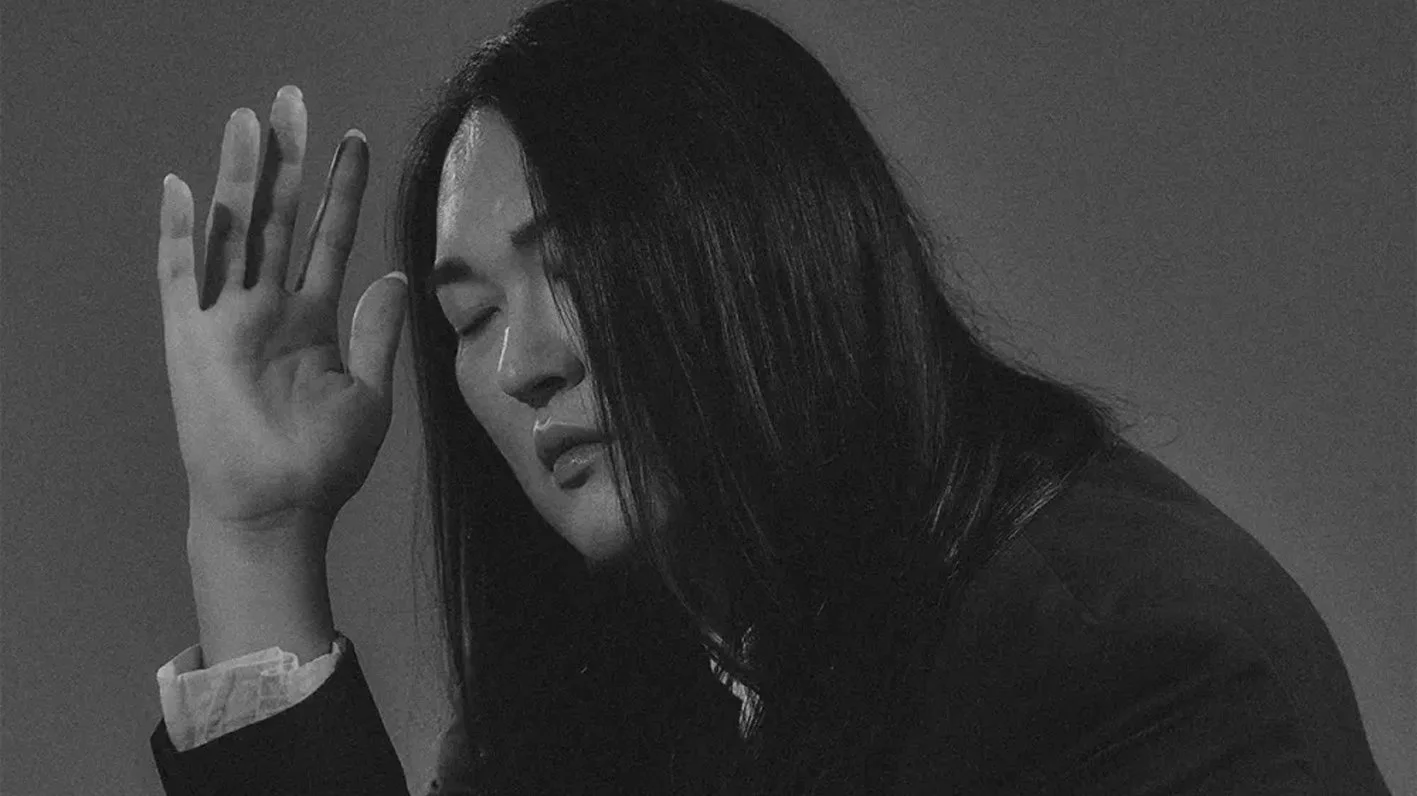
As part of our Music That Made Me series, we talk to someone from the Korean music scene about the songs that soundtracked their lives. For today’s instalment, we talked to DANPYUNSUN.
Known for his rich songwriting, falsetto singing style, and flamboyant stage presence, Danpyunsun has long been one of the most celebrated voices in Korea’s independent music scene. Over the last few years, with the help of his backing band The Moments Ensemble, Danpyunsun’s music has been heard by bigger and bigger audiences.
Here, he shares some of the songs that he’s loved in his life.
First album I ever bought / 내가 산 첫 앨범
음악을 본격적으로 듣기 시작한 건 90년대 후반, 내가 10대가 되던 무렵이었다. 그전까지 음악은 하나의 커다란 덩어리처럼만 존재했다. 하지만 사춘기에 들어서면서 개별적인 곡들을 구분해 듣고, 나만의 취향과 자의식을 조금씩 형성해가기 시작했다.
그 시절 나라는 개인에게 가장 큰 문화적 충격을 준 사건은 김대중 정부 시절 이루어진 ‘일본 대중문화 개방’이었다. 그 이전까지 한국에서 일본 대중문화를 합법적으로 접하는 건 사실상 불가능에 가까웠다. 그런데 내가 막 10대에 들어서던 시점과 개방 시기가 맞물리면서, 애니메이션·게임·서브컬처 같은 것들을 운 좋게 이른 시기부터 경험할 수 있었다.
하지만 ‘구매’라는 기준으로 말한다면, 내가 산 첫 앨범은 한국의 90년대 댄스그룹 UP의 2집 [Second Birth]였다. <뿌요뿌요>와 <바다>가 수록된 앨범이다. 흥미롭게도 <뿌요뿌요>라는 제목은 일본 게임회사 컴파일이 만든 동명의 게임에서 따온 이름이기도 하다. 당시 나는 부모님을 졸라 이 CD를 손에 넣었고, 매일같이 반복해 들었다.
<뿌요뿌요>라는 곡은 지금 들어도 기묘하다. 댄스 뮤직의 여러 장르가 아무 근거 없이 뒤섞여 있고, 사운드와 전개는 천박할 만큼 즉물적이다. 그러나 나는 그 무질서와 천박함 속에서 오히려 어떤 안정감을 느꼈다.
I began listening to music in earnest in the late 1990s, around the time I entered my teens. Until then, music had existed as one vast, indistinguishable mass. But as I entered adolescence, I started to distinguish individual songs, gradually forming my own tastes and sense of self.
The event that delivered the greatest cultural shock to me as an individual during that period was the “opening up of Japanese popular culture” under the Kim Daejung administration. Prior to that, accessing Japanese pop culture legally in Korea had been practically impossible. Yet, as I entered my teens, this coincided with the opening period, allowing me the good fortune to experience things like anime, games, and subculture from an early age.
However, if we're talking about “purchasing”, the first album I bought was Second Birth, the second album by the Korean 90s dance group UP. It's the album featuring Puyo Puyo and Bada. Interestingly, the title Puyo Puyo itself is taken from the Japanese game of the same name created by Compile. Back then, I pestered my parents until I got my hands on this CD and listened to it on repeat every single day.
Even now, that track sounds peculiar. Various dance music genres are mixed together without any apparent rationale, and the sound and progression are almost crassly literal. Yet, within that disorder and crassness, I actually felt a certain sense of stability.
The first gig I went to / 가 처음 갔던 콘서트
중학생이 되자마자, 아버지가 록 싱어 서문탁의 콘서트에 데려갔다.
As soon as I started secondary school, my father took me to a concert by rock singer Seo Moontak.
A song that reminds me of my childhood / 어린 시절을 떠올리게 하는 노래
우리 가족은 집과 차를 가지고 있었다. 서울의 중산층과 고소득층 사이 어딘가쯤 되는 생활방식이었다. 아버지는 하드록과 메탈을 좋아했고, 어머니는 클래식과 샹송을 들었다. 하지만 서로의 음악에는 관심이 없었다. 그래서 부모가 함께 있는 상황—어딘가로 차를 타고 이동하는 시간 같은 것—에서는 주로 라디오에서 흘러나오는 한국의 가요를 들었다. ‘라디오-프렌들리’하다고 말하는 이유는, 그것이 댄스 음악이 아니라 감상적인 노래들이었기 때문이다. 그중에서도 가장 자주 들었던 건 포크 밴드 동물원의 음악이었다.
동물원의 노래는 단순히 내 어린 시절의 기억을 소환하는 데서 그치지 않는다. 그 음악 자체가 80~90년대, 도시화가 빠르게 진행되던 한국 사회를 직접적으로 담아내고 있다. <시청 앞 지하철 역에서> 같은 곡은 2호선 시청역을 배경으로 한다. 2호선이 개통해 시청역이 환승역이 된 건 1984년이다. 또 다른 곡 <혜화동>의 가사에는 “덜컹거리는 전철을 타고 찾아가는 그 길”이라는 구절이 있는데, 혜화역이 개통된 건 1985년, 곡이 발표된 건 1988년이다. 그러니까 우리 가족이 동물원의 노래를 들으며 공감했던 건 우연이라기보다 당대 도시인의 삶과 맞닿아 있었던 것이다.
부모는 1960년에 태어났고, 나는 1986년에 태어났다. 그들이 <시청 앞 지하철 역에서>나 <혜화동> 같은 노래를 들을 때 느꼈던 감각은 무엇이었을까. 나는 군부독재를 경험하지 않았다.
Our family owned a house and a car. It was a lifestyle somewhere between the middle class and the upper class in Seoul. My father liked hard rock and metal, while my Mother listened to classical and chanson. But they took no interest in each other's music. So in situations where both parents were present—like the time spent travelling somewhere by car—we mainly listened to radio-friendly Korean pop songs. The reason I describe it as “radio-friendly” is that these were sentimental songs, not dance music. Among them, the music we heard most frequently was by the folk band Zoo.
Zoo's songs do more than simply evoke memories of my childhood. The music itself directly captures Korean society during the 1980s and 1990s, a period of rapid urbanisation. A song like At the City Hall Subway Station is set against the backdrop of City Hall Station on Line 2. Line 2 opened in 1984, making City Hall Station a transfer hub. Another song, Hyehwa-dong, contains the line ‘that road I travel on the rattling train’. Hyehwa Station opened in 1985, and the song was released in 1988. So, our family’s shared resonance with Zoo's songs was less coincidence than a direct connection to the life of contemporary city dwellers.
My parents were born in 1960, and I was born in 1986. I wonder what sensations they experienced when listening to songs like At the Subway Station in Front of City Hall or Hyehwa-dong? I did not experience a military dictatorship.
The song that made me want to make music / 음악을 하고 싶게 만든 노래
한국 인디 1세대 밴드들—델리스파이스, 언니네 이발관, 미선이, 코코어—를 좋아했고, 그래서 밴드를 시작했다. 하지만 그 이전부터 전자음악을 만들었다. DDR, 비트매니아 같은 게임을 하다 보니, ‘좋아서’가 아니라 ‘나도 만들 수 있겠다’는 생각이 들었기 때문이다. 단순히 만들고 싶어서 만들었다.
I loved Korea's first-generation indie bands - Delispice, Sister's Barber Shop, Misoni, Cocore - and that's why I started a band. But I'd been making electronic music even before that. Playing games like DDR and Beatmania made me think, not “I like it”, but “I could make this myself”. I simply made it because I wanted to.
A song that makes me cry / 나를 울게 만드는 노래
한국 인디 1세대 밴드들—델리스파이스, 언니네 이발관, 미선이, 코코어—를 좋아했고, 그래서 밴드를 시작했다. 하지만 그 이전부터 전자음악을 만들었다. DDR, 비트매니아 같은 게임을 하다 보니, ‘좋아서’가 아니라 ‘나도 만들 수 있겠다’는 생각이 들었기 때문이다. 단순히 만들고 싶어서 만들었다.
I loved Korea's first-generation indie bands - Delispice, Sister's Barber Shop, Misoni, Cocore - and that's why I started a band. But I'd been making electronic music even before that. Playing games like DDR and Beatmania made me think, not “I like it”, but “I could make this myself”. I simply made it because I wanted to.
One song that you have made that has significant emotional meaning / 자신이 만든 곡 중 감정적으로 중요한 의미가 있는 곡을 하나만 선택하세요
곡이 내게 주는 의미는 늘 바뀐다. 같은 곡도 2005년의 나, 2015년의 나, 2025년의 내가 다르게 느낀다. 그래서 특정하고 싶지 않다.
The meaning a song holds for me is ever-changing. The same piece resonates differently with the me of 2005, the me of 2015, and the me of 2025. That's why I don't wish to pin it down.
The song I want to be played at my funeral / 내 장례식에서 연주되고 싶은 노래
장례식은 무엇일까. 사후세계는 있을까. 나는 없다고 생각한다. 물론 있다고 믿어도 상관없다. 어차피 우리는 알 수 없다. 장례라는 의식은 남겨진 커뮤니티에게는 의미가 있겠지만, 이미 어둠으로 돌아간 나와는 상관없는 일이다.
그럼에도 살아 있는 사람들에게 하고 싶은 말이 있을까. 잘 모르겠다. 다만 서로 조금은 너그러웠으면 한다. 결국 우리 역시 짐승 새끼들에 불과하고, 한 개체가 스스로 이룰 수 있는 것은 거의 없으며, 삶에는 정답 같은 것도 없다. 그 사실을 알아주었으면 한다.
그래서 어떤 노래라고 특정하고 싶지는 않다. 다만 사람들의 풍경이, Steve Reich의 Music for 18 Musicians을 닮아있지 않을까, 그런 생각을 어렴풋이 해보았따.
What is a funeral? Is there an afterlife? I don't think so. Of course, it doesn't matter if you believe there is. We can never know for certain. The ritual of a funeral may hold meaning for the community left behind, but it has nothing to do with me, who has already returned to the darkness.
Even so, is there anything I wish to say to those still living? I'm not sure. Only that I hope we can be a little more forgiving towards one another. Ultimately, we are but mere creatures ourselves; a single individual can accomplish almost nothing alone, and there are no definitive answers in life. I wish they would recognise that fact.
So I don't wish to pinpoint any specific song. I merely vaguely wondered if the landscape of people might resemble Steve Reich's Music for 18 Musicians.