
The Indonesian Invasion: A look at the Indonesian acts breaking ground in Korea’s indie scene
Words by Elizabeth Bolin (@elizabethboolin)
Photos by Dhira Noor (@shotbydhira)
From the “British Invasion” of the 60s to the currently cresting “Korean Wave,” creative exports have long been a remarkably successful tool of soft power. But these movements don’t have to take place on a global scale to be significant. South Korea’s indie music scene is lively and established, with a variety of individuals, groups, and venues keeping it thriving. Helping to expand Korea’s indie ecosystem are a small (but growing) group of international acts. Notably, more than ten acts from Indonesia have performed since 2017, composing a miniature “Indonesian Invasion” over the past decade. Three of these groups met with Debaser to discuss their origins, the pandemic, and performing in Korea.
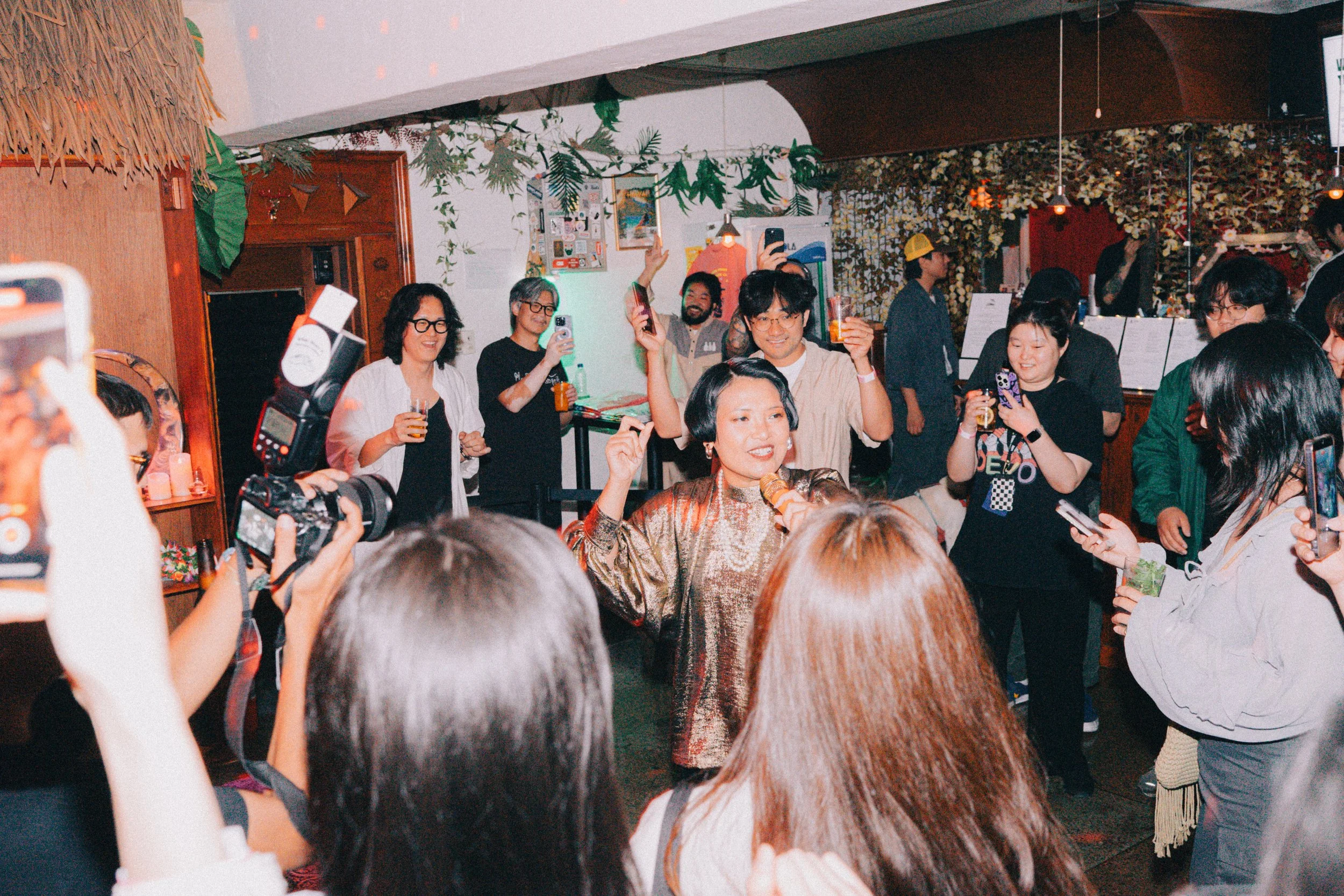
White Shoes and the Couples Company
White Shoes and the Couples Company have been a cornerstone of the Indonesian indie scene since their formation in Jakarta in 2002. The group is a sextet, comprised of Aprilia Apsari (vocals, violin), Yusmario Farabi (vocals, acoustic guitar), Saleh Husein (vocals, electric guitar), Ricky Surya Virgana (cello, bass), Aprimela Prawidyanti (keyboard, viola) and John Navid (drums). The six musicians met as students and are still playing together twenty years later.
Drawing inspiration from 1970s Indonesian movie soundtracks and a variety of genres including disco, jazz and classical music, White Shoes does not shy away from the music tradition they have inherited. The result is an expansive, dreamy and nostalgic sound that has been dubbed “Indonesiana.”
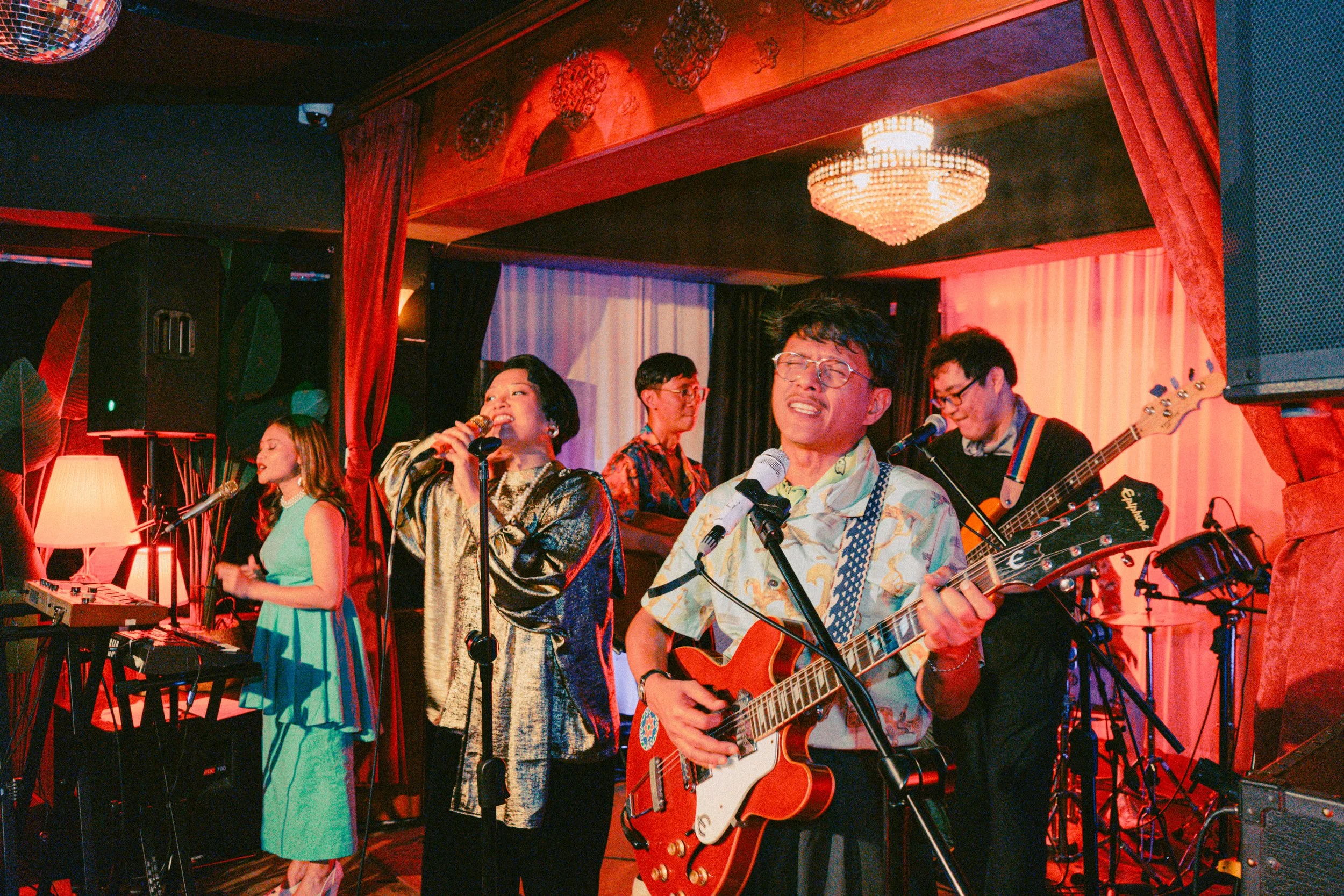
Indonesiana is rooted in honouring the culture and identity of Indonesia. Yet, although they sing primarily in their native Indonesian, the enchanting style is familiar in a way that transcends language. This isn’t surprising, considering how much care the group takes when constructing their albums. “We don’t want to just release an album every year and go on tour,” said Virgana, “I think the moment has to be right.”
The lankiness of the name “White Shoes and the Couples Company” was not by accident: the group modelled it after Janis Joplin’s band “Big Brother and the Holding Company” and have stated that they chose it because they wanted to stand out from bands with more “straightforward” names. The “white shoes” are a nod to a popular trend at the university where they met.
Within the name exists a tension between references to both a timeless artist and a passing trend, but White Shoe’s ageless sound seems to lean towards the former. Their self-titled debut album is considered to be one of the most influential records in Indonesian indie history, something that the group did not expect when they made it. “It’s the same for all college kids,” said Virgana, “We just wanted to make an album for ourselves and our friends and our community.”
In addition to playing shows in Indonesia, White Shoes has also toured across Asia, North America and Europe, including the SXSW festival in 2008. As one of the first Indonesian bands to break into the Western indie scene, they set the stage for other Indonesian artists. “There were many invitations for Indonesian bands,” said Apsari. “Not just music, but also art and culture, especially the contemporary art and indie music scene.”
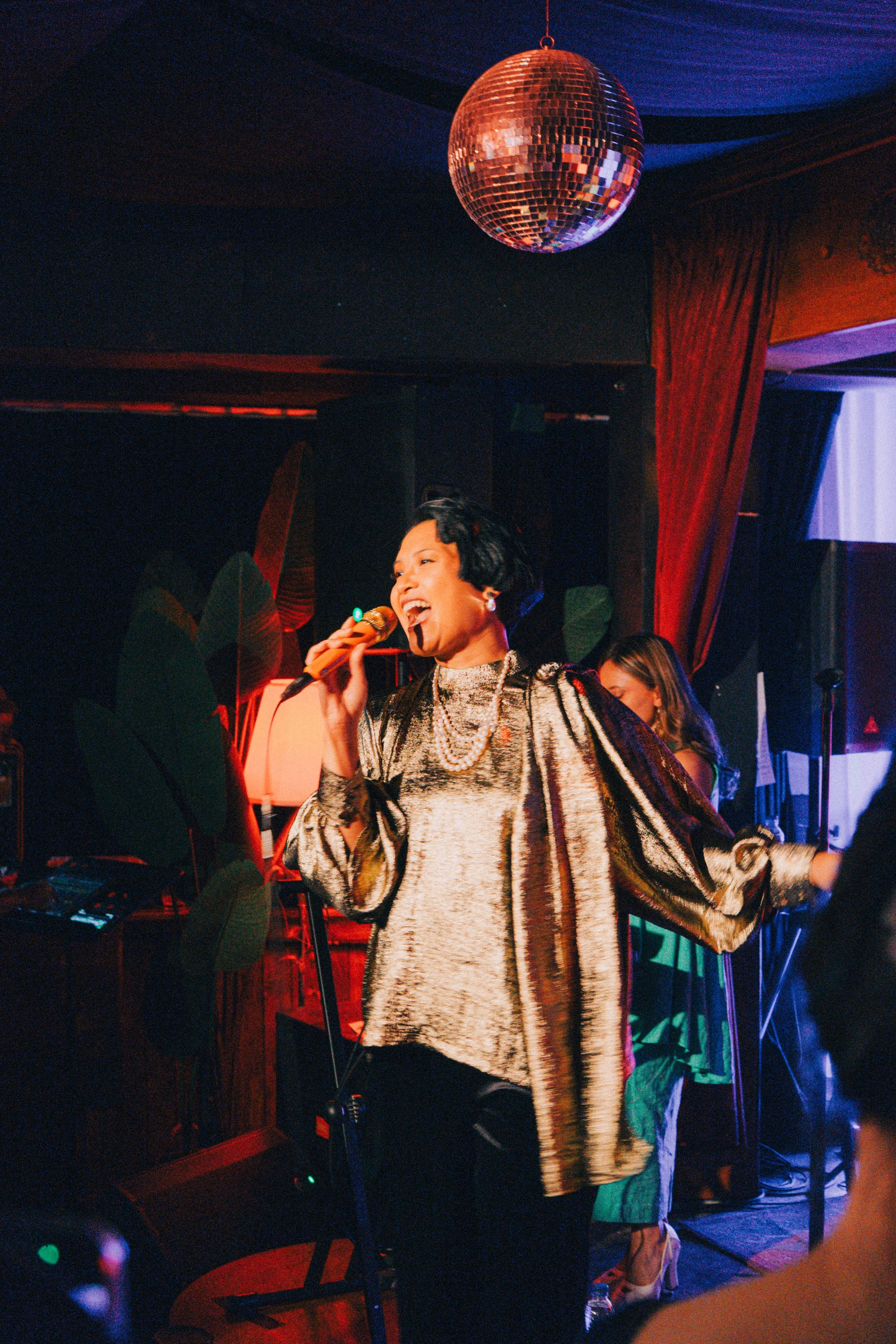
White Shoe’s connections to Korea go back as far as 2007, when they re-released their self-titled album through the Korean label Boss Moon, Beatball Records. But it wasn’t until 2015 that the group learned they had a Korean audience, something they were informed of by False Gemini, who they met while playing a festival in Finland. They finally performed in Seoul for the first time in 2023 and again in 2025 and hope to return soon. “We were so happy to be in Seoul. We met so many cool people, which is the best thing about touring. It’s especially cool to connect with people who come from a different culture and speak a different language,” said Farabi.
White Shoes are veteran musicians who have weathered the dramatic changes to the music industry, particularly post-pandemic. “Not many people know about what was going on before the pandemic; it’s like a lost archive,” said Sari. “After the pandemic, a new era began.”
Even though the group has helped pave the way for the next generation, they are also committed to continuing to grow alongside them. The era is really different, but it’s good,” said Virgana. “We keep learning, and we are still connected.”
Milledenials
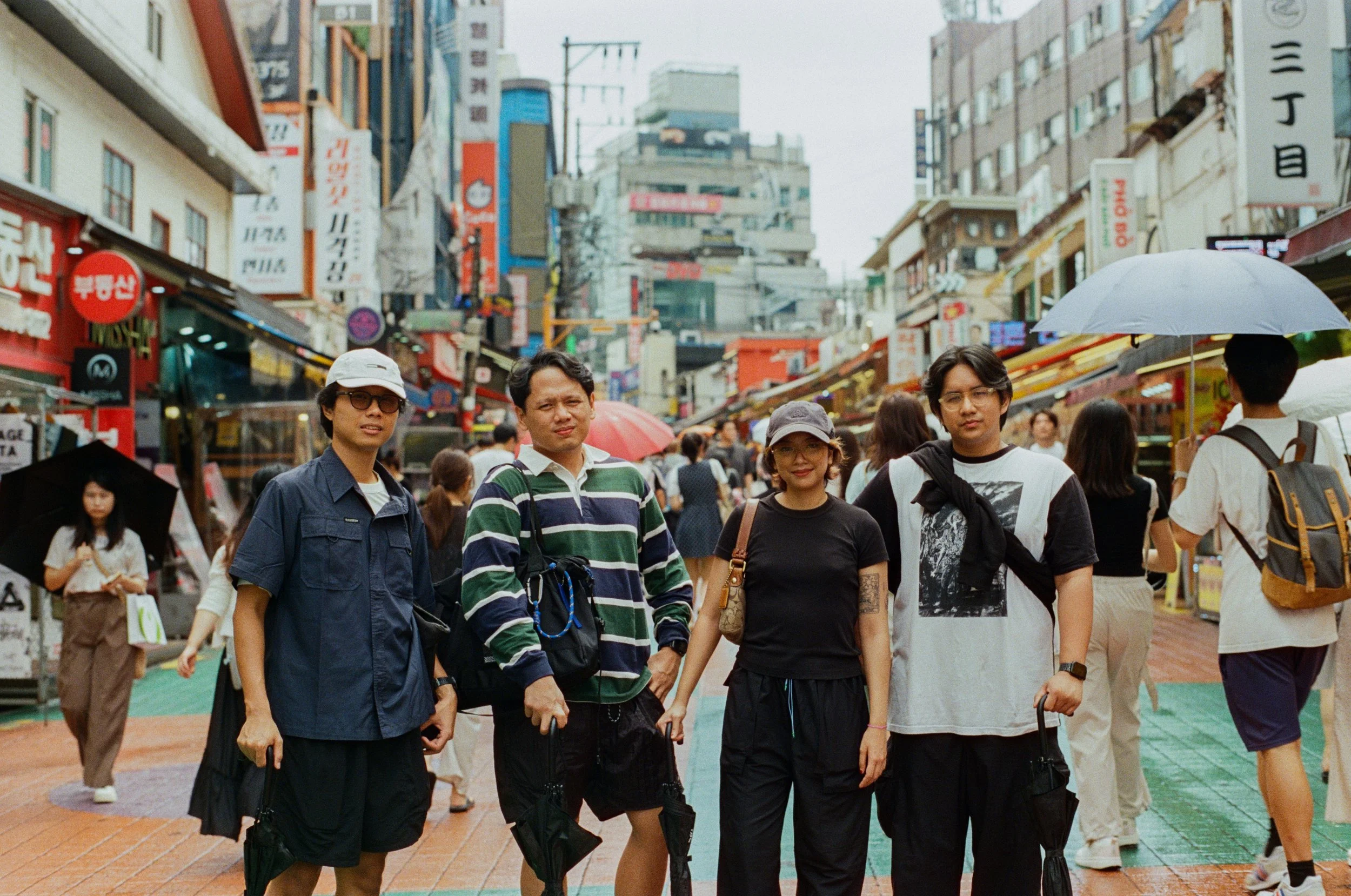
Formed in 2020 in Denpasar, Milledenials are a quartet made up of Nadya Narita (vocals), Made Krisna (guitar), Bagus Aditya (guitar) and Billy Sukmono (bass).
Their name embodies the anxieties of the Millennial and Gen Z “cusp generation,” those of us old enough to remember a time before the internet but young enough to have grown up in tandem with its social and cultural takeover. “We are in denial about our age, about being Gen Z,” said Aditya. “We are in denial about most things, maybe.”
“We couldn’t do anything during Covid, so we wanted to start a band. That’s how you kill the time,” said Krisna. Starting a band during the pandemic came with unique challenges, but the group made it work. Because there were no shows in Bali at the time, the group used the internet to connect with their audience. They even went as far as organising their own secret DIY gigs (with limits on attendance), but were eventually stopped by the police.
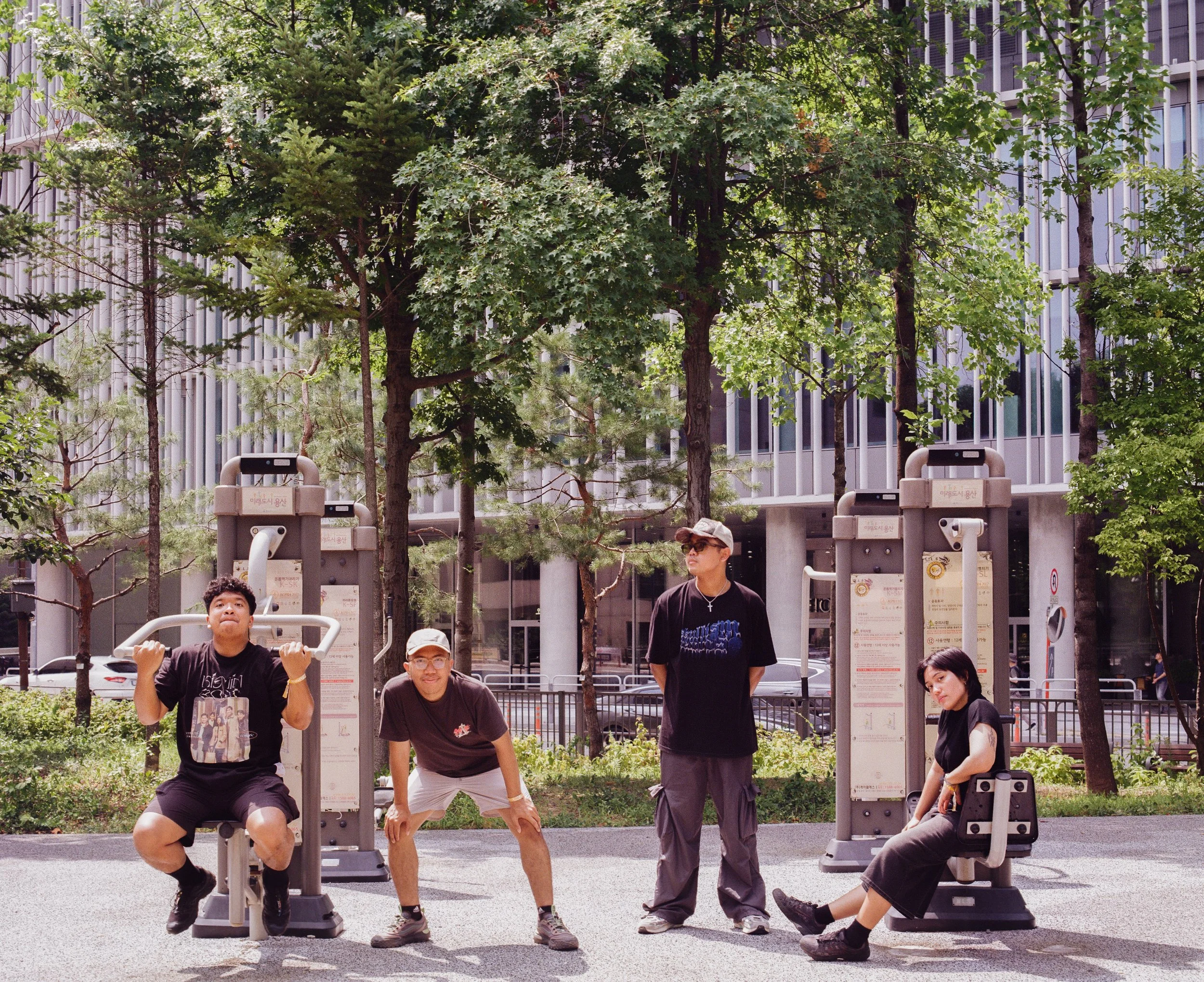
Sometimes classified as “emogaze,” Milledenials combines the fast rhythms and ruminative lyrics of Midwest emo with the blanketing static of shoegaze to create a sound that feels both familiar and unique. The label was coined by a listener, and the band accepts it as the broadest term to describe their music. “But actually, we don’t want to label it,” explained Krisna. “We want to be free. We just like music, that’s all. We want to explore more genres and make music for ourselves.”
The group has a distinctive flair when it comes to naming their work. They have released three EPs since 2020 and, between 5 Stages of Doomed Romance, The Peak of Youth Life, and It’s Terrifying and It’s a Shame, it’s clear to see the band has explored the full range of human emotion over the years. “We’re too emotional,” said Krisna. “[Our music] is based on our experiences, especially heartbreak. Not just with partners but with everything.”
Having toured in Indonesia, Europe, and Asia, Milledenials is no stranger to life on the road. Korea got its first taste of Milledenials at the Pentaport Rock Festival in 2025. The festival was a highlight for the group because it was the first time they were assigned a security guard. “It was not needed,” Krishna laughed, “but it was unique.”
It may have been needed after all, because Korean audiences certainly love Milledenials. After the festival, the group was pleasantly surprised to discover that their merchandise had been completely sold out and multiple fancams had been uploaded to various social media sites by Korean listeners.
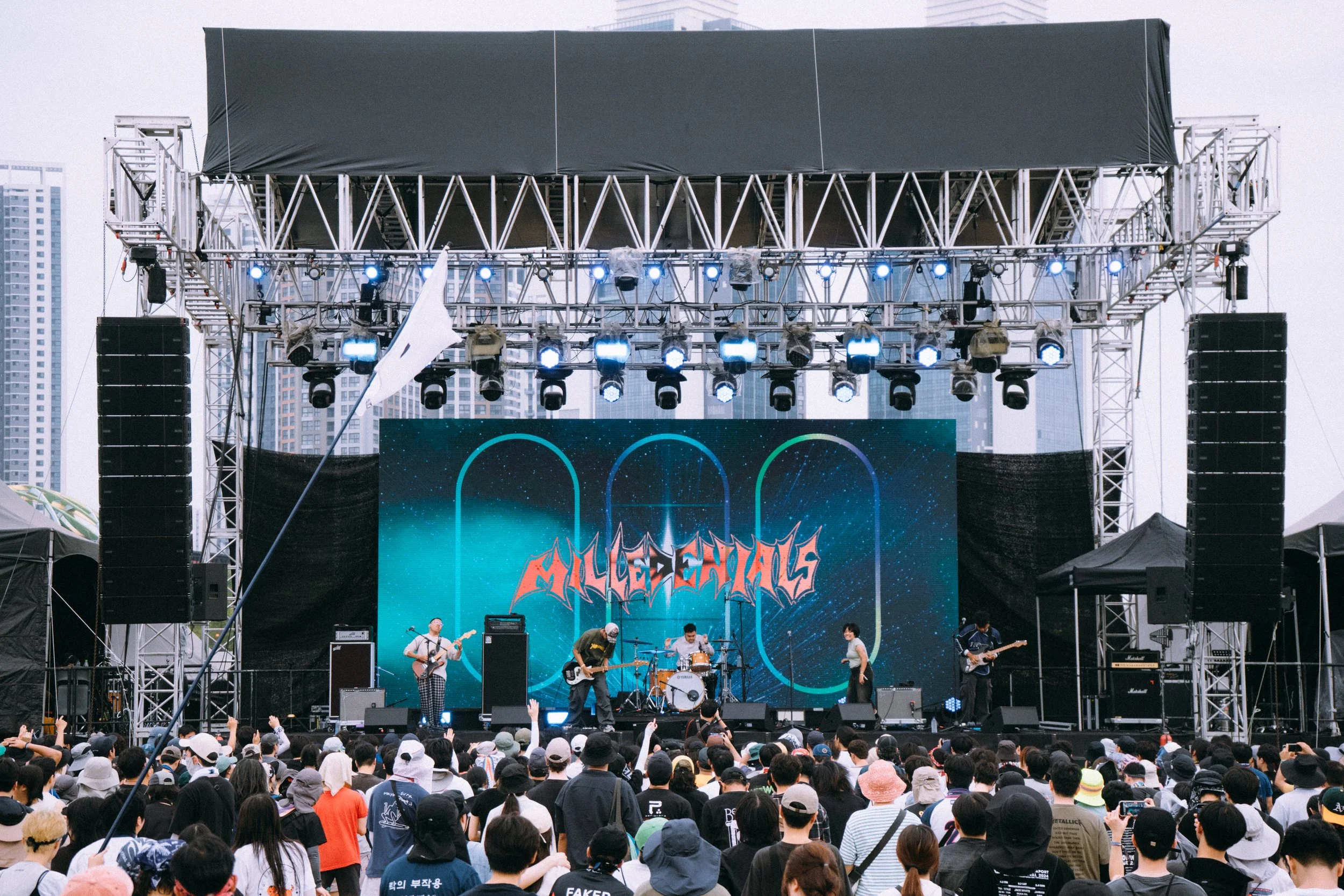
“Korean audiences know us; they look us up before they come to a show,” said Aditya, “Not all audiences know us, but Korea is unique in that way.” The band loves Korea in return. “We love BHC chicken,” said Made.
“And makgeolli!” Aditya added.
Grrrl Gang
Grrrl Gang are composed of Angeeta Sentana (vocals and guitar), Akbar Rumandung (bass), and Edo Alventa (guitar). The trio met as college students in Yogyakarta through their involvement in “Terror Weekend,” an artist collective that organised gigs in the city. “We tried to create a safe space for everyone at the [Terror Weekend] gigs,” said Akbar, “Back then, a problem [in the underground scene] was that girls and women usually tended to be afraid to come to gigs because they were too rough and there wasn’t space in there.”
After realising that the collective needed a group of its own, the three musicians joined forces, and Grrrl Gang was born in 2016. As in Terror Weekend, inclusivity and feminism are at the core of Grrrl Gang. While the group is male-dominated, it expresses itself in a feminine way—through the lyrics and voice of Angeeta (Angie), the main songwriter and vocalist. Even the name was inspired by the Riot Grrrl tradition and ethos. “At first I offered up the name as a joke, as a filler name until we came up with something better,” recalled Angie, “but the name just stuck with us.”
Like both White Shoes and Milledenials, Grrrl Gang endured the pandemic and the changes it inflicted on the world and the music industry. The pandemic hit right as Grrrl Gang was preparing to make their US debut at SXSW, and the loss of momentum was devastating. “It was a make-or-break moment for the band,” Sentanta said. “Every time I think about the pandemic, and what happened to us, I get really bad vibes.”
In their music, Grrrl Gang strike a balance between their spunky indie pop/rock sound and the roiling emotional and political topics covered in Sentana’s succinct songwriting. Online 24/7, Grrrl Gang’s latest release, is a collection of three singles that tackle serious subjects with an almost facetious loveliness. If you listen to the first single “O, My Love” without paying close attention, it might sound like a simple love song. But Sentana’s sweet tone hides the heaviness lurking under the surface. “Tried to rid/my unclean nature,” she sings, a lyric inspired by Lily Rose Depp’s character in the Nosferatu movie. “I was really impacted by that particular line because in the movie she’s a victim of grooming, abuse, and sexual violence. A lot of survivors feel that way because they’ve been heavily wronged and violated.”
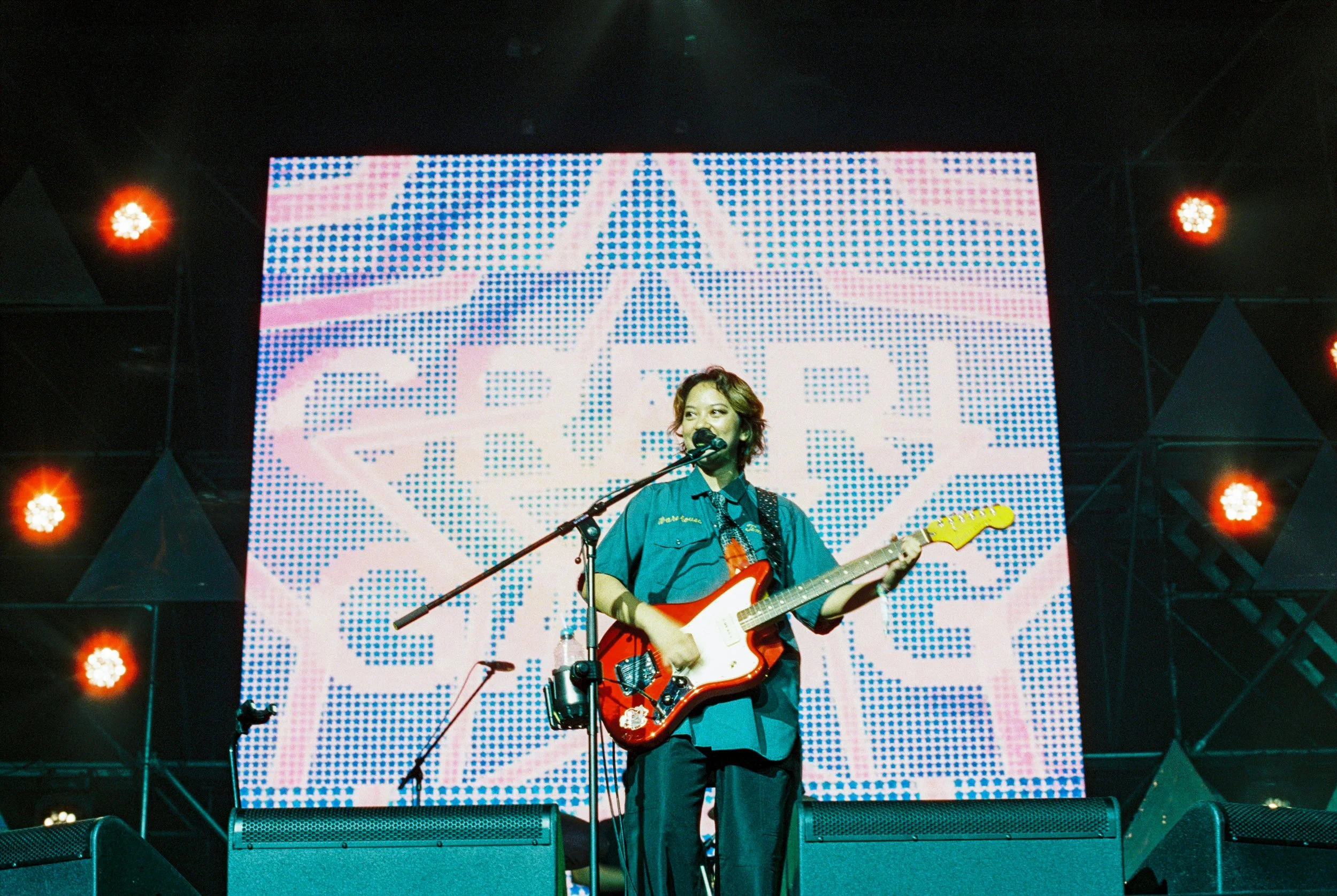
Since their formation in 2016, the group has been forced to change their approach to releasing music in the internet age. While they reject the pursuit of virality for virality’s sake, the band admits it has been hard not to be influenced by the ways the music industry has changed in the age of social media. “I’ve always held onto the idea that, as a writer, you should not really think about what the audience wants,” Angie said, “but now I can’t deny that it's been in the back of my mind over the past few years.”
Following the release of their first full-length album Spunky! in 2023, Grrrl Gang toured Asia and Australia. But it took them another year to finally make it to Korea. After Angie and Akbar hosted the Korean band SURL in Jakarta, they became connected to the “Have A Nice Trip” music festival that finally brought them to Korea in 2024. “We never have expectations wherever we go,” Akbar said, “but we had a huge circle pit in Korea. I cried backstage after the show.”
SURL returned the favour by taking Grrrl Gang out in Seoul to eat sashimi and drink soju. “I drank so much,” recalled Angie. “I was really hungover at the airport and it was a little traumatising.”
“We didn’t even care about work after the Korean trip,” said Akbar. “That was the best time of our life.”
As governments worldwide are making and breaking promises, there’s a powerful type of global cooperation unfolding in the small indie venues that flourish in cities all over the world. Talented international acts challenge and strengthen a local indie scene, something epitomised by the bands making up this “Indonesian Invasion.” These bands are feisty, bold, and fun to watch—Korea is lucky to have them. So be on the lookout for any Indonesian acts performing near you, for they are sure to entertain.