
Written by Charity Lynn (@_charitylynn_)
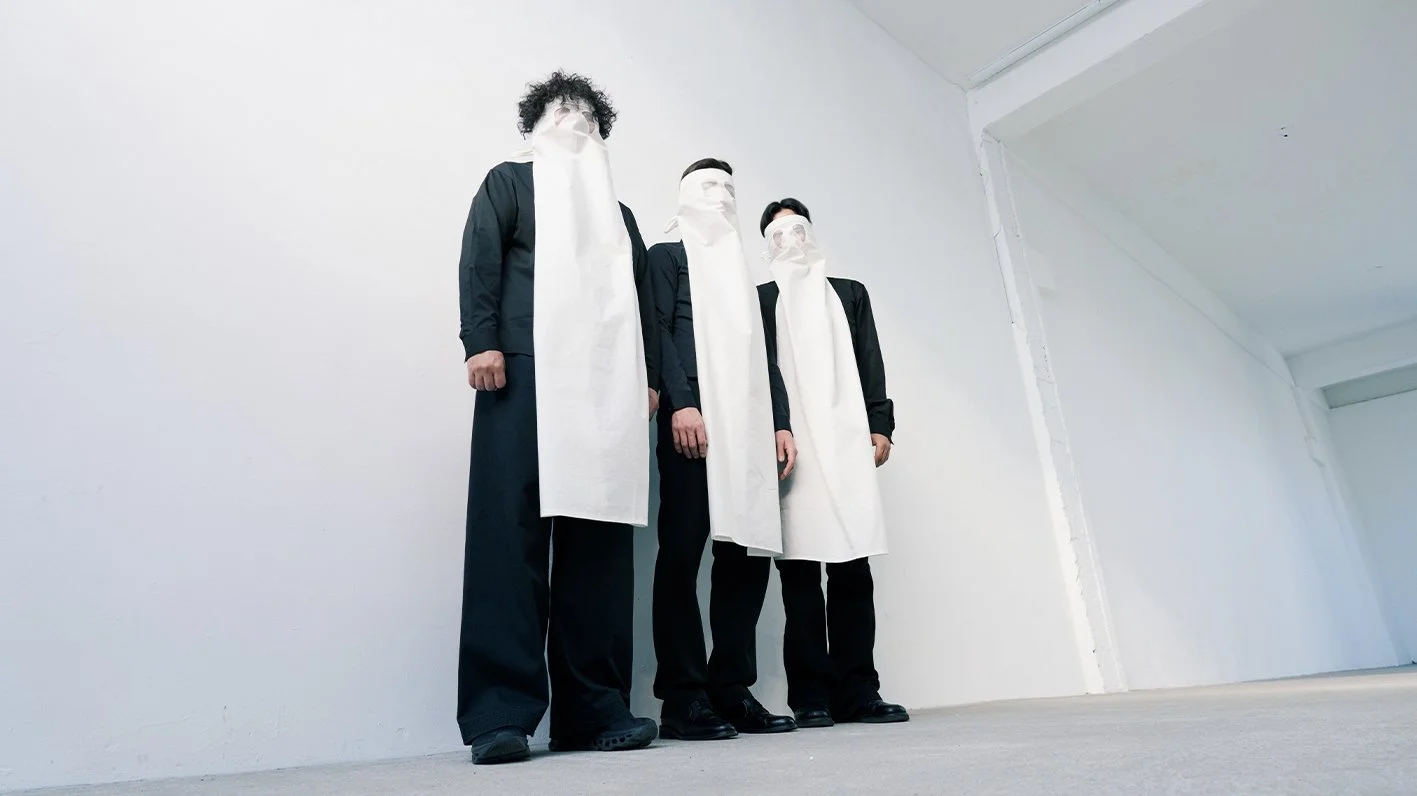
Despite their name, Monotheism presents no single figure to command the stage. Behind the masks lies a faceless trio who embrace balance as a sacred ritual. And yet, through this shared philosophy, the three seem to converge as one.
Formed in 2018, this instrumental rock band has developed a sound that draws on the atmosphere of post-rock while resisting the limitations of a single genre. Their music has moved between darkness, brightness, and complexity, with each release offering a different perspective on the band’s evolving sound.
But before music, there is the name.
In Korean, ‘monotheism’ is written as ‘일신교’, a word that also carries a personal significance to the band. According to bassist Suhwan, its syllables connect the names of the members of the original lineup. “Originally, we wanted to name the band Mantra,” explained Suhwan. However, it was later changed after deciding that it might upset their original drummer’s father, a preacher who worried about rock music and its association to the devil.
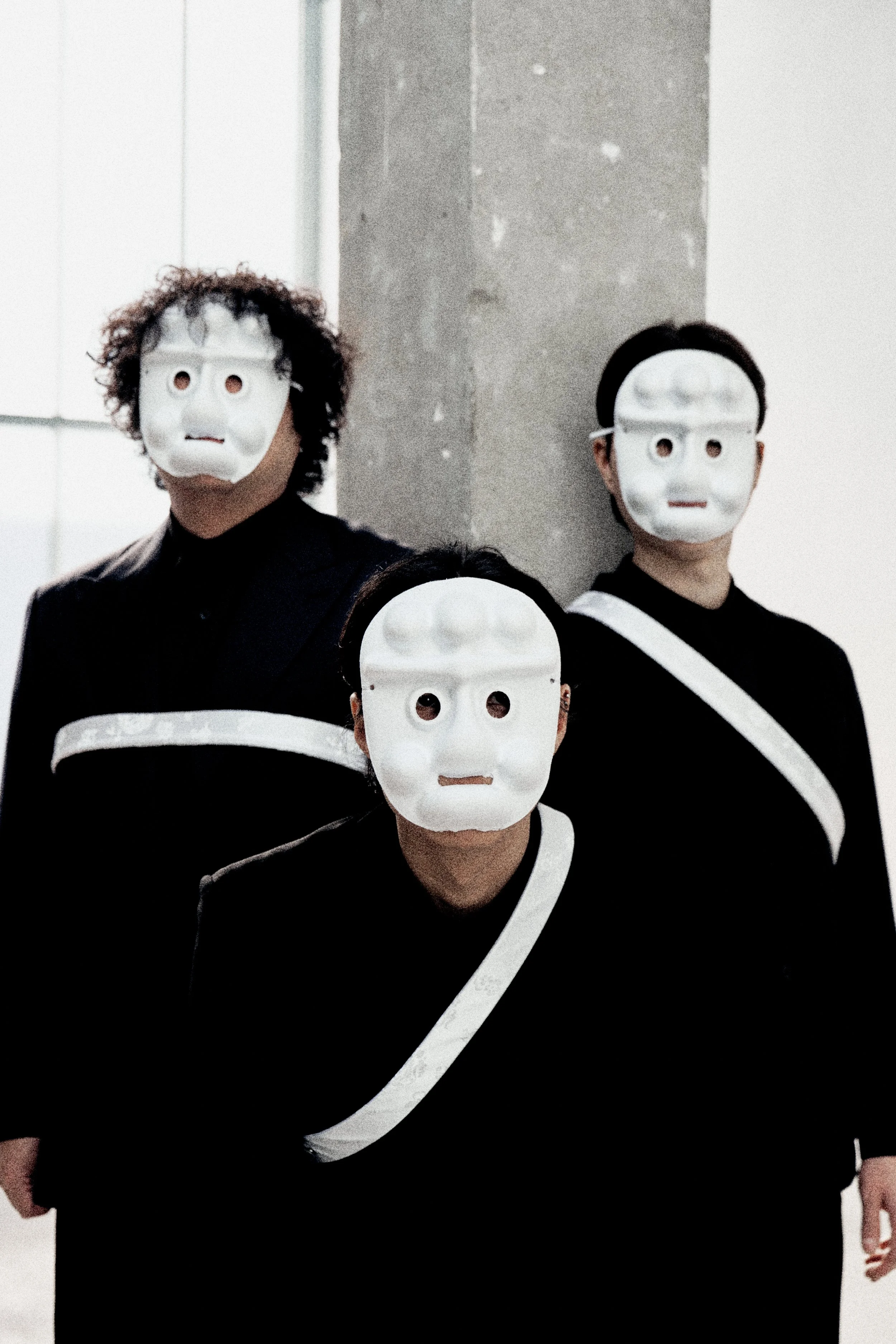
Beyond their instrumental sound, Monotheism has cultivated a distinct visual identity rooted in occult imagery, religious symbolism, and an air of mystery.
“Music is my religion,” stated Suhwan.
Religion had already begun to find its way into the band’s creative world. Suhwan, who takes lead as Monotheism’s visual director among other roles, once considered becoming a film director. This love of cinema has played a part in shaping the band’s artistic identity. He recalled being influenced by the movie Kingdom of Heaven, whose masked figures inspired the very idea of including masks in their visual aesthetic. “In a way, it adds more balance to the members,” he said. “Monotheism doesn’t have a frontman. So, with the masks, no one’s focus lingers too much on a single member.” Besides film, Suhwan also draws inspiration from Buddhism, magic, and voodoo.
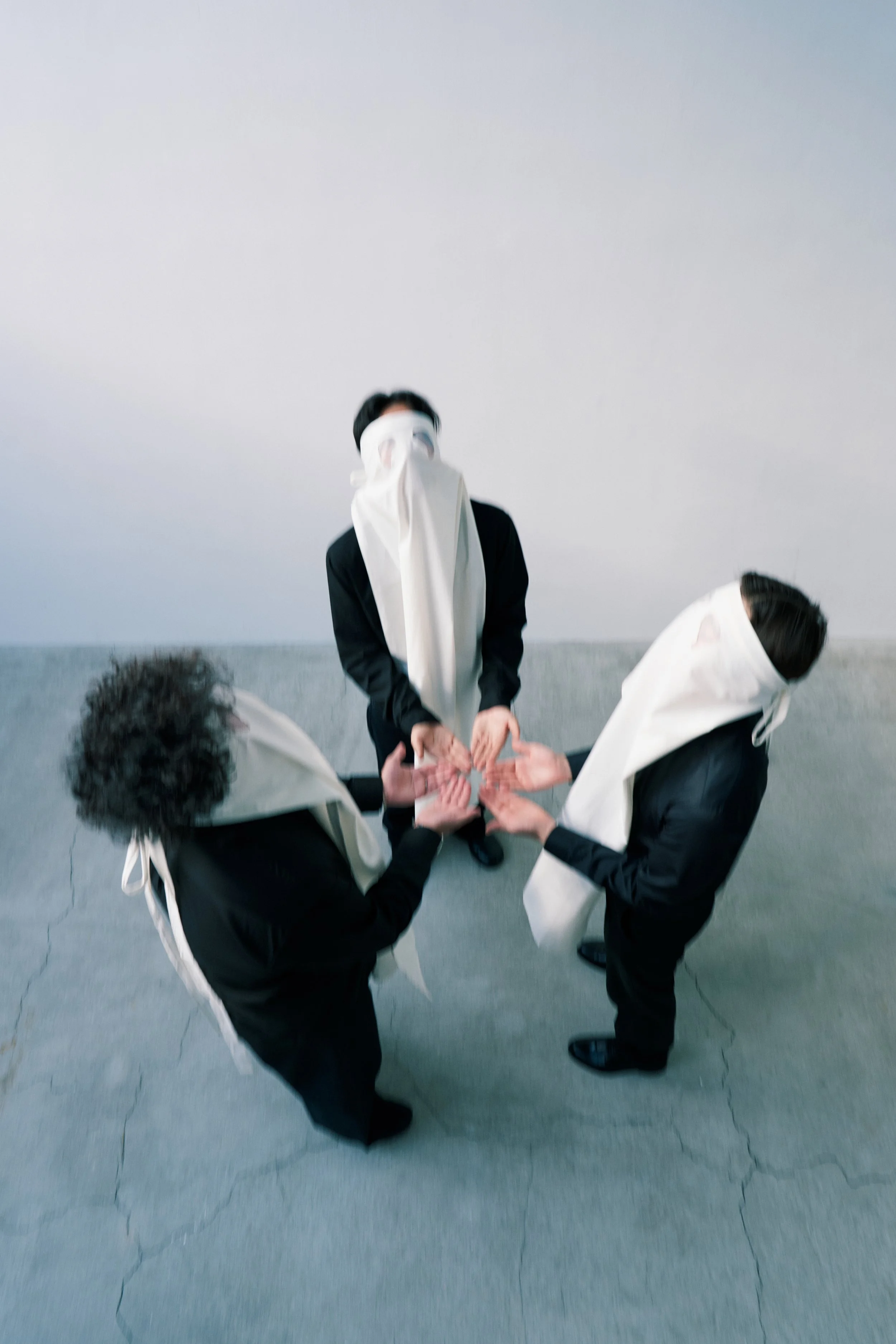
As an instrumental band, Monotheism lets the music speak for itself, conveying meaning without a need for lyrics. Chekil approaches this ambiguity through a different artistic reference: the abstract painter Mark Rothko, known for his large fields of color and simple titles. Chekil saw Rothko’s work as something that evokes an emotional response without prescribing one, and compared it to Monotheism’s music. “We have a title. We have a song,” he began. “So I recommend that you look at the title, listen to the music, and experience it the way you would while looking at Mark Rothko’s work.” For Chekil, the relationship between the song and its listener matters more than a fixed interpretation. A title might suggest a direction, but the experience ultimately belongs to the person listening.
However, that openness does not mean that their music lacks intention. On the contrary, their earlier releases had distinctly darker imagery. The band’s song Gandora, for example, took inspiration from a dark dragon card of the same name from the trading card game Yu-Gi-Oh!. Suhwan wanted to play as though he were the dragon himself. This idea extended past the song’s concept and into the way the members approached their instruments. On Psychopath, Chekil was encouraged to play as a psychopath would. “Suhwan told me that I should try playing crazy,” he laughed. In a way, the titles of the songs often commandeer the member’s identities and shape how they approach their performance. “Sometimes, it’s like a battle that I’m riding into with my horse,” explained Chekil, pointing out how he uses multiple delay effects to transform his instrument into something that feels almost alive, one that screams with the slightest touch.
Mantra, Monotheism’s most recent single, marked a turning point for the band: it introduced a new drummer and a renewed perspective on their sound. Released five whole years after Rally, Suhwan described it as being “more technical and brighter,” while Chekil heard a difference in the underlying structure of the music. Where their older work had a sense of emptiness or “void,” Mantra moved with a more continuous flow.
Mantra also presented Nabeen an opportunity to establish his own voice within the band. Having initially performed with Monotheism as a session member before holding a permanent role, he was conscious of the expectations attached to the band’s earlier work. The original drummer had developed a distinct technique, and Nabeen wanted to preserve its character without simply reproducing it. “I didn’t want to just show that there was a new drummer,” he started. “I wanted listeners to be able to feel the difference as well.” So, he studied the original drum parts and incorporated his own interpretations while maintaining a sense of continuity. On Mantra, that balance becomes part of the sound’s evolution: remaining recognizable, even when the members continue to reshape it.
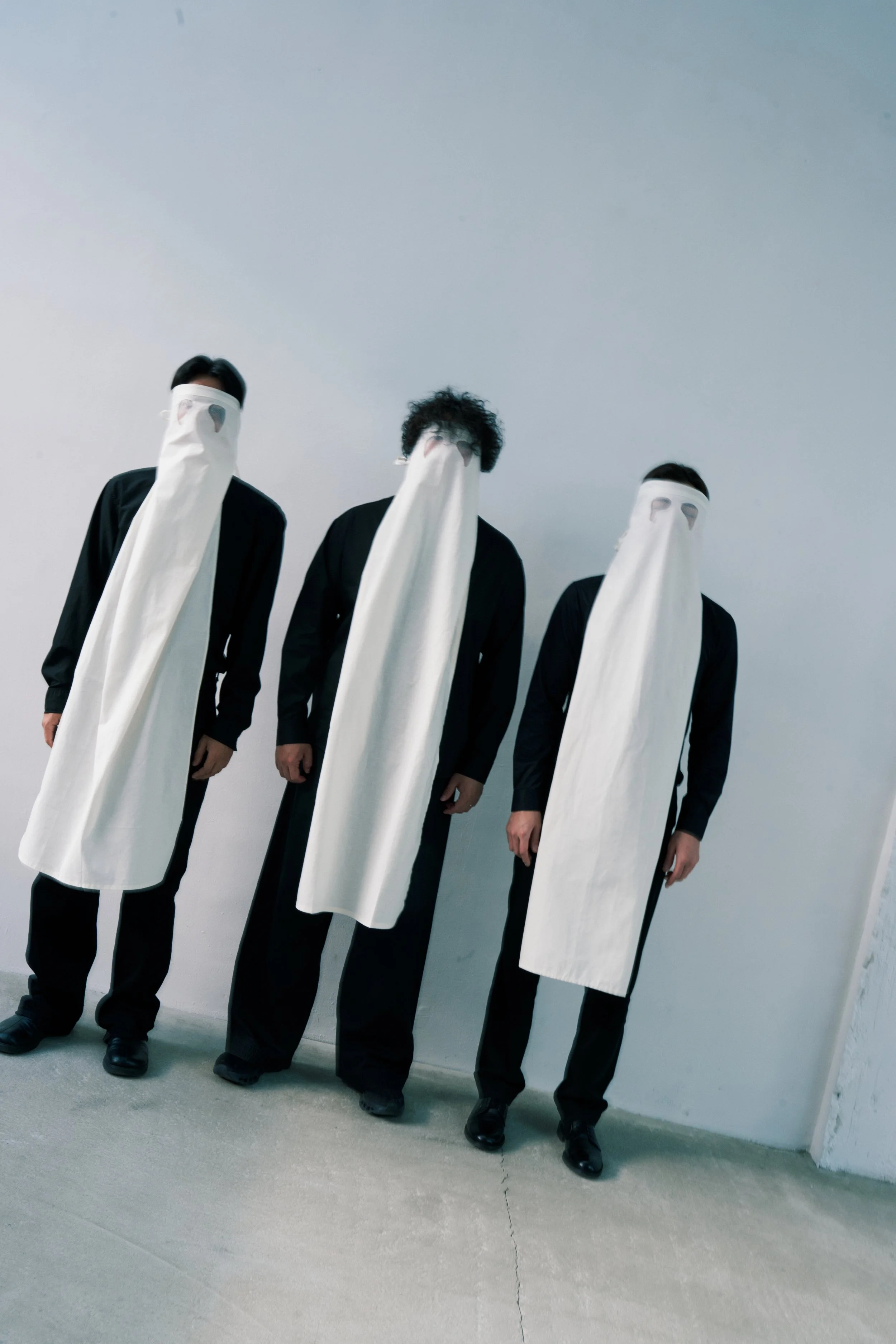
So how do Monotheism’s songs come together? Suhwan brings his song sketch to the other members, where they work together to bring it to life. Chekil joked that Suhwan sometimes hands him a seven-minute long guitar part, leaving him to work out what to do with it. Nabeen, meanwhile, looks beyond the drumline to make sure everything fits well. Suhwan sees the bass as central to this process, as it is the bridge between melody and rhythm. In the end, each instrument contributes without overwhelming the others. This balance becomes most apparent on stage, where the three perform like leading characters in a play, sharing a single spotlight.
Following a hiatus back in 2021, Suhwan focused on Seoul Magic Club, a personal project of his that explored shoegaze, added vocals, and incorporated a wider range of instruments, like synthesizers and cello. That experience broadened his approach to sound design and gave him new ways to think about Monotheism's music. After Seoul Magic Club’s final performance, the decision to regroup as Monotheism was made. The return was not simply a way to recreate the past, though. “At the time when we formed, we wanted to try something that made us stand out against other post-rock bands,” Suhwan explained. “But these days, we want to go back to more classic post-rock sounds.” He hinted that this direction is already taking form in a new single to be released in the spring. Chekil also shared his desire to experiment and “not be a guitarist confined to one genre.”
Looking ahead, the members hope that Monotheism continues to evolve without losing its sense of youth. As music moves with the times, they want Monotheism’s music to remain connected to those changes rather than aging alongside its members. Chekil also offered a simple promise: “We ended Monotheism once. But this time, we’ll be forever.”
In the meantime, Monotheism is preparing a special performance taking place on November 21st at Mudaeruk in Hapjeong. You can find more information on the band’s Instagram page (@band_monotheism).