
Written by Ethan Kim (@count.kim)
Photos by Blair Kitchener (@blairkitchener)
It is almost impossible to describe Kuang Program in a single word. Noise, industrial, post-punk and no wave may all hover somewhere in their vicinity, yet none of these terms seems broad enough to fully capture the band. At the centre of it are Taehyun Choi, who has carried Kuang Program since its earliest days, and drummer Kyoungsoo Seo, who joined in 2019 and has been their longest-serving drummer.
Their music emerges from friction and collision, from live drums pressing against electronic systems, and from noise. Over nearly 15 years, Kuang Program has built a following in the Korean underground scene, not by committing to a clear form, but by repeatedly breaking away from whatever form they previously had. "Activities that eventually became Kuang Program began around 2011," Choi says. "At first, it was my solo project."
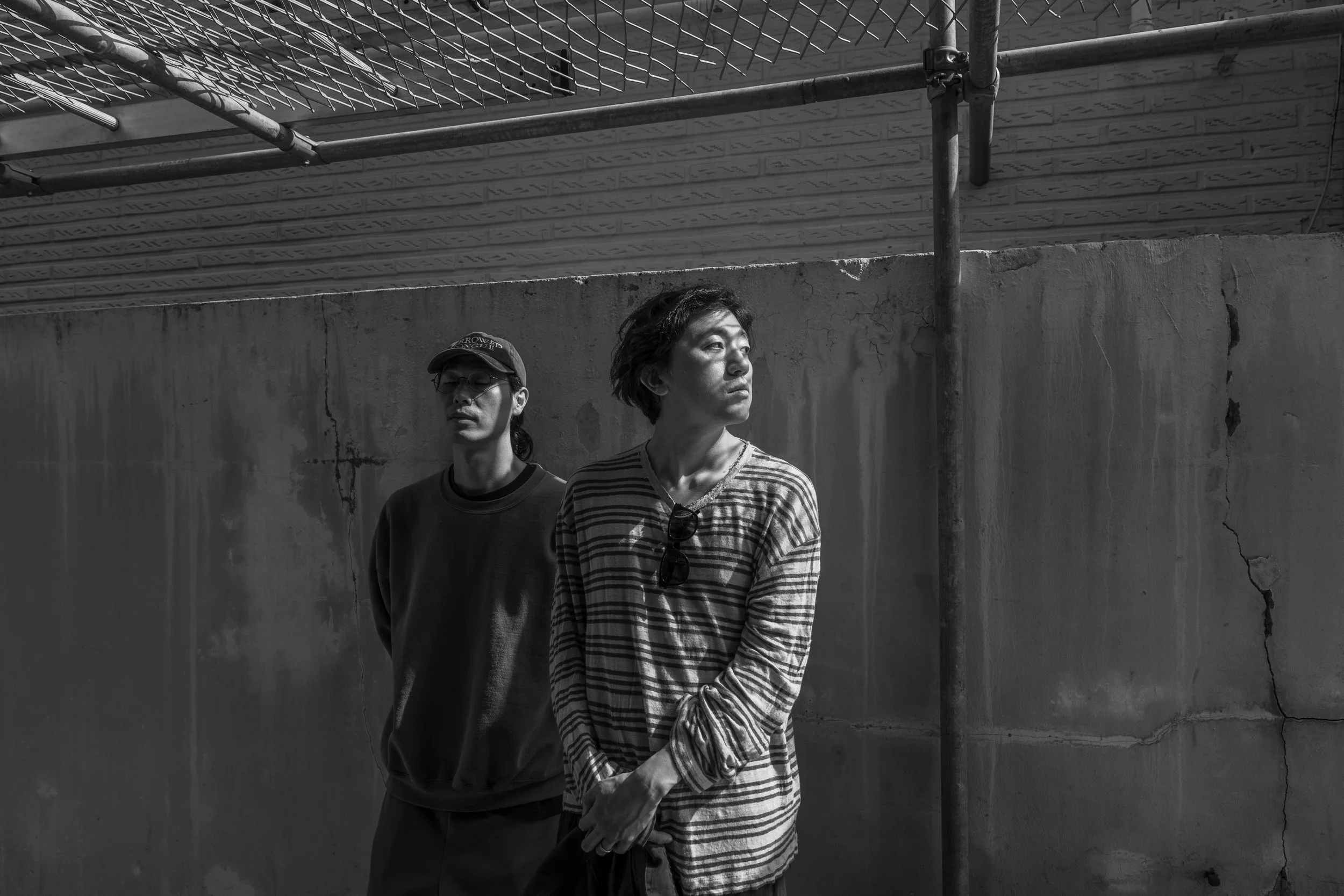
With the exception of that earliest phase, Kuang Program was largely a duo: Choi and a drummer. The band's former drummer, Younghoon Kim, played with them until the release of their first album, You or Me, in 2013. From 2014 to 2016, Yongman Kwon took over the role. Following a difficult period complicated by military service and other practical issues, Seo joined on the recommendation of Park Daham.
Seo was already familiar with Kuang Program before joining. During his time with Kim Oki's project Electro Hustler, he had occasionally bumped into Choi at venues such as Salon Badabie, one of Seoul's old underground live clubs. "I didn't know Taehyun personally," says Seo. "But all my friends in my circle knew him."
Initially, Kuang Program were often described as post-punk, and Choi admits that the first album had strong links to that sound. But the more the band evolved, the less accurate that label became. "Depending on how broadly you define post-punk today, it might still fit," he says. "But if I had to compare it to something, I think it comes closest to no wave." He is careful, though, not to portray the band as one that is desperately trying to defy all definition. "It's not that we're deliberately doing anything to break free from the rules. We simply work with the material we have at our disposal and with the way we understand each other's playing."
This approach is particularly evident on their 2025 EP Stroller. Over the preceding years, Choi had collected sounds created for visual art, dance pieces and other projects, then edited, mixed and recombined them into new forms. The result is less a conventional band recording and more a sculpture composed of old fragments, new drums and altered memories. "I found it interesting to use existing sources as material and remake them," he says. "The first track, Not Alone, takes pieces I liked from music I had been listening to and combines them with Kyoungsoo's drums. Sleeping Stone was originally music I made for another project, then I added his drums to it."
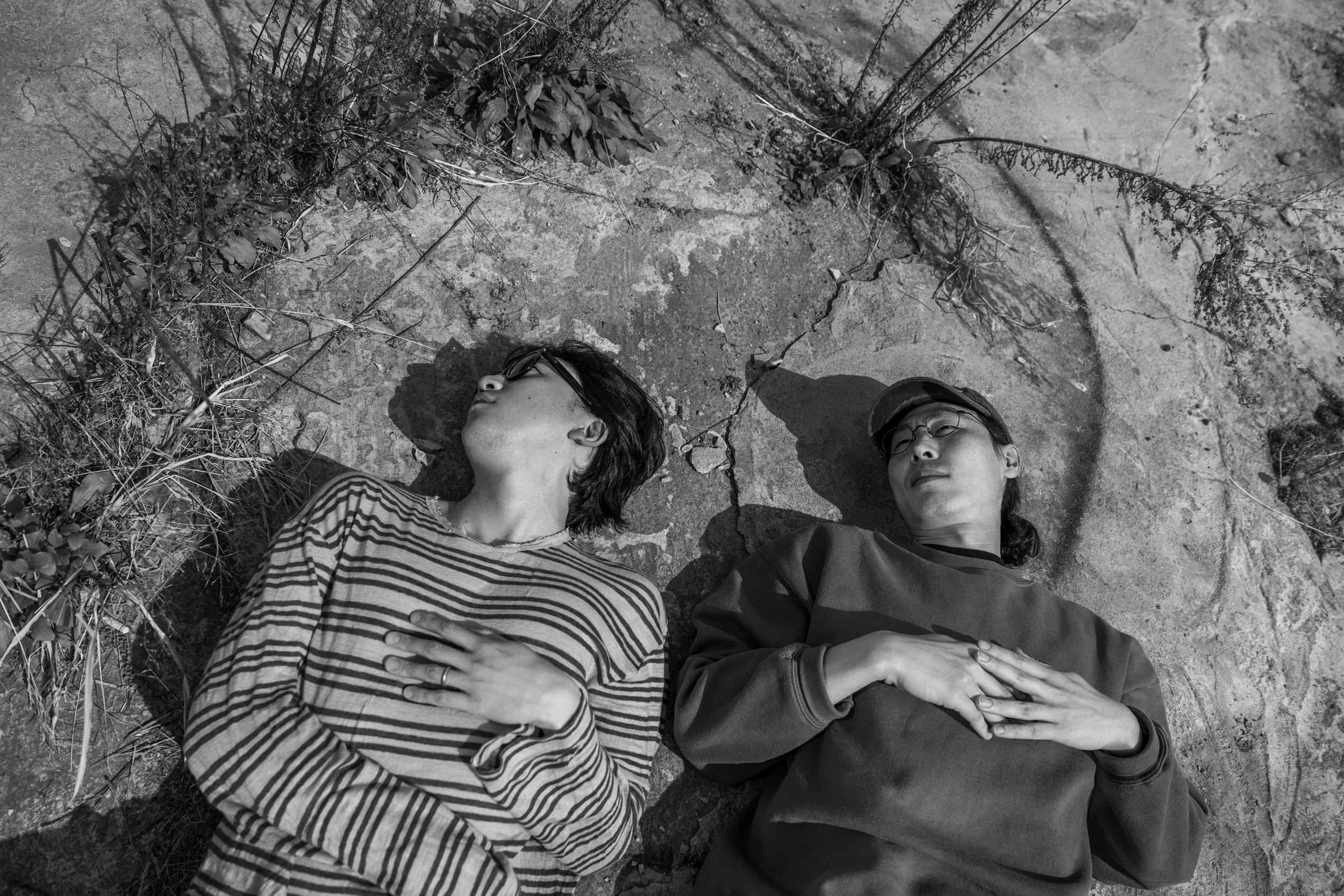
Some songs are recorded live, some pieced together through editing, and some transformed all over again on stage. "Even if we play something based on a recording, Kyoungsoo might play it differently, and I adjust my playing accordingly," says Choi. "So there's always a discrepancy between what you hear on a record and what you hear live. That's an important part of Kuang Program."
Seo's drumming has its roots partly in jazz, whilst Choi's background is shaped by noise, free improvisation and electronic music. Choi recalls that his interest in noise grew around the time of the first album, when he came into contact with experimental music at Kkotdang. His time in the military also became an unexpected turning point. "As I suddenly had time, I began to think about what kind of solo music I could make myself. Noise performances, the band music I'd already been making, and electronic sounds began to blend together back then." Seo's arrival changed something too. "Kyoungsoo was the first drummer with whom I could really play openly and improvisationally," says Choi.
Choi's work has expanded through recording other musicians at his studio, Under, among them Spirits Unbound by Ureuk and the Gypsies, the eight-member group working between Korean traditional music, improvisation and avant-garde jazz. "I want to record more underground musicians and people who work alone," he says. "I'd like to keep it more open."
When Seo is asked about his favourite Kuang Program music, his answer takes him back to before he joined. "I mostly listen to the first album," he says. "I don't listen to the newer albums that often." He still recalls the early days with warmth. "Shortly after I joined, I travelled abroad with them for a gig. I remember looking out over the fields during the drive whilst listening to Kuang Program's music. The landscape was so beautiful, and I really enjoyed that time."
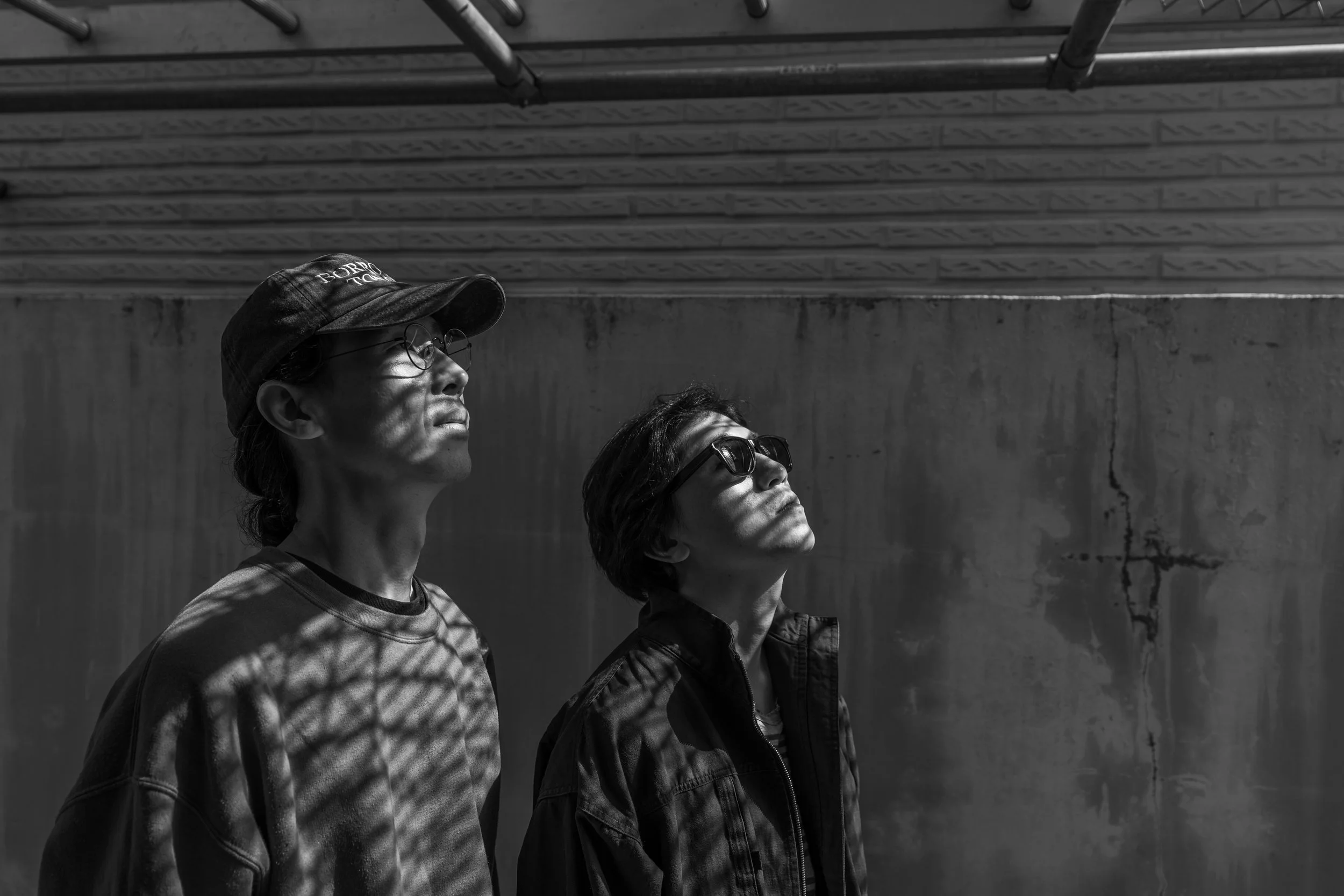
The live sound is central to what they do, though not without its complications. Kuang Program often perform in rough-and-ready venues, which means they can't always achieve exactly the sound they want. Some gigs abroad have impressed them, because the sound engineers there actively helped shape the performance. "They would pull the dynamics down and then bring them back up, open the drums when they needed to, or adjust sections where small sounds had to be heard in detail," says Seo. "I liked those moments when the sound engineer shaped the live set together with us."
Small spaces often suit Kuang Program best. "When you are near the audience, small sounds and the movements of the players can all be felt," says Choi. Festivals are more complicated. Kuang Program has rarely appeared at domestic ones, and whilst some have described them as a band that rejects festivals, Choi says the simpler truth is that they have not been invited to many. Seo partly accepts the idea, but for a different reason. "There is music and sound that suits festivals. In that sense, maybe 'rejecting' them is not completely wrong." Still, they don't sound closed to the possibility, imagining smaller, more experimental programmes, or festivals where techno and rock can coexist. They can play a bigger stage. They simply don't make music for the idea of one.
When the conversation turns to the recent rise of young Korean bands associated with noise, shoegaze, punk and DIY culture, Choi does not see it as sudden. "Those bands were always there. But when I look at new bands in their early twenties now, they grew up in an environment where they could access a much wider range of music very easily." He also believes the divide between pop and noise has narrowed. "Ultimately, genre boundaries may become less significant. What matters more is that different tastes can coexist and that more musicians are incorporating them in their own way."
For Kuang Program, freedom does not mean a lack of structure. It is built into the structure itself. Seo says Choi never pressured him to play in a particular way. "From the very beginning until now, he has never instructed me by saying, 'I want you to play like this.' I think he decided not to do that right from the start." Choi links this to the band's improvisational nature. "When you're playing, you have to make decisions all the time. If you just want everything to go according to plan, then the moment it deviates, it becomes a failure."
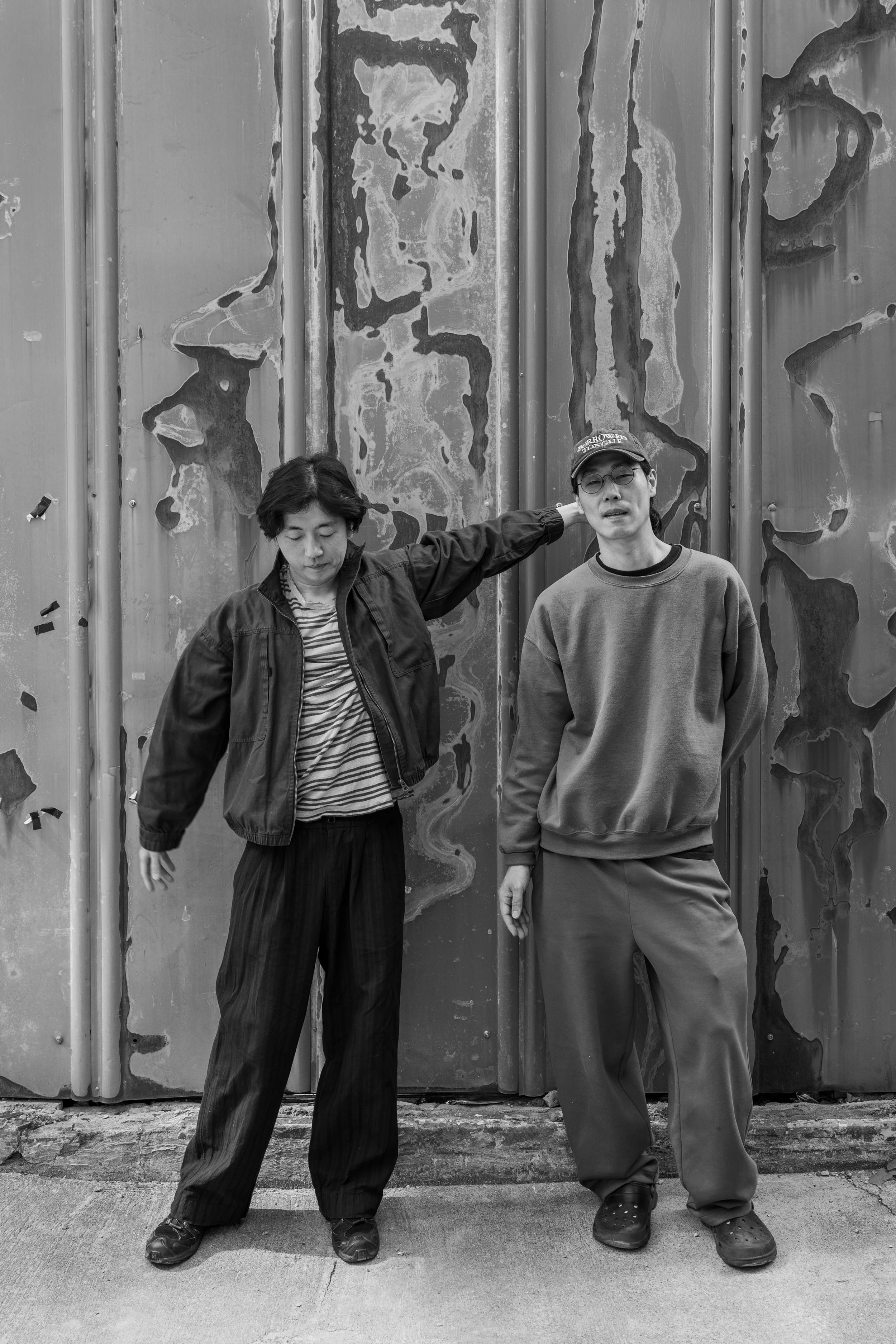
Some of their most memorable performances were precisely the ones that demanded that attitude. Choi recalls a gig in a small rural space near Frankfurt, what felt like a factory or a clothing shop, where someone in the audience told him afterwards that he hadn't been able to tell at first whether the band was good or just chaotic. "But the longer he listened, the better he understood them."
When asked what has enabled the band to keep going for so long, Choi points to their DIY approach. "I handled most of the recording, mixing and mastering myself. This way, we can keep making music and carrying on, even if we don't sell many albums." The duo format helps too, light and mobile, yet never hollow.
After 15 years, Kuang Program still sound like a collision happening in real time. Their story isn't over, because their music has never behaved like something finished. It keeps seeping through.