
“I like sounds that feel messy” - Interview with Park Hwi No
Written by Charity Lynn (@charitylynn)
Photos by Christian 이수 Mata (@chris_isu_m) and Pedro (@nemocaet)
For Park Hwi No, music wasn't his original plan. Before stepping into Korea's indie music scene, he majored in acting at a drama school. "I originally started as an actor," he said. "But when COVID hit, everything was cancelled. So I turned to music instead." He transformed this setback into a new opportunity, picking up the guitar that had once been just a middle school hobby and starting to write songs. Although he is still early in his musical journey, his work already bears a considerable emotional weight.
Park Hwi No's music is dense but intimate, noisy yet deeply personal. Chaos is the language of his songs. "I like to describe my music as 'personal stories written over chaotic sounds,'" he explained. To him, layers and textures matter more than clarity. The hazy distortion and blurred layers of his sound are less stylistic choices and more an emotional translation of his own mind. "These sounds are very similar to my own thoughts, which are quite messy. So I like sounds that feel messy, too." His music is deeply emotional at its core. "Emotions are something uncontrollable. I think shoegaze shares the same texture as emotion," he added. "I never know how it will turn out, and I enjoy those moments of making music."
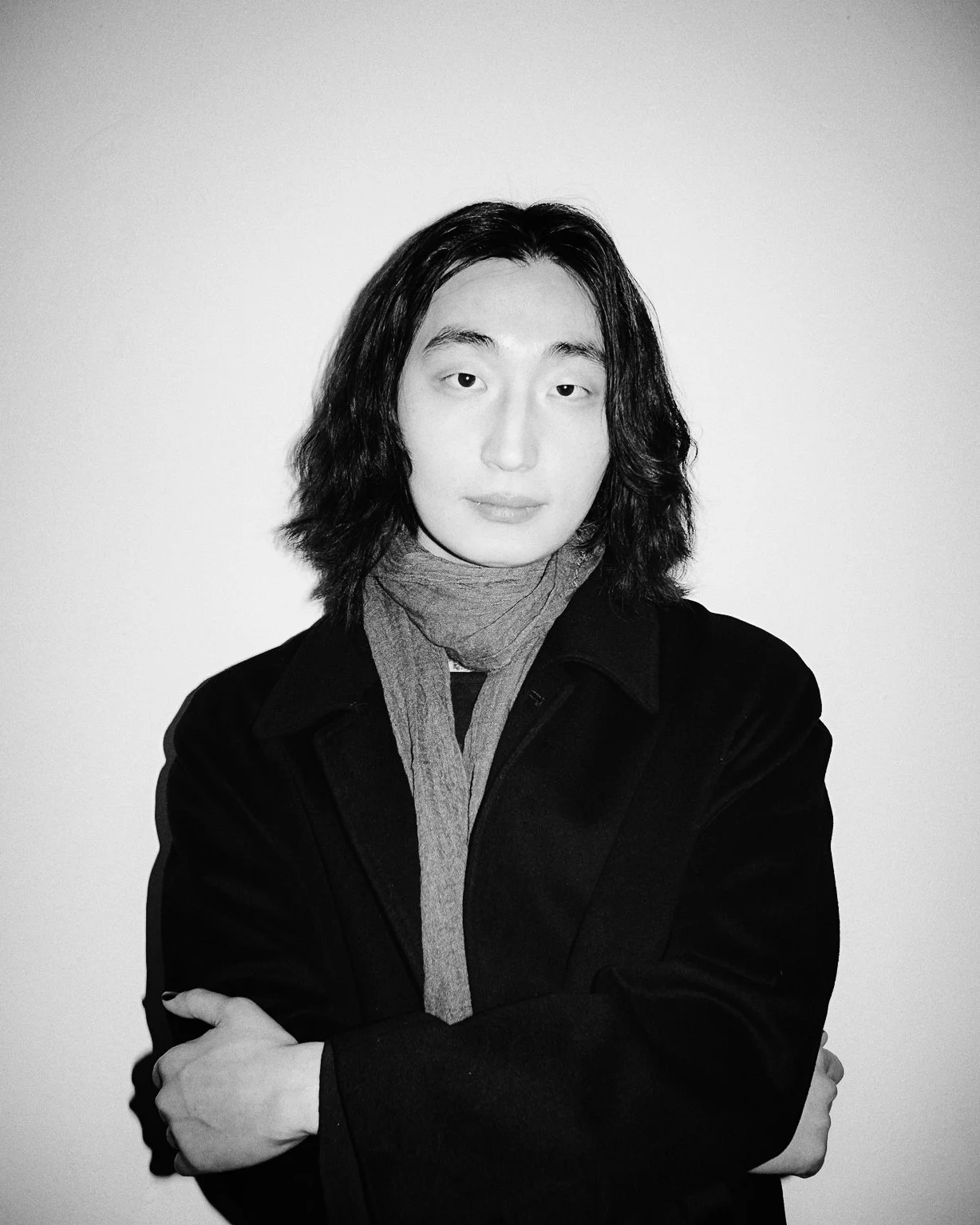
This musical philosophy solidified when he discovered shoegaze for the first time. "I listened to a lot of music at that time, but I never knew something like shoegaze even existed." He pointed to My Bloody Valentine in particular as his initial source of inspiration and a turning point in his musical identity. "I thought, 'This is what shoegaze is?' I decided then that that's what I wanted my music to sound like."
His path to releasing music was slow and persistent. "I realised that in order to upload my music to streaming platforms and manage everything properly, I needed to find a distribution company," he explained. He had sent his demos to several distributors more than a handful of times before one finally responded. "Mirrorball Music was the only one who got back to me." From there, he was able to officially release his music.
Although this process took some time, it didn't discourage him. If anything, acting had prepared him for it. "I was already used to rejection," he laughed. "When I worked as an actor, there were a lot of times when I got rejected. Instead of worrying about it, I learned to just keep trying my best." His determination helped him overcome this hurdle and eventually led to finding listeners who connected with what he was making.
Park Hwi No's music touches on topics that not many people are comfortable bringing to light. "Actually, I don't like hopeful songs too much. That's not really my style," he said. "I think there aren't many artists in Korea who cover the deeper topics of depression." His work leans heavily into his own vulnerability and personal struggles — moments when life felt overwhelming and pushed him to his breaking point. His first album, Orpheus, inspired by the Greek mythological figure of the same name, explores themes of love, loss, and descent. His second album, Side Effect: The Death of Orpheus, continues through the aftermath of the self-destruction depicted in Orpheus.
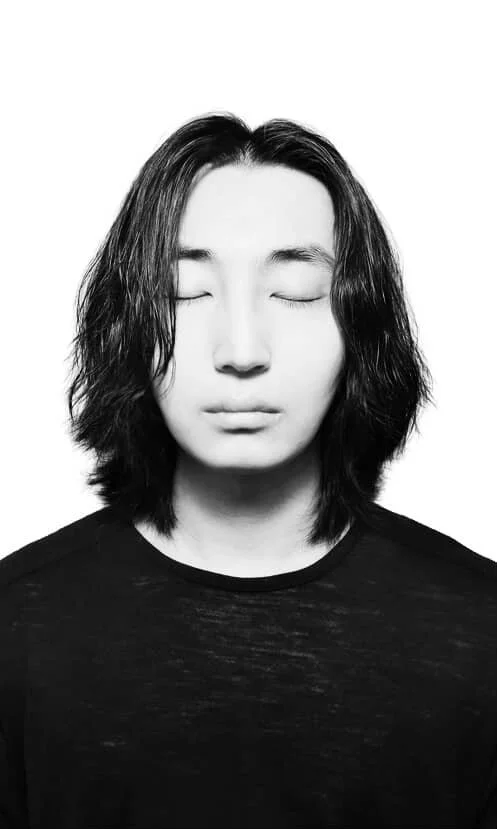
His newest release, After Dark, stands apart in both sound and context. It's not mythology or metaphor — it's survival. "As I mentioned, my music reflects events in my life. At that time, I felt a lot of self-hate and depression. I felt trapped and couldn't work the way I used to. I was really angry and wanted to give up, so this album shows a different side of me." He also spoke openly about his struggle with alcoholism, a fight that is heavily present throughout the album. At one point it contained 24 songs, but was narrowed down to ten. The title carries both weight and hope. "It was my wish to see life after this darkness," he said.
Even though Park Hwi No works with heavy themes and personal stories, he tries to remain somewhat ambiguous. "I don't like my songs to be too direct or to explain too much. I would prefer the listeners to make their own interpretations," he said. Still, he admits to being curious about being more direct — a hint of openness in his future work.
When asked about his songs, he points to sleep as the one he feels most proud of. "It was the first song I wrote, and it also received a lot of love." Broken God was the most difficult to write; he rewrote it "over twenty times before it felt complete." And Cohen, his debut track, holds a special place in his heart. "I think it really defined my musical identity, and I still listen to it often." Its lyrics capture the anxiety born from love, and that feeling still lingers throughout his work.
Despite the emotional scale of his work, Park Hwi No records almost everything in the smallest possible setting: his bedroom. This, expectedly, comes with its limitations. "Because I record in my room, I often feel the limitations of how simple my setup is. I don't have any synthesisers, so the sound quality isn't exactly what I'd like. I also have to keep in mind the noise level in my flat." On the other hand, these constraints often push his creativity and spark new ideas. "One thing I learned is that technology can help you overcome many walls in this process." For now, his setup is simple: a MacBook, an electric guitar, a handful of pedals, and his cat Vino, who occasionally makes an appearance in the recordings. "If you listen closely, you might be able to hear him," he laughed.
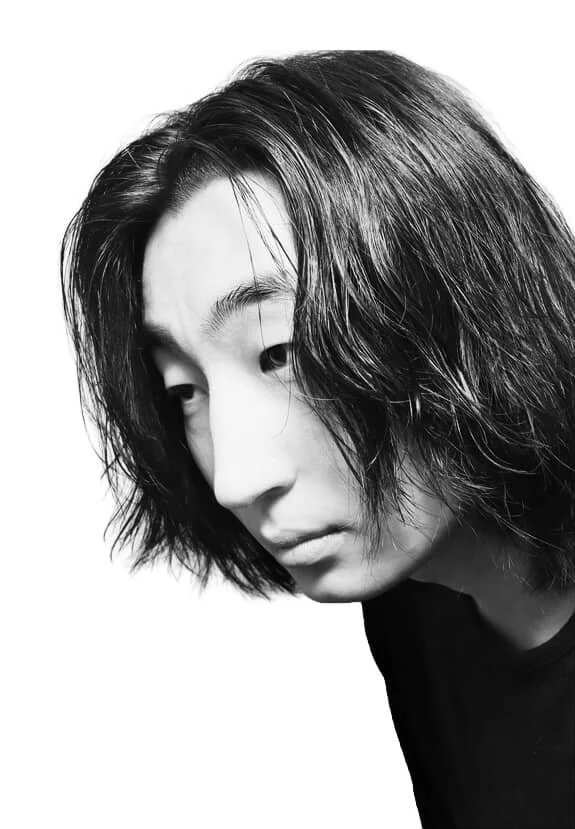
As a solo artist, Park Hwi No has come to appreciate the freedom of working alone. "When you work with another person, there could be disagreements about sound," he explained. "I like the improvisations that come with working alone. It also helps me stay focused." Working solo doesn't mean complete isolation, though — he still leans on friends, like Shin Yunsu, for advice when he hits creative walls. Over time, something else has changed in him: confidence. More pedals, more experience, and more belief in himself. "I think I have more of an ego now," he admitted. It's not arrogance, but self-assurance.
Music isn't the only way he expresses himself. Park Hwi No remains deeply drawn to visual art, film, and photography, and sees these mediums as complementary opposites. Visual art proves existence because you can see it, whereas music is something you feel rather than observe. Last November, he held an art exhibition presenting visual work that mirrored the landscape of his songs. "If my music were a physical space," he said, "it would look like that exhibition: a room into my own mind." He hopes to hold another exhibition someday, and perhaps include a short film this time.
Park Hwi No continues to look forward, with plans to release his new album Side Effect: Left Behind on 1st April. This time, the sound will lean more towards dream pop. He also dreams of collaborating beyond music, particularly with film directors. His final message is simple: he's not done revealing himself. "I'm going to share a different side of myself," he said, "so keep watching."
You can stay up to date by following Park Hwi No on Instagram (@parkhwino).