
A Rising Tide: Asian Spice House explore Asian root sounds on their latest album
Words and pictures by Christian Mata (@chris_isu_m)
Bringing an effortless groove across genres, Asian Spice House have just released their second full-length album. Debaser joins the band for an exclusive first English-language interview to talk about defining themselves, wearing many hats, and a case of mistaken identity at a market.
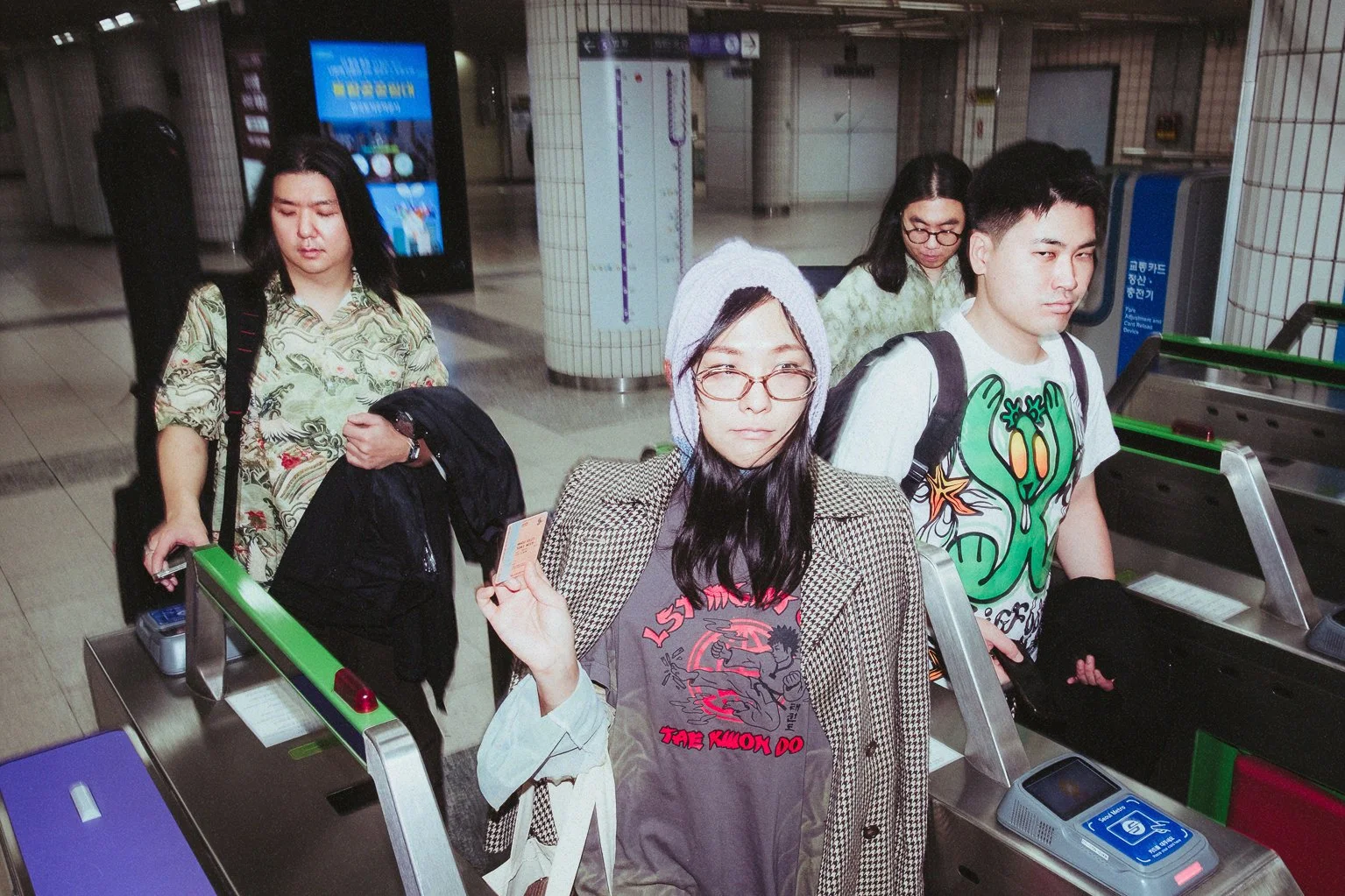
In an old market full of produce, hot street food, and busy passers-by, there is a DJ playing. Some workers join in the fun, dancing and cheering, still aproned and gloved. Their charisma draws in more people, some fresh-faced and others weathered. A few younger, enthusiastic workers are draped in excessive patterns and bold tones, beaming. Then one of them dons a jewelled headdress and slinks onto the stage. A few more follow suit, pulling out their picks, a karaoke-style soundboard, and all manner of cords and pedals. The DJ cuts the music, and suddenly the market is bombarded with psychedelic waves. There is undeniable funk, but the keys are playing hyper-disco synth, and the singer has a soundboard firing off random laser noises and "아주씨" soundbites. Then the guitarist leaps off stage, shepherding the crowd as he melts his guitar, losing his hat in the process. The next second, it's surf rock, rolling toms in proper form — chaos minute to minute, but everyone is wrapped in the spell. Ageing market workers and twenty-somethings alike are going wild, the energy palpable from floor to ceiling. Full of sweat and hoarse from yelling, the crowd is ecstatic. This was one of Asian Spice House's earliest gigs with their current four-piece line-up.
More than a band, most of the members take on multiple roles. Yoo YoungEun is the bassist who handles recording and mixing. Drummer Lee SeungHyeon, a founding member alongside Raffina, oversees the band's rhythm and performance schedule. Vocalist and keyboardist Raffina is the leader and overall producer, responsible for the band's creative direction and sound. Jung Young-joon is the group's guitarist, and he also guides the Asian melodic sensibility and the band's distinctive tones. Because they handle nearly every aspect themselves, they have free rein on and off stage.
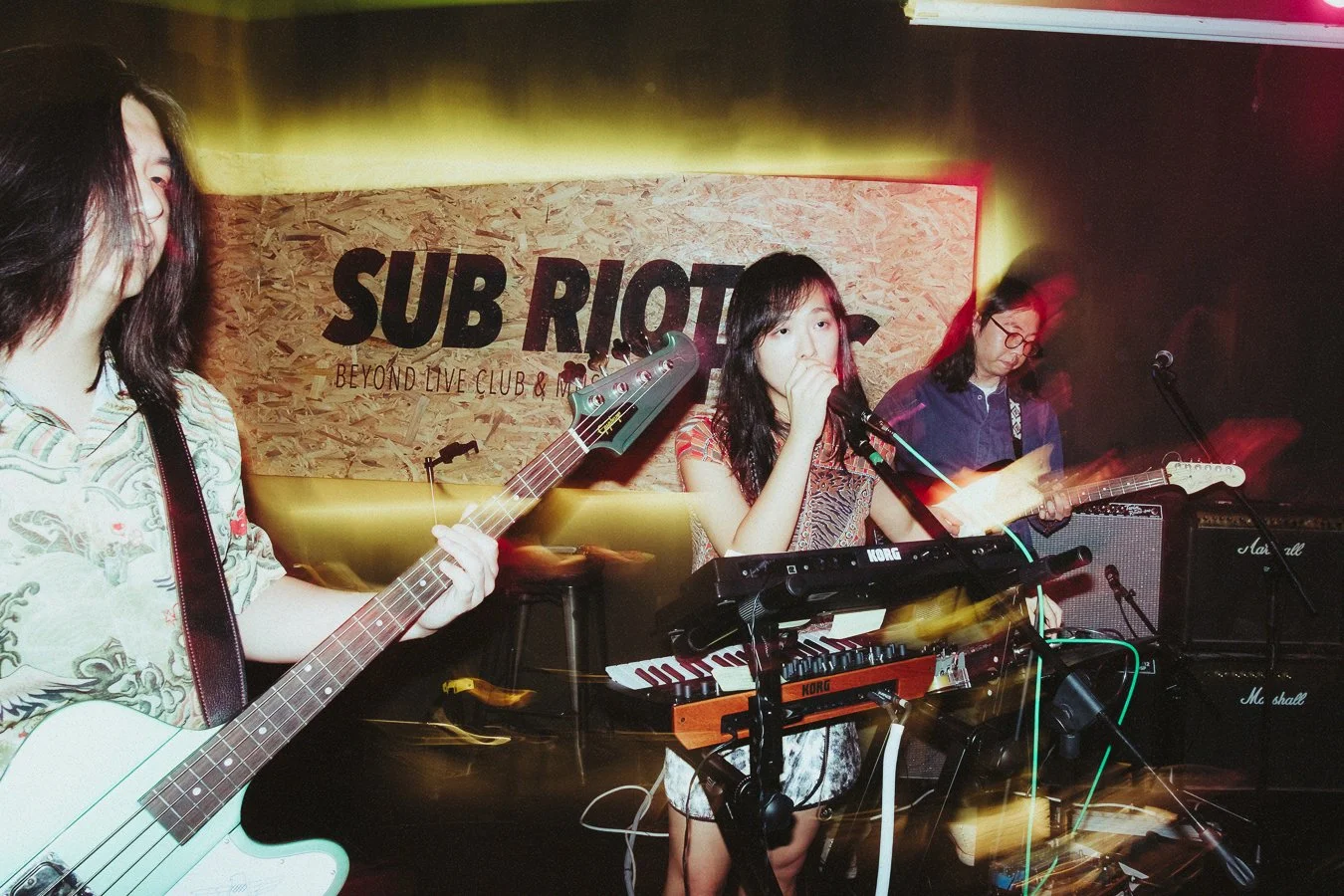
Asian Spice House chassés between genres whilst egging each other on, but amid the menagerie of sound, there are small threads connecting their music across generations and countries. Gakseoli (Pumba) were wandering vagabond troupes in Korea who performed music — often critical and comical — whilst wearing colourful scraps of clothing. The band transmutes the festive, ragged aesthetic of these storied figures into thrifted, mismatched ensembles: rice hats, handmade headwear, Hawaiian shirts, and animal prints. The band's only rule for their fashion? "We should never look like we are trying to be cool," declares Raffina. Their audacious wardrobe is part of the entertainment. Raffina initially found inspiration in these jester-esque figures because "it's fascinating how heavy stories can be presented in a playful way. Life is inherently grim — each person can find a connection with that." Whilst the group touches on these ideas, they are more preoccupied with searching for the "Asian Root Sounds" that connect cultures across the continent. The band's music has a decidedly fun and psychedelic air, but they see a kinship with gut (Korean shaman rituals). Like those rituals, music is "performed for the well-being of the community," says SeungHyeon. "People who listen to our music can put down a certain part of their lives and feel lighter" — and that seems like the most honest summation of what the band does.
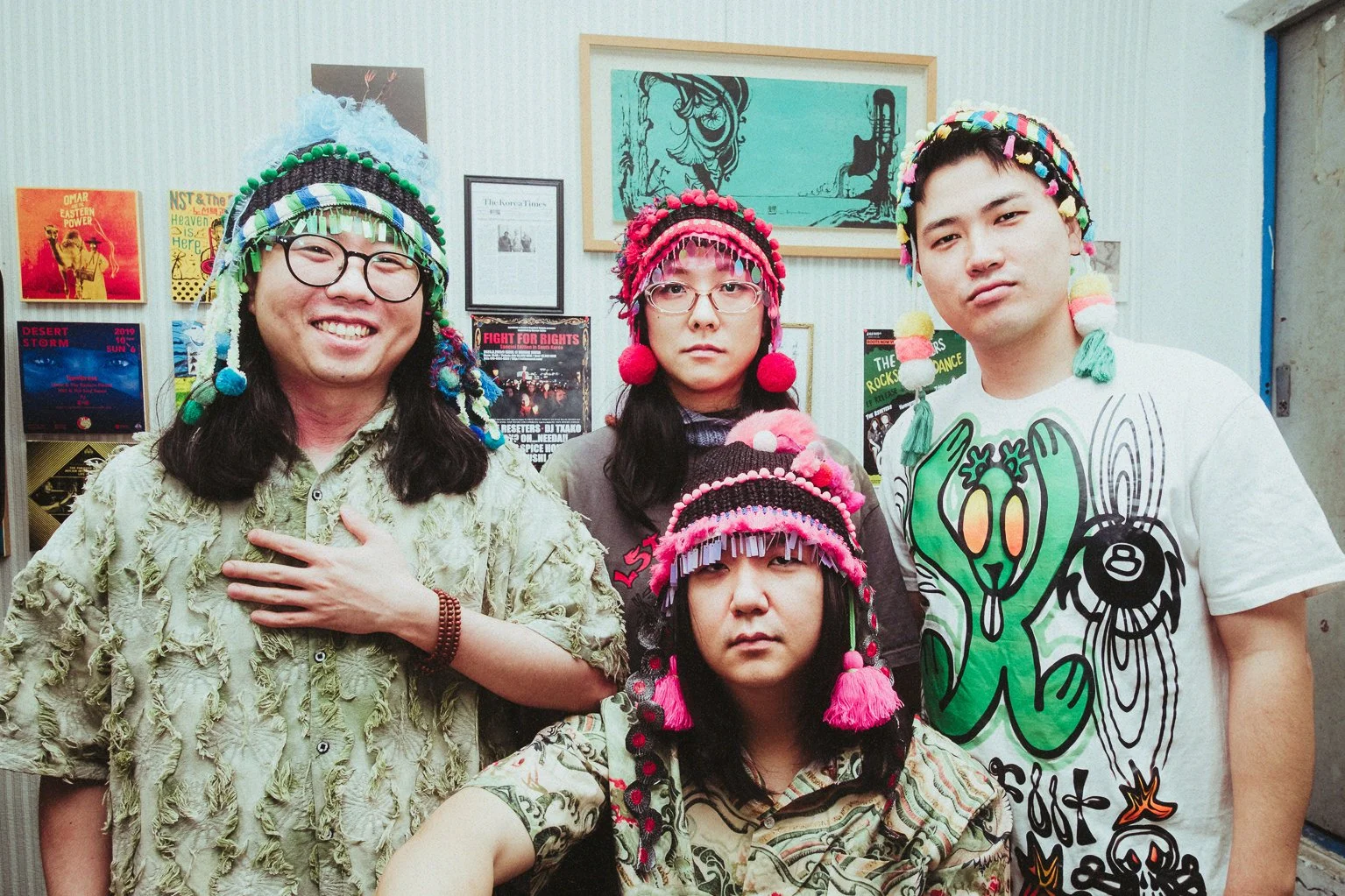
It's apparent that YoungEun and Raffina have inspiration across the arts constantly swimming through their minds. YoungEun often envisions film scenes after taking in cinema and exhibitions, then thinks about how to dress them musically, holed up in his room. Raffina draws from older films and museums filled with stories and music. Despite his jazz background, SeungHyeon also draws on the roots of various Asian music in his approach to drumming with the band. In contrast to the others, YeongJun finds his truest inspiration right at the cusp of performance. Each member's approach is different, but songwriting is done as a team: everyone brings their ideas and sketches together to arrange and complete the songs, so that each one carries the whole group's fingerprint.
Cosmic Rowers is an accumulation of all the pruning the band felt they needed in order to evolve. Raffina found their previous album a little "kitschy and minimalist." Now the band wields a heavier, more serious sound informed by their desire to bring greater depth to live performances — the main factor that delayed the recording process. Both YoungEun and YeongJun didn't contribute to the first album, but held deep admiration for it. "We've changed our sound so much because the new album takes the fonder elements of the previous one and adjusts them to where the group is now," says YoungEun, lending the group a richer overall sound. SeungHyeon felt their first album "was difficult to categorise as a cohesive whole," so this time they decided it would be better for the "songs to flow in a consistent direction" — quite literally, given the maritime theme.
The album is full of surprises, but also a reassurance that the band are as groovy as ever. Most importantly, "the audience should listen to this album and think: 'this is something only Asian Spice House can do,'" SeungHyeon declares. Cosmic Rowers resonates with that message: the band is pushing further into new territory, reflecting on marine musical traditions across Asia. A Korean children's jump rope chant about a whale is rendered into a haunting, psychedelic jeer on Echoes. Baennorae, a Korean sea song, serves as the foundation for the album's funkiest track, Sea Shanty, which features Burkinabé drummer Diabate Yoacuba. The album closes with several dub mixes by Uncle Bongo — and this is only a small sample of what the band accomplishes on Cosmic Rowers. Their multicultural inspirations are given room to thrive thanks to their label, Eastern Standard Sounds.
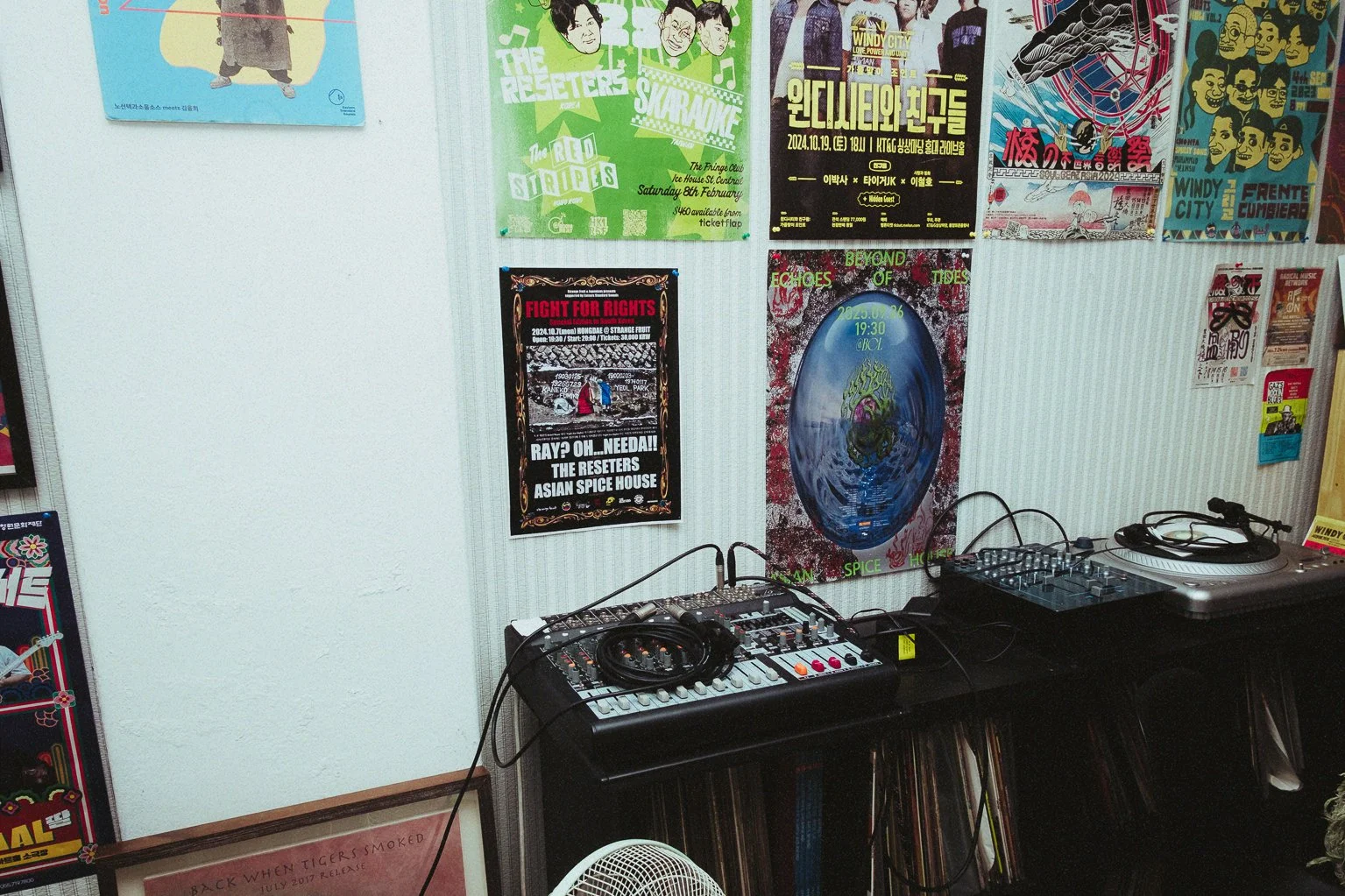
Despite the different genres and countries in play, the album has a clear consistency. YoungEun, handling engineering and mixing, notes that he wanted listeners to feel a "rough" texture, as though the album had been "recorded in a garage." It's fitting: their recording and practice space is cosy and filled with musical artefacts from across the globe — cumbias, dub, and everything else that Eastern Standard Sounds has touched. The practice room feels more like a home than a polished, clinical studio. They sought out recording equipment that would retain an analogue feel "to create a psychedelic texture in the 1970s and 80s style," with careful attention to space, notes Raffina. The album is meant to "evoke the feeling of a psychedelic trip." With Chris Longwood — known for his work with Khruangbin — mastering the record, that psychedelic, groovy quality is pronounced throughout the band's expansive aural reach.
The album is endlessly loopable, but the band are a must-see on stage. Fresh off their release, they are keen to explore more interesting venues, much like that early market show. It makes sense that they want to bring their inspiration back to its roots. Morene Sukha was a venue they thoroughly enjoyed, though — despite the venue's reputation for creating signature food or cocktails for performing bands — Asian Spice House received only a cocktail. The band also wants to introduce new dimensions to their live show. Last September, they were able to expand their visual vocabulary on stage with choreographers and VJs. There's no telling what cinematic soundscapes they will dream up next. Eager to return to the stage, their album showcase on 18th April is not to be missed.