
Yes, Under15 is gross. But this was always the obvious next step for K-pop
An upcoming K-pop audition show that aims to create the “underage BLACKPINK” has drawn heavy criticism for its exploitation and sexualisation of children. The almost unanimous condemnation is a relief. But, as this article argues, we shouldn’t be surprised that this show now exists.
“I might get criticised for saying this,” says Seo Hye-jin, leader of the upcoming talent show Under15, “but our goal is to create an 'underage BLACKPINK.’” With quotes like this, it is not hard to see why the show has drawn such a uniformly negative response. Everything from the title of the show to its core concept to the teaser video of young contestants wearing heavy makeup and revealing clothing SCREAMS creepy. With such a negative response, it’s not surprising that the creators have disabled YouTube comments - the universally acknowledged expression of “yeah, this ain’t it, chief.”
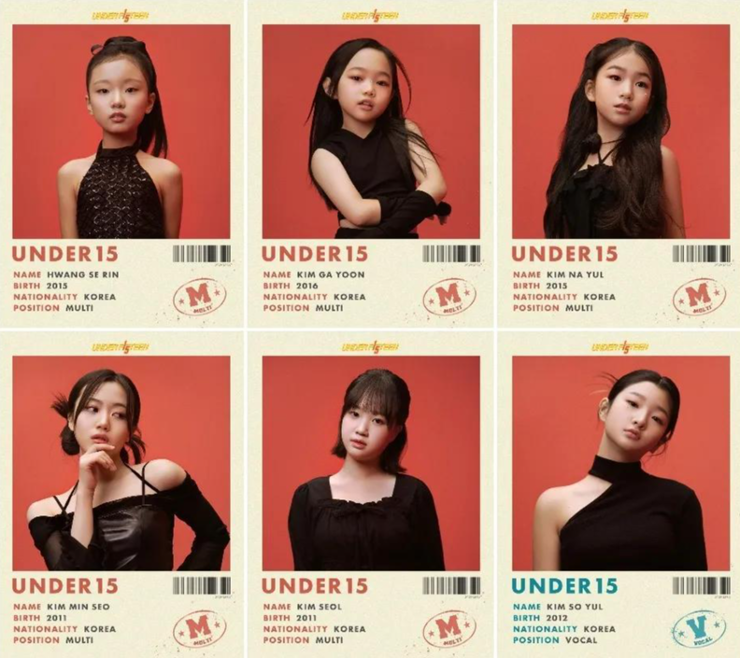
Another thing that is not surprising, or at least shouldn’t be, is that an industry that thrives on infantilisation and pedo-baiting would make a show like Under15. Hear us out.
For the longest time, K-pop has had a problem with infantilisation, particularly (but not exclusively) with the women and girls who are performing. As Liz Jonas put it in her essay, Crafted for the Male Gaze: Gender Discrimination in the K-Pop Industry in a genre where “innocence and sex are the bestselling concepts, girl groups find themselves both infantilised and hyper-sexualised through the outfits they wear, the choreography they learn and the lyrics they perform. This creates the illusion of an idol fantasy that tantalises the public.”
In her essay, Jonas uses several examples to explore ways in which attempts to “de-age” K-pop performers, especially women and girls, contribute to a culture of problematic, male-gazey infantilisation. But let’s be honest, you don’t really need an essay to tell you this. Watch K-pop videos for long enough, and you’ll see the repeated iconography of infantilisation: school uniforms, slumber party pyjamas, pigtails, lollipops etc. You could argue that there is nothing inherently wrong with any one of these things on their own. They are, however, all part of a fabric of normalisation in which the sexualisation of youth happens.
Of course, Korea is not alone in this. Far, far, FAR from it. The recently released pictures from Under15 are eerily reminiscent of photos from America’s child pageant scene. In both examples, equally exploited children (again, mostly girls) are forced by their equally messed up parents to take part in equally insidious beauty competitions.
Pop music, in general, has been perpetually guilty of this for the longest time. In fact, as long as there has been pop, there has been someone involved willing to exploit children. From Shirley Temple to Britney Spears, there’s an endless list of pop stars who have been presented in problematic ways through a mixture of plausibly deniable innuendo and “wink wink nod nod” suggestiveness.
K-pop does generally seem to take that ickiness to the next level, though. Or, at the very least, it’s more transparent about it. The seemingly ever-constant intertwining of sexualisation and youth in pop culture has never been as on the surface as it is in the world of K-pop. Take the Newjeans Cookie controversy of 2023. The girl group (aged 14-18 at the time) sang lyrics that were both cutesy eyelash-batting and also the most thinly veiled sexualisation imaginable. Despite their label’s efforts to claim it was innocent, few were convinced that “Made a little cookie / Come and take a lookie / Only at my house, come over and play / I’ll bake it for you daily” was innappropriately sexual. It would be almost commendable - this removing of the veil and showing of the strings - if it weren’t so downright vile.
And this is the environment in which Under15 emerges. The increasing inclusion of underage girls performing provocatively and the constant de-ageing and infantilisation of older K-pop singers created the stage in which a show like Under15 gets greenlit. Are they as bad as what’s happening in Under15? No, of course not. But a show like Under15 can only exist because of years of normalisation. We’ve been on the path towards this show for years. This was the only logical next step.