
Written by Charity Lynn (@charitylynn)
“Babydoll. We’re the hottest venue in the city, baby,” Garrett, co-owner of Sinchon’s music venue Babydoll, proclaimed. All the while, Jinho, the other co-owner, laughed across the table. Before long, someone suggested they should probably take a shot before beginning this interview. That’s more or less the energy that built Babydoll.
Babydoll wasn’t born from some grand business plan. Instead, it was boredom and community that kickstarted its creation. “There just weren’t enough places for our friends’ bands to play,” Garrett explained. Hardcore shows often fell into an awkward gap; there was a lack of venues with the right kind of space, and many simply didn't want to deal with people stage-diving, moshing, or accidentally breaking things. “Which…I can understand,” he joked. Timing also played a role in Babydoll’s beginning. At the time, Garrett was preparing to close his previous bar, Deadboy. “I was getting bored. Same thing every weekend, making drinks, getting drunk.”
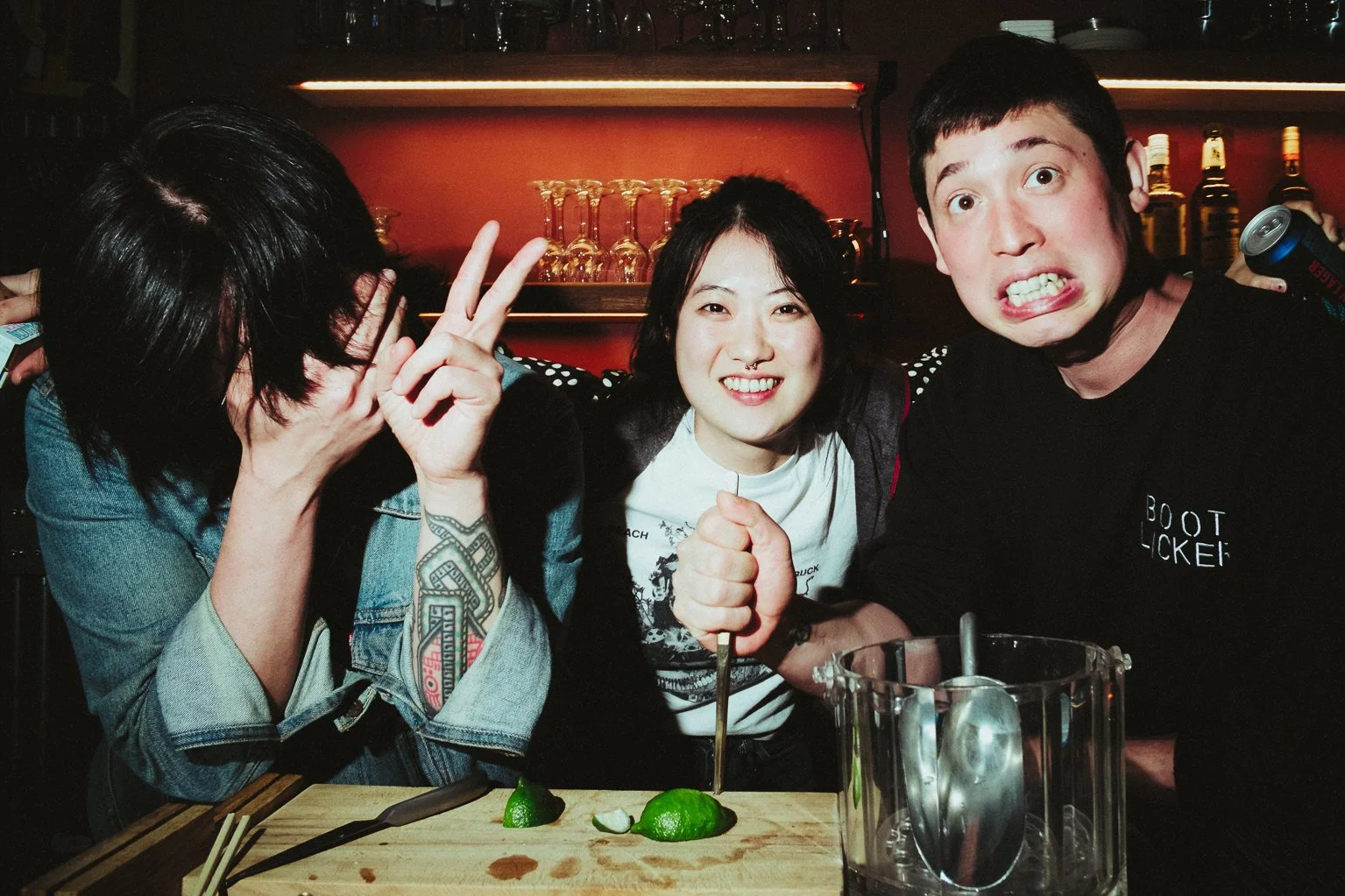
Jinho was in a similar place. He had quit his job and even tried going back to school. “It went terribly,” he said with no hesitation. So the two of them, along with a few drinks, started throwing around the idea of opening a venue. “We’d say, ‘Hey, let’s do a venue, I dunno,’ but it was mostly just talk.”
That was until it wasn’t. “We really just wanted somewhere fun to hang out,” Jinho added. “Weekends started to feel repetitive. All we were doing was just drinking and occasionally talking about music.” Garrett, being in a band himself, also recalled always missing out on shows because he was working the bar every weekend. “I had a show at Deadboy once, but it was just too small,” he explained. Now, instead of missing shows, he gets to watch them every weekend. As for the location, the Sinchon area was chosen mostly out of convenience, although their unofficial “third co-owner”, Gunny, had another reason. “He kept saying we were gonna make Sinchon cool again,” Garrett laughed.
Garrett explained that Babydoll’s name was originally the title of a song from his old band Crawler, which he was in with Gunny and their other friend Paeng. “It was also just something Paeng used to say all the time, ‘Hey, babydoll,’.” Jinho admitted that the alternatives weren’t exactly inspiring. “Honestly, we weren’t very creative.”
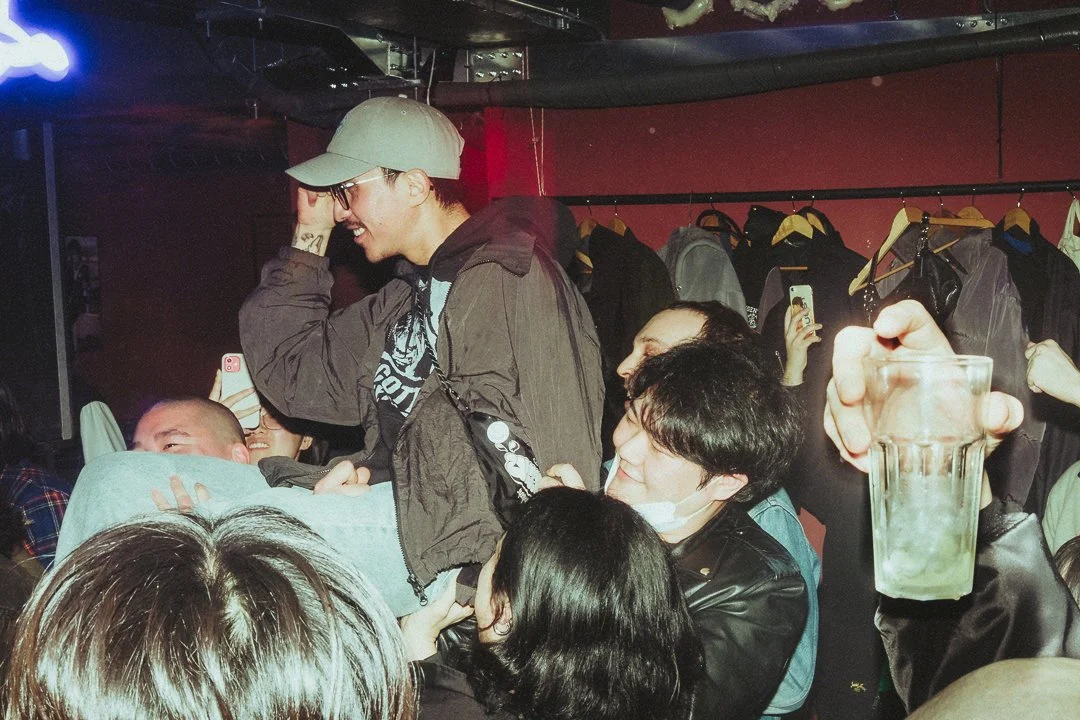
“There was one called Lexicon…” Garrett remembered.
Ultimately, it was agreed upon that Babydoll was probably the better choice.
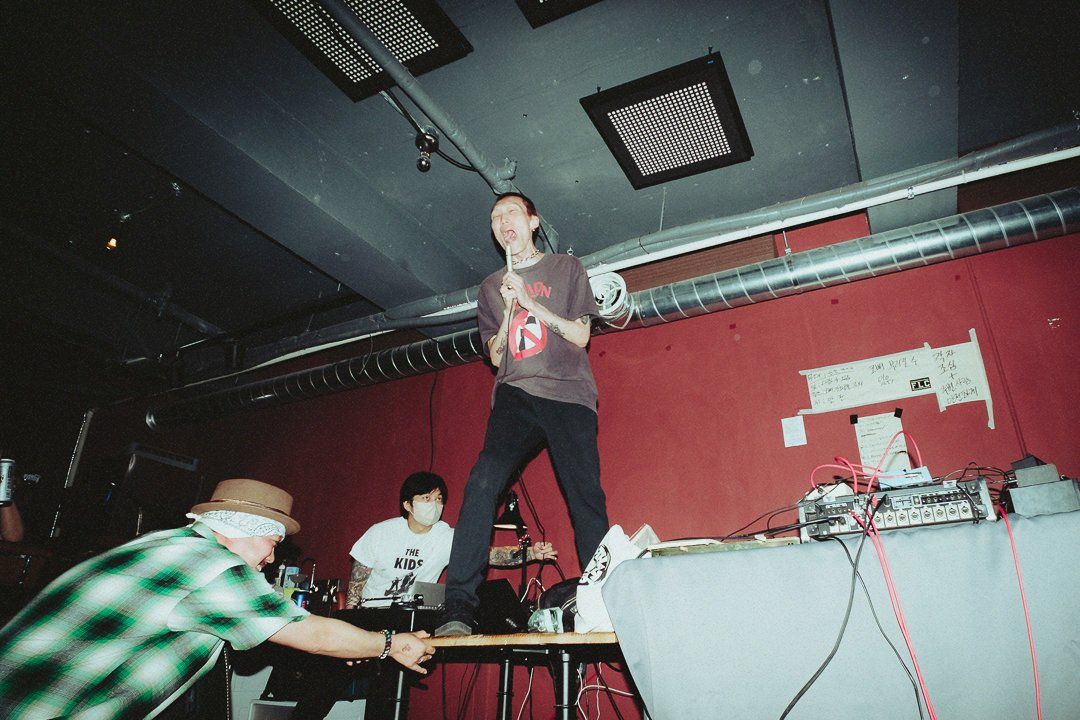
Despite Babydoll’s reputation as one of Seoul’s go-to hardcore venues, neither of them intended it to belong to just one scene. “We didn’t open it only for hardcore,” Garrett explained. “We just wanted a place that would allow those kinds of shows. Even if it wasn’t a live music venue, we’d be open to anything. Recording, art, things like that.” For them, Babydoll is a space where all kinds of artists can perform.
Of course, hosting hardcore shows comes with its own reputation. So what goes through their minds when the energy starts to build up and everyone starts moshing?
“Hey, be careful! Knock it off!” Garrett immediately blurted out.
“Don’t hang on things!” Jinho added.
Both broke into laughter. Behind the jokes, there’s an understanding of what comes with hardcore. “As long as people aren’t trying to hurt each other on purpose, it’s just part of it,” Garrett said. People have gotten hurt before, though. “There was one time someone split their head open,” Jinho recalled. “But honestly those things don’t happen very often.” The two agree that most people walking into a hardcore show know what to expect.
Jinho and Garrett also have a simple philosophy for Babydoll: cheap drinks, good shows, and a room full of people having a good time. They aren’t interested in pretending to be fancy. “We’re not trying to be too sophisticated,” Jinho said. “People don’t come to these shows because they want a really nice cocktail. I mean, who wants to buy a twenty-dollar Old Fashioned?” he laughed. Garrett also hopes people will look back and think, “Remember those days at Babydoll?” He reminisced on past performances, pointing out that audience experience is valuable. “When everyone’s singing every word to the songs, completely soaked in sweat? That’s the best.”
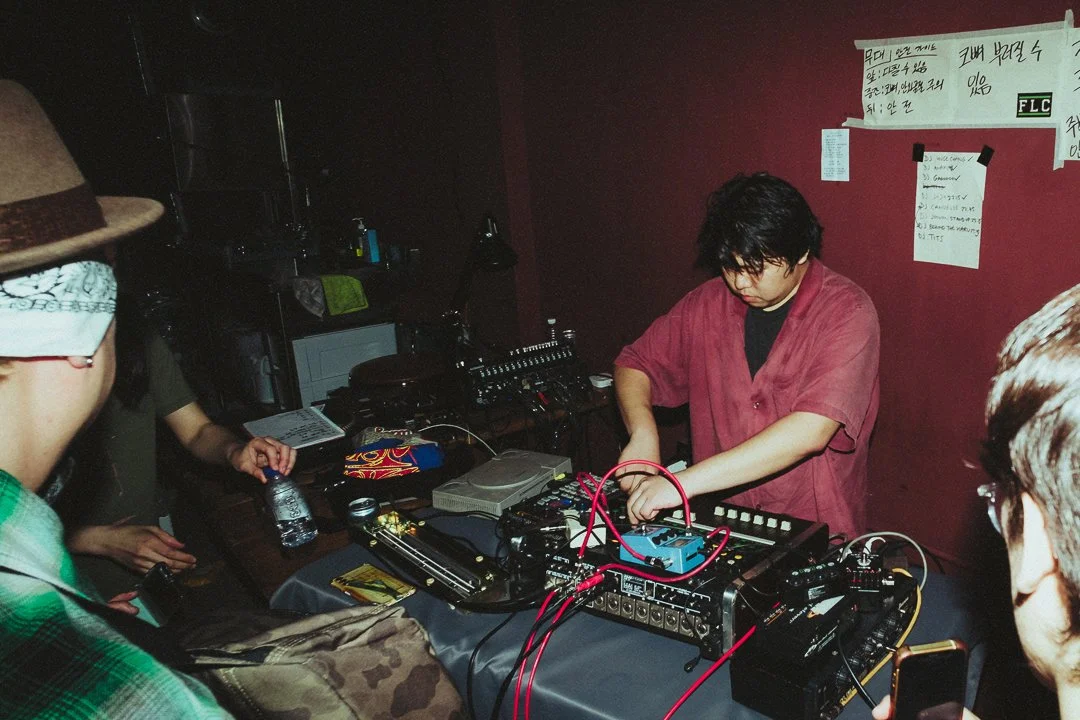
Things weren’t always going so smoothly, though. The first few months were spent dealing with noise complaints, and every show came with the possibility of another phone call from the landlord. “I started thinking we made a mistake,” Garrett admitted. The venue eventually settled into a strict 11 p.m. curfew, a compromise that neither owner particularly minds. “I honestly kind of like it,” Jinho mentioned. “I’d rather finish around eleven than have shows going until one in the morning.” Garrett nodded, and added, “Someone once asked if we could have a show until six in the morning...” Neither of them seemed particularly interested in making that happen.
Surprisingly, one of the venue’s biggest enemies wasn’t landlords or noise complaints.
It was mosquitoes.
“There were so many mosquitoes,” Garrett groaned. “They were everywhere. Bands would swat at them on stage. Even the drummer would fuck up because there was a mosquito flying in his face.”
“Maybe that was the real source of your stress,” Jinho joked.
“I had nightmares,” Garrett added. “Every day, I’d send Jinho a text saying, ‘I can’t do this anymore.’” Thankfully, that war has been won. “We finally bit the bullet and hired a guy. We’re now mosquito-free.” After that fiasco, a dehumidifier was first on their list of future facility upgrades.
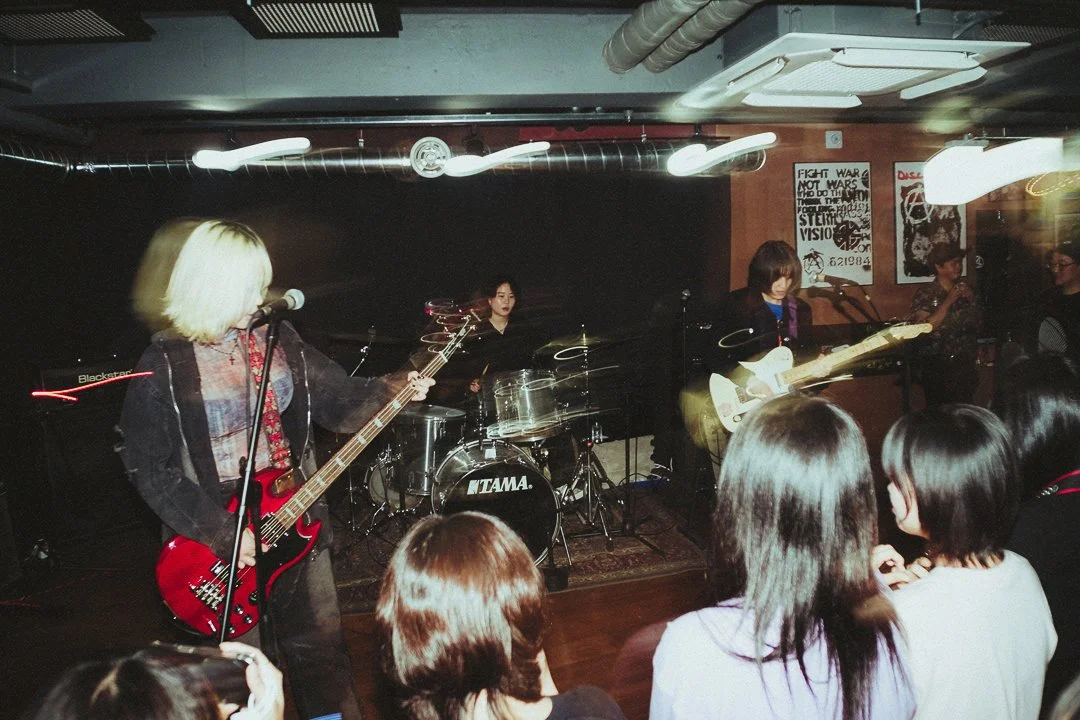
Over time, things have settled down, and they’ve built a better relationship with both their landlord and the surrounding neighborhood. Not only that, but they’ve built a stronger working relationship with each other as well. “We’ve known each other for about twelve years,” Garrett said. “We actually didn’t really get along the first five,” Jinho laughed. But after spending some time getting to know each other at Deadboy, they started to become closer. Even though they butted heads a little the first year of running Babydoll, they both agree things are going much smoother now.
Both are also longtime musicians, which has helped a lot in running the venue in a way that makes musicians comfortable. Garrett, who manages the sound, stated, “I know what I’d want if I were the one playing.” Details like that lead Jinho to hope that people won’t remember Babydoll as a “place with bad sound.” Sometimes it’s the smallest things that musicians remember.
In a way, running Babydoll has changed them too.
“I definitely value connecting with people more,” Jinho said. “My catchphrase used to be, ‘Leave me alone.’ But I’ve grown more tolerant now.”
“Sure,” Garrett nods.
“Thanks, man,” Jinho laughs.
Garrett shrugged, “I’ve got gout now.” Whether that’s because of Babydoll or not remains inconclusive.
Before wrapping up, both owners became sincere. “Thank you to everyone who comes,” Garrett said. Jinho nodded, “You could have the nicest venue in the world. But if nobody shows up, what’s the point?” Babydoll isn’t cool because of its drinks or gear or performances. “It’s the people who come who make it feel that way.”
Garrett paused for a moment before offering one final piece of advice.
“Rehearsals aren’t that important. Don’t worry about it. It’s gonna be fine.”
Keep up with Babydoll on Instagram (@babydoll_seoul).