
Live Sound Temple - Choi Hyunseok on Morene Sukha’s new approach to music

Written by Ethan Kim (@count.kim)
Pictures by Christian Mata (@chris_isu_m)
Morene Market in Seodaemun-gu is not where you'd expect to find one of Seoul's most talked-about live venues. Narrow alleys worn smooth by decades of foot traffic, small restaurants, vegetable stalls and looming new apartment blocks don't exactly scream 'music stage'. Still, a few corners hold on to their own stubborn kind of charm.
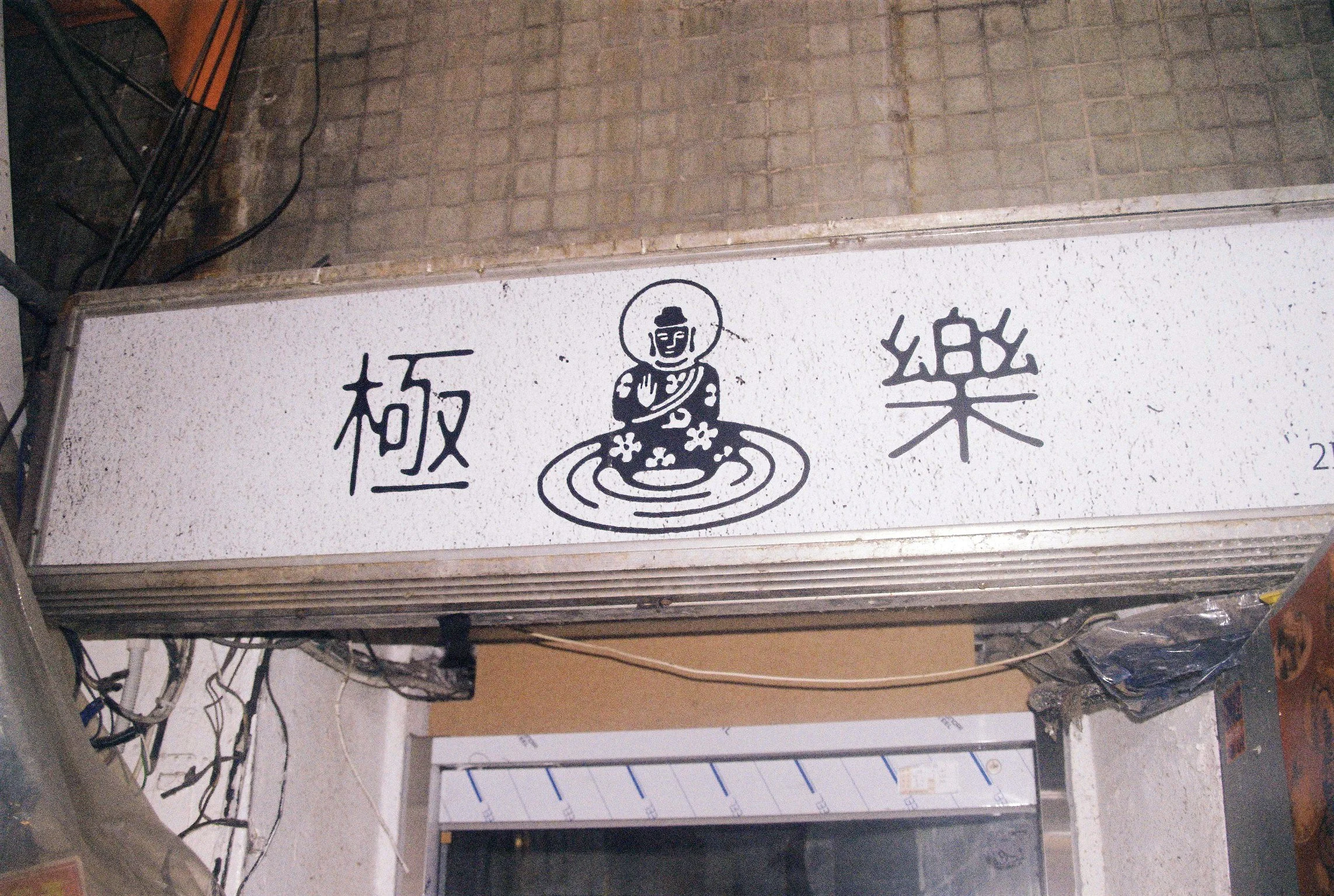
Sukha (극락) is one of those corners. Hidden inside a market building near Gajwa Station, it feels like stepping into another world: Hawaiian resort details mixed with Buddhist imagery, neon lights against dark wood, an almost temple-like calm hanging over a space built for very loud sound. Part venue, part bar, part spiritual joke – as its slogan says, a "Live Sound Temple". "We're a small live venue tucked away in Morene Market," says founder and CHS frontman Choi Hyunseok. "We're a place that worships live music and focuses on live sound."
Sukha wasn't originally meant to be a public venue at all. It began simply as CHS's personal studio – a place to work on music and hang out with friends. That changed during COVID-19, when most Seoul venues were shut and gigs vanished. "Honestly, I don't remember the exact year," Choi says, "but it was during the pandemic that this place really turned into somewhere other artists worked and performed. Venues were closed, no one could do gigs, everyone was struggling. We asked ourselves, right now, what can we actually do for musicians?"
Their answer was live streaming: Sukha teamed with Senggi Studio and Channel 1969 to host what Choi refers to as one of Korea's first live-streamed festivals. From there, the room naturally grew into a proper venue. Soon Sukha had shifted from "just a workspace" into a fully functioning live music hub. "In the beginning it felt more like a workplace than a livelihood," Choi says. "We chose every line-up ourselves and handled all the programmes internally. Now there are far more shows put together with outside promoters. The space has grown together with the scene around it."
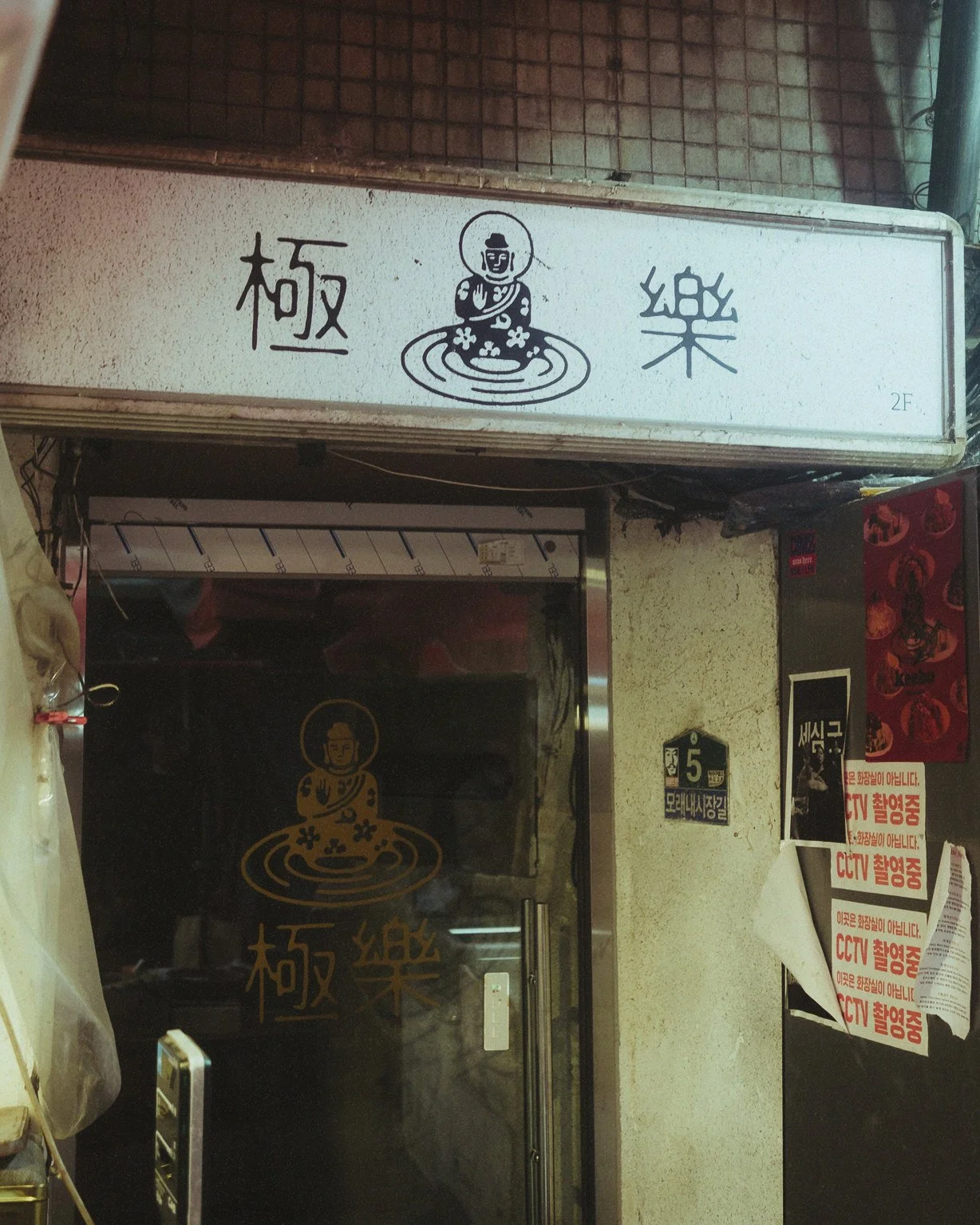
Despite its growth, Sukha is not a rental hall where any band can pay to play. "Honestly, there's a bit of a hurdle here," Choi admits. "We don't rent the space out in the standard way. We run a lot of in-house projects, so it's not that easy for a completely new band to step onto this stage." It isn't about excluding newcomers, he notes, but about giving the room a sense of ambition. "From the musicians' side, I want Sukha to feel like a place you set as a goal." Newer names do make it onto the bill – especially acts Choi feels deserve more attention and whose sound fits the room. He even lights up when mentioning a couple of young bands more people should hear, insisting, "It's definitely not 'you're a rookie so we won't book you'. What matters is whether your sound and mood belong here."
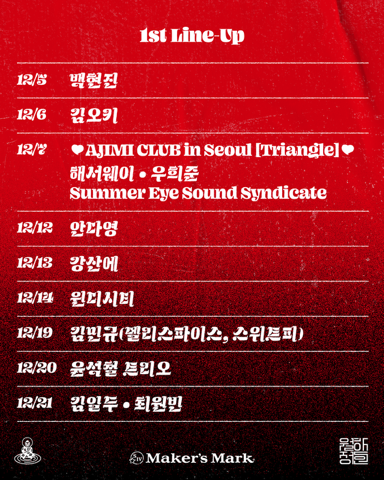
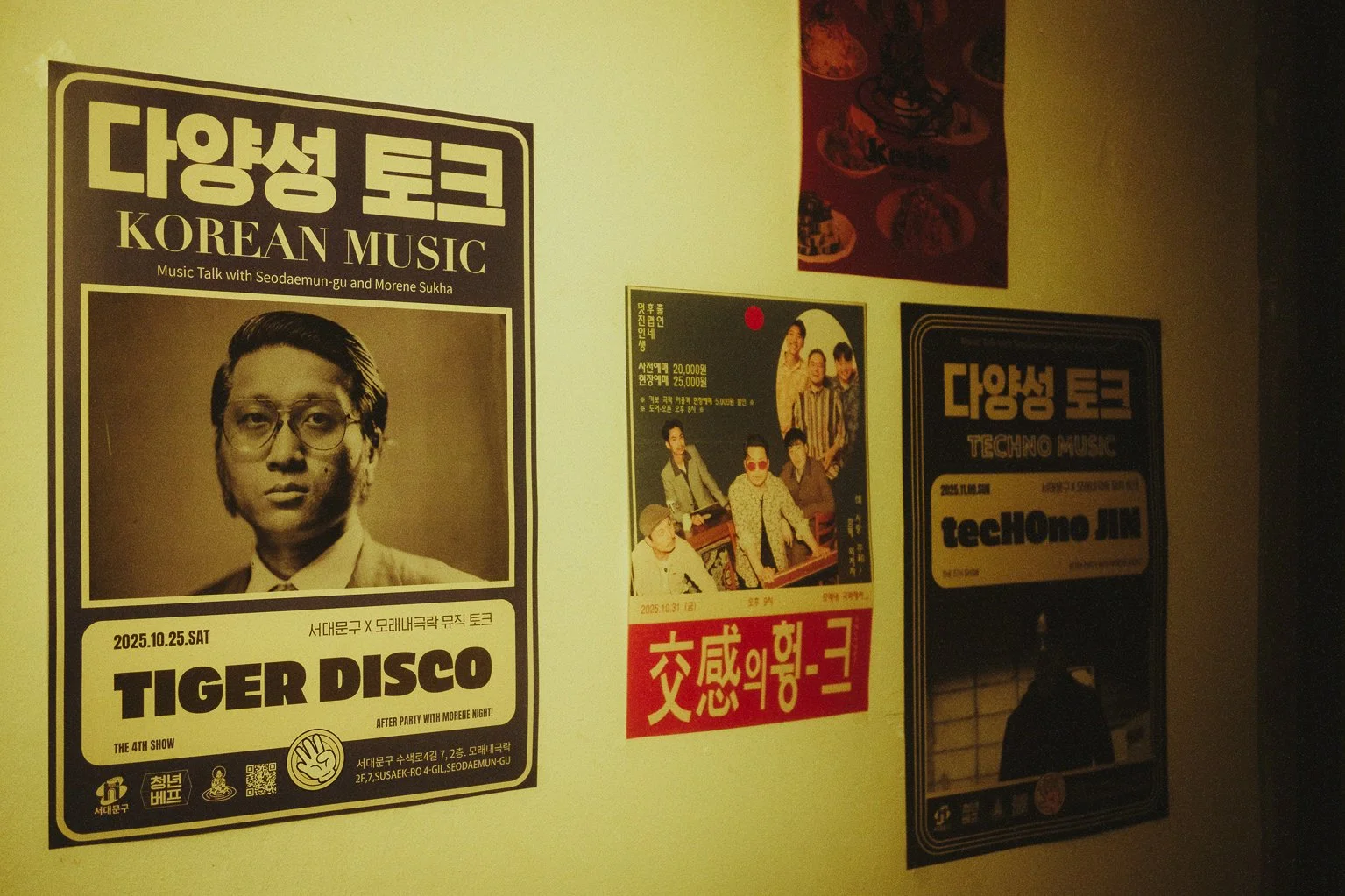
Choi doesn't set strict genre boundaries – any style is welcome as long as it works in the room. A collaboration with Seodaemun-gu's Bef Gajwa youth project has opened up more space for emerging acts. Sukha supports a student ambassadors' group called Indies (인디즈), letting them try their hand at programming: choosing line-ups, designing posters and putting together shows that sometimes stretch the usual "Sukha style". "You could say we're in an experimental phase," Choi says. "We're trying to embrace as many different planners and curators as possible." On paper, the bookings cross genres freely; in practice, the rule is simple – the music has to work in the room. "We almost never draw strict genre boundaries," he says. "If I had to nitpick, I'd just say techno doesn't quite fit our style, so we haven't really put it on. But if someone came with a really clear 'techno special' concept, there's no reason we couldn't do it."
DJs like Yohei Hasegawa, Jeon Yonghyeon and DJ Hodori are regulars behind the decks. On the band side, the programme stays tightly curated. Sukha would rather leave a night blank than shoehorn in a booking that doesn't feel right. "Even if there's a free date, we don't force a team in," Choi says. "Sometimes it's better for the schedule to breathe." And Sukha's upcoming annual series Wolhajeongin (월하정인) is now entering its second season.

Ask Choi what Sukha takes most seriously and he answers without hesitation: sound. "Compared to other venues, we really focus on it more," he says. "This is a space for dealing with sound, so how good it sounds is the number one thing." Sukha's sound engineers visit regularly to fine-tune the room, tweaking little details the average audience member might never notice – a cable swap here, a component change there. Over time, those small moves add up to a difference you feel in your chest more than you see with your eyes.
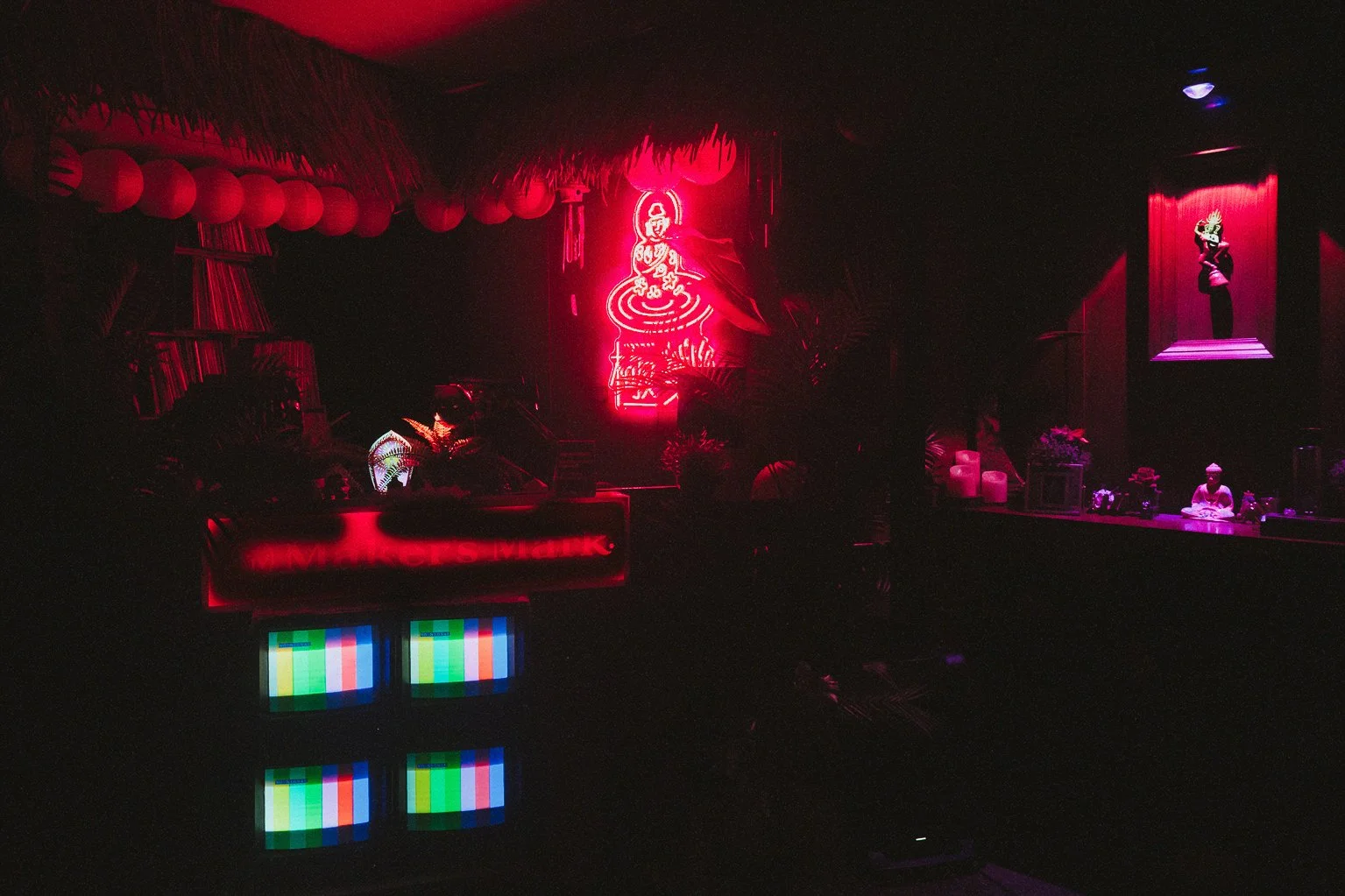
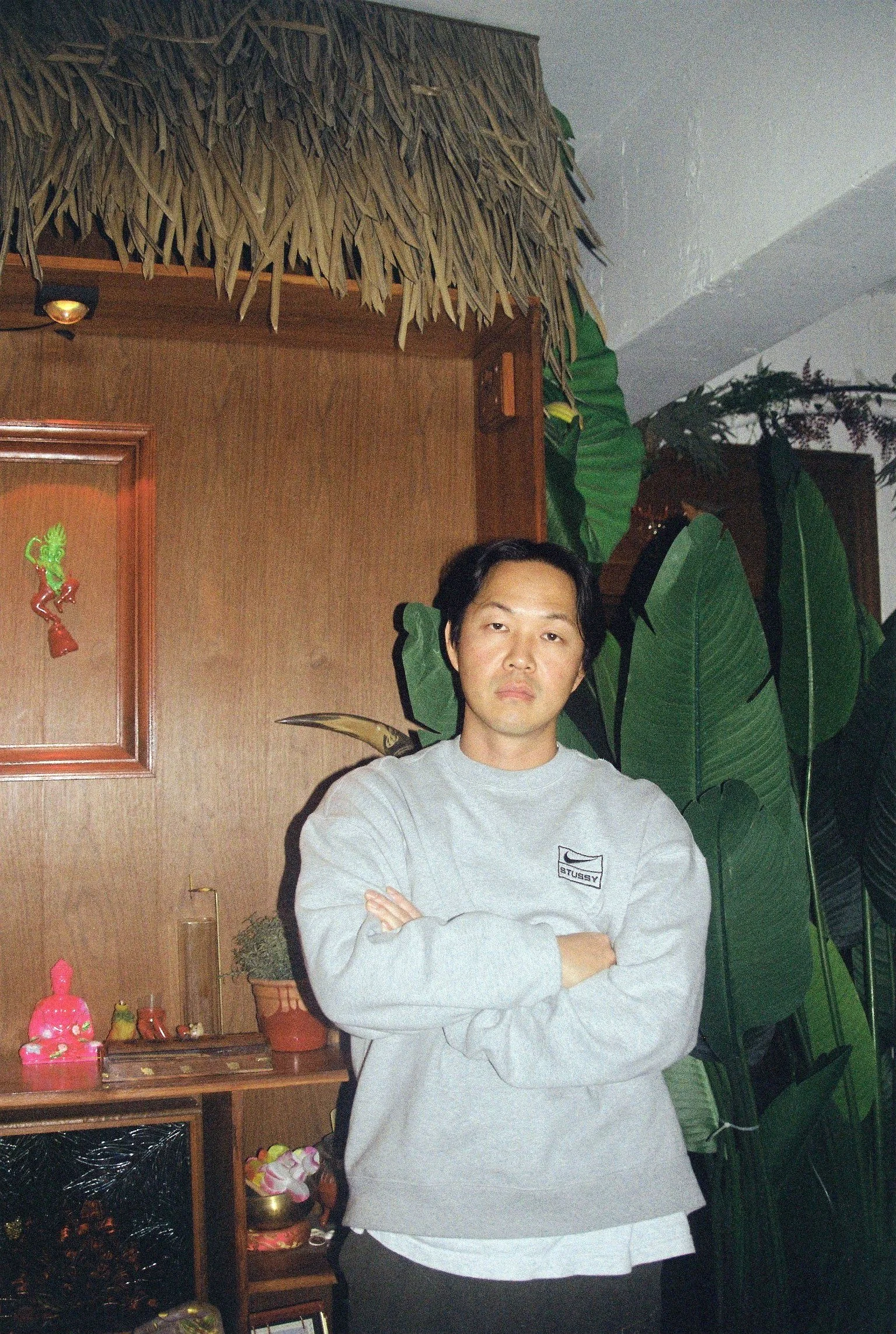
Visually, the venue is just as intentional. Sukha's logo and décor hint at Buddhist roots, but the real inspiration is a loose mix of influences. "I was looking at subcultures that emerged in the US and thinking about how to localise them," Choi says. "At the same time, I've always liked Buddhist art and considered it part of Asian culture, so those images naturally became one of the themes here." Hawaii is another touchstone – resort-like warmth, tropical touches, a hazy zen vibe. In a word, Sukha's aesthetic is mixed culture. "It's a space that directly reflects my taste and is filled with the things I like," Choi says. "In that sense, you could say the space itself is me."
The result can be surreal – actual monks have even turned up at shows. The Buddhist look drew so much interest (even a proposal for a TV documentary) that Choi tweaked Sukha's slogan to refocus on sound. "Now we use 'Live Sound Temple' more in the sense of a place that praises live sound, not something strictly religious," he explains.
Part of Sukha's appeal comes from where it is. Morene Market is one of Seoul's older traditional markets – a bit shabby but full of life, now partly updated with new buildings yet still bustling with food stalls and everyday commerce. Sukha plugs directly into that energy. "In the end, the concept here is 'eat and play'," Choi says. "It has to be somewhere people can enjoy themselves, where drinks feel like proper drinks in a delicious atmosphere. That's important." The venue doesn't seal itself off from its surroundings, either; it embraces the street-market vibe rather than shutting it out.
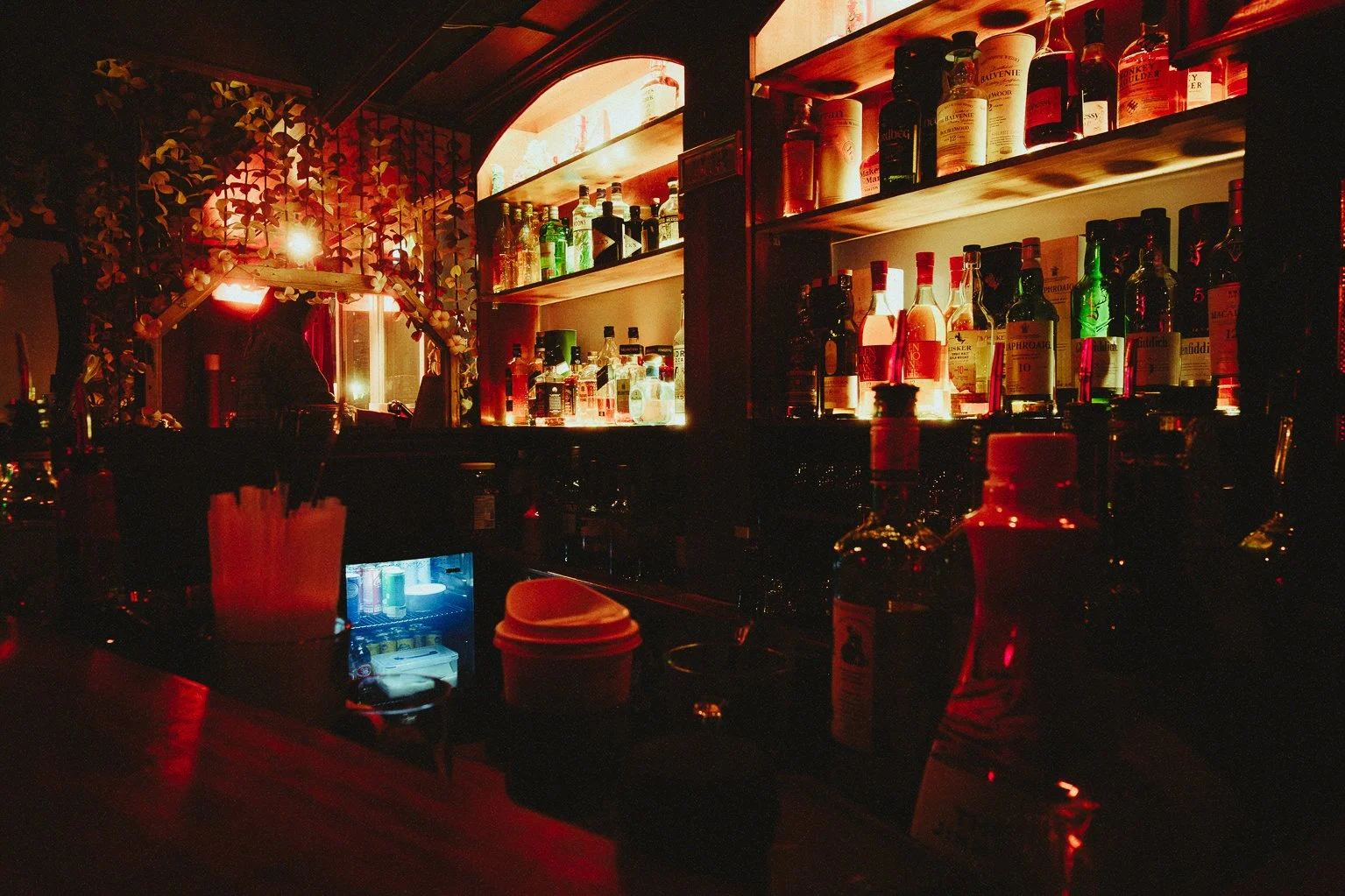
Inside, Sukha's identity flows into its food and drink. They've collaborated with brands like Maker's Mark on special drinks, and host a food stall called Keebo run by chef Nam Joonyoung, a younger friend of Choi's. Keebo isn't a static restaurant – its menu changes with the events. When certain bands play, the kitchen might whip up a dish to match their vibe. Maker's Mark keeps inventing new cocktails, and Keebo acts as a platform for creative food ideas tied to each show's programme. "We're aiming for a space where music and food create the event together," Choi says. "We're planning shows that borrow from the old 'dinner show' concept – people eat in a cosy atmosphere, have conversations, then it rolls into DJ parties."
At Sukha, change is constant. New cocktail ideas emerge almost every week – sometimes faster than the staff can keep up. When asked to choose a personal favourite among the bar's creations, Choi chose one. "The basil tomato cocktail," he says. "It's a bit fiddly to make, but it tastes a bit like pizza. I've drunk a lot of it myself." The bar programme is equally experimental, and one creation in particular has become a minor legend: Sukha's coriander-infused gin and tonic. When the team first started dropping fresh coriander into gin and tonics, photos of the drink went viral. These days other bars serve coriander cocktails, but Choi is convinced Sukha did it first. "It's a love-or-hate kind of drink, and I actually like that," he says. "It's for people with a clear sense of taste... a cocktail that gives even more satisfaction to the people who do like it."
Next door, an annex called OBEY Sukha is taking shape. Inspired by the rounded Seokguram Grotto, it's being built as a dark, immersive room for house music and beyond. Sukha's own apparel will be on offer alongside a collaboration line with streetwear brand OBEY – blending music, fashion and venue into one "Sukha world". Choi sees this as part of building Sukha into a brand where music, food and clothing flow together in a unified experience.
Choi often returns to a guiding image for Sukha: a place where temple-like stillness and resort-like ease coexist. He believes this dual vibe draws in kindred spirits – people who truly "get" Sukha's world tend to become very loyal. Just as importantly, when they bring friends who share that taste, those newcomers often fall in love with the place as well. "Someone might come at first just to eat Keebo food, then realise there's a gig on, start watching shows and gradually fall into the music," Choi explains. "Or the other way round – they come for a gig and end up loving the food and drink. I want to create gateways where all these different points of contact link together."
Looking ahead, Choi is more interested in deepening Sukha's identity than expanding its size. A Sukha Magazine and other content projects are in the works, and a pop-up at a major department store is planned. Rather than running every show themselves, the team plans to support more outside curators and sharpen how they communicate what Sukha is all about. As Choi puts it, "It's not about expanding recklessly – it's about digging deeper into what we already have."
Above all, Sukha's golden rule is that the team must enjoy what they do. "It's important that we enjoy it ourselves," says Choi. "When we can enjoy this culture together with others, that's when it becomes real – a culture everyone creates together in the spirit of 'let's have fun together'. That's the direction I'm aiming for with Sukha."