Ppangse’s harmony and connection in paint
Words and pictures by Christian Mata (@chris_isu_m)
In a plain, elderly Seoul neighbourhood, there is a house with a radically coloured giant snail spray-painted across it. The steep hill it sits on overlooks the city, where tall offices loom above the classic blue-roofed residences. The pavement leading to the house is from another generation when Korea would mix stones into the cement batch; nature and development hand in hand. It’s hard to notice when your feet leave the contemporary side of Seoul: bicycles personalised with quaint trinkets and makeshift baskets, small old-fashioned shops with bright hand-painted signs, and peppers and persimmons drying out in the sun. It’s far from her hometown, but it’s Ppangse’s favourite part of the city.
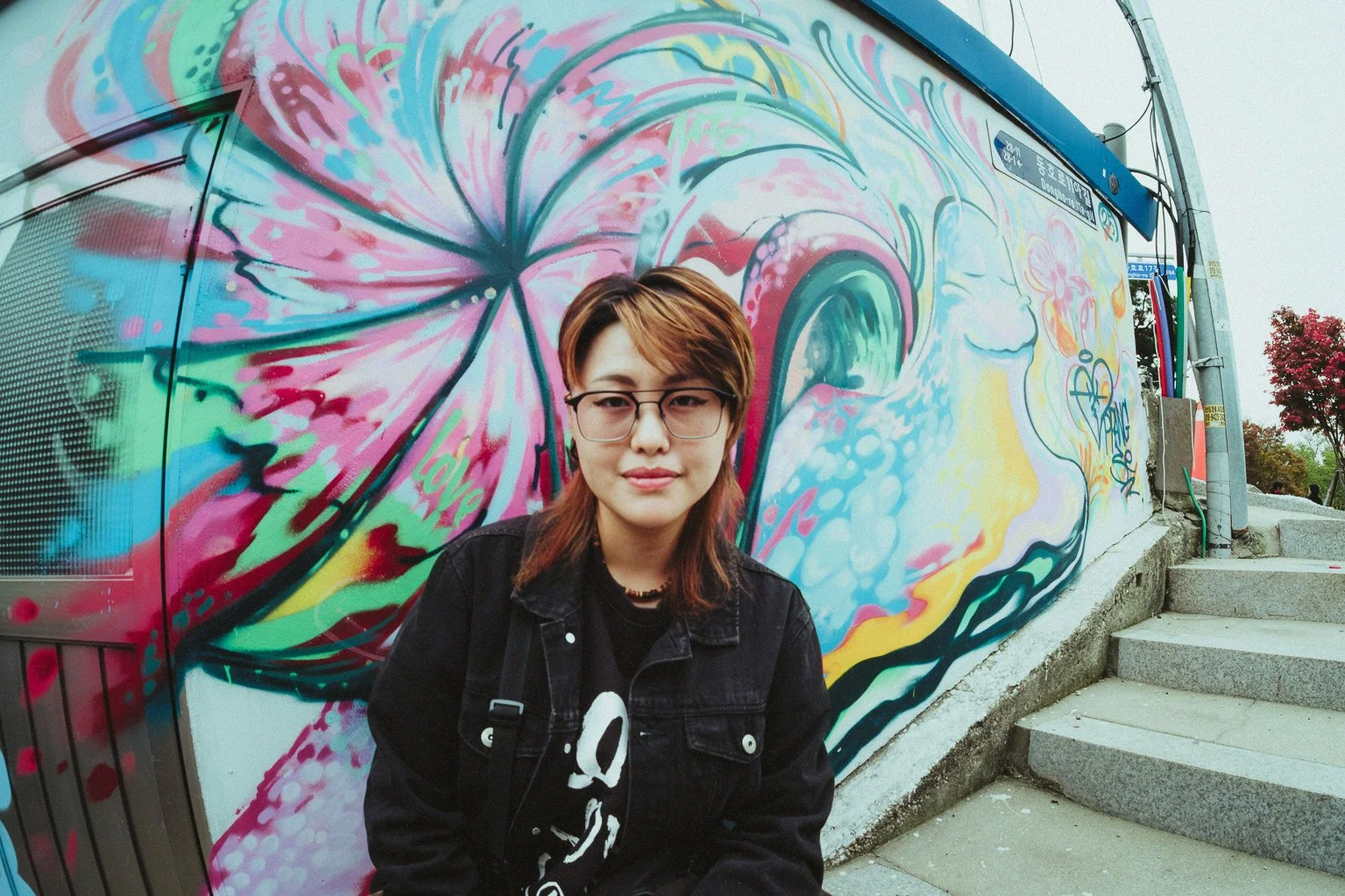
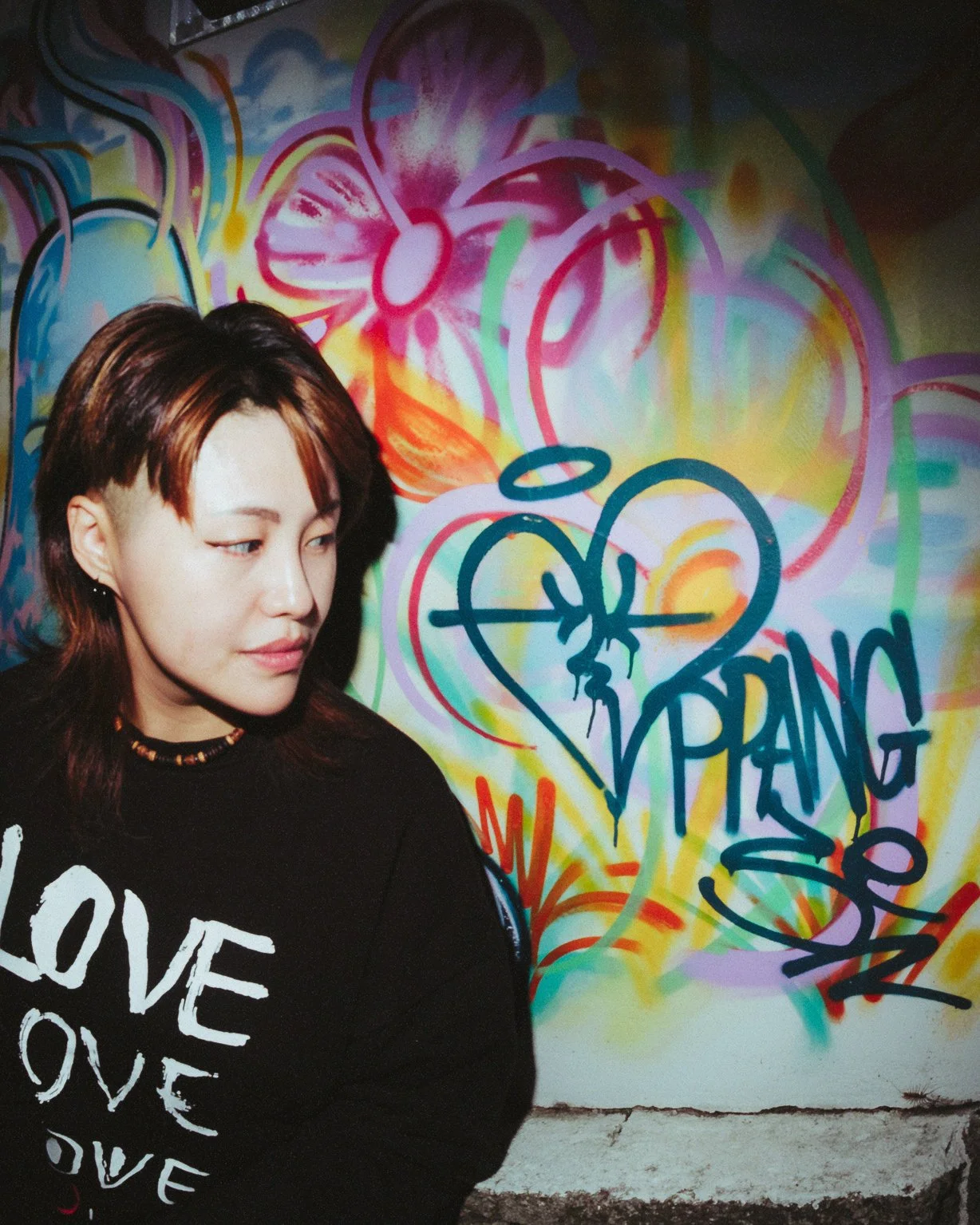
Born Kwak HaeJi, she was a precocious child constantly doodling. By middle school, she was penning a regular repertoire of comics and characters, including a bird that would become her namesake. Her interest in graffiti began with her high school homeroom teacher giving her a media artist’s memoir, Park Hoon-gyu’s Underground Travels (박훈규 언더그라운드 여행기). Teeming from the burden of being a graphic design major in university, she took a year off and rediscovered her passion for art through graffiti, which makes her feel like “a pioneer, a navigator.” Now, she carries herself with a kind of peace and weightlessness: often found at a variety of art and music events around Korea, joined by all manner of artist friends and her long-term boyfriend, DJ 5nail. But it’s not the art itself but rather connections that motivate her.
Part of Ppangse’s signature style is shaving 1 side of her head
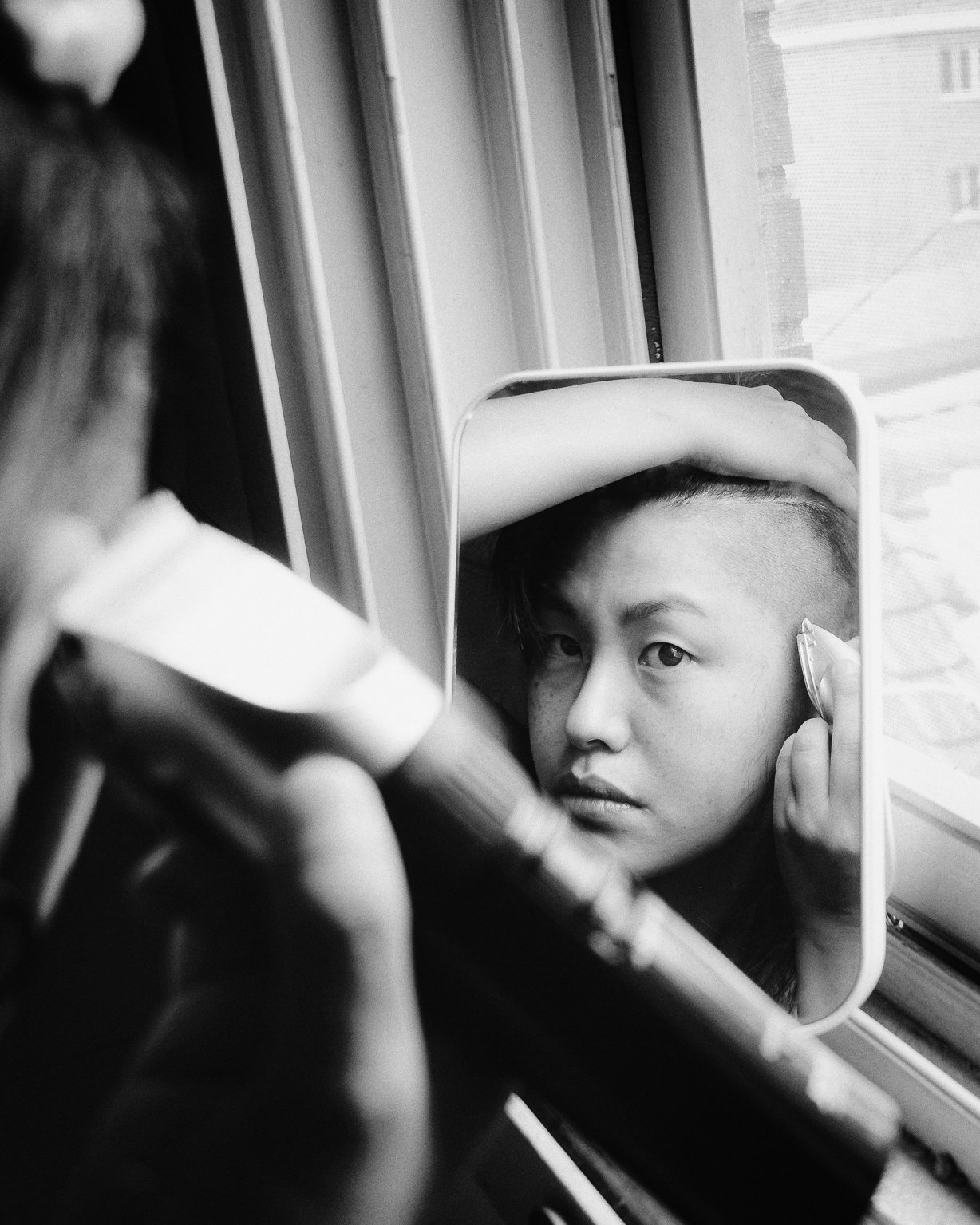
Ppangse is careful in choosing how she describes her craft. Street art is a broad term that can include anything that happens in the street. While a lot of her activities include graffiti, her “beliefs are more like expressions of street art.” She often sees the world through dualism: everything exists with a counterpart. The graffiti scene in Korea is ”colourful, like the red and blue, separation and balance of taegeuk (태극),” but she feels like graffiti in particular is such a personal form that it’s impossible to make an absolute statement. On one side are the conservative people with old-school hip hop values arguing about what is ‘real hip hop’, and on the other are newer artists who treat graffiti more like street art, free expression. Though people could mistake this for conflict between the old and new, Ppangse view the two sides as “friendly, just with different personalities”. This is in stark contrast to Korea’s graffiti scene 10 years ago, when she began her career in earnest on the streets of Daegu. Then, graffiti had “a feeling more like vandalism, not art, lots of tagging, bombing, and dissing”, she admits it was hard for her to do her activities at that time.
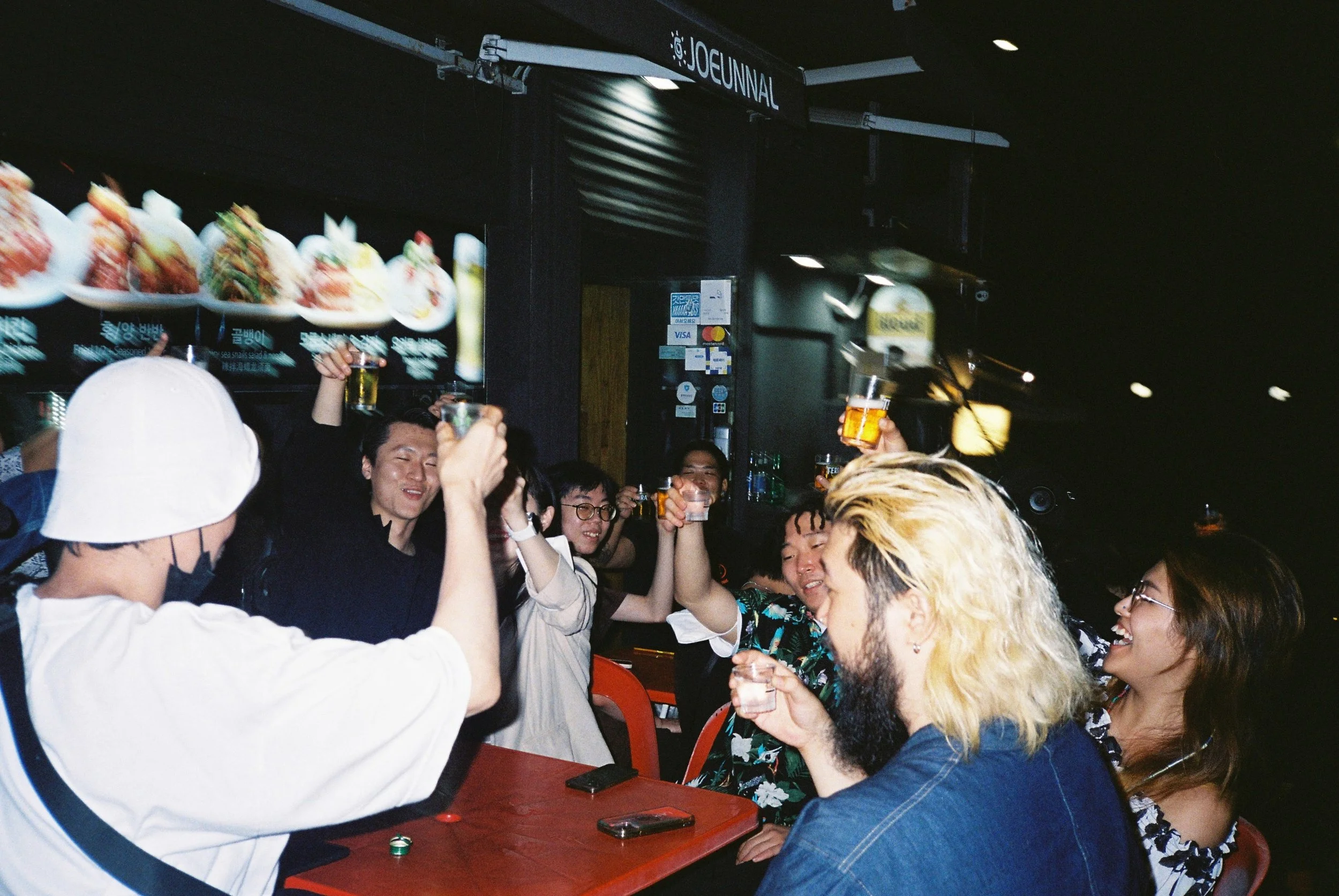
Mingle 2022
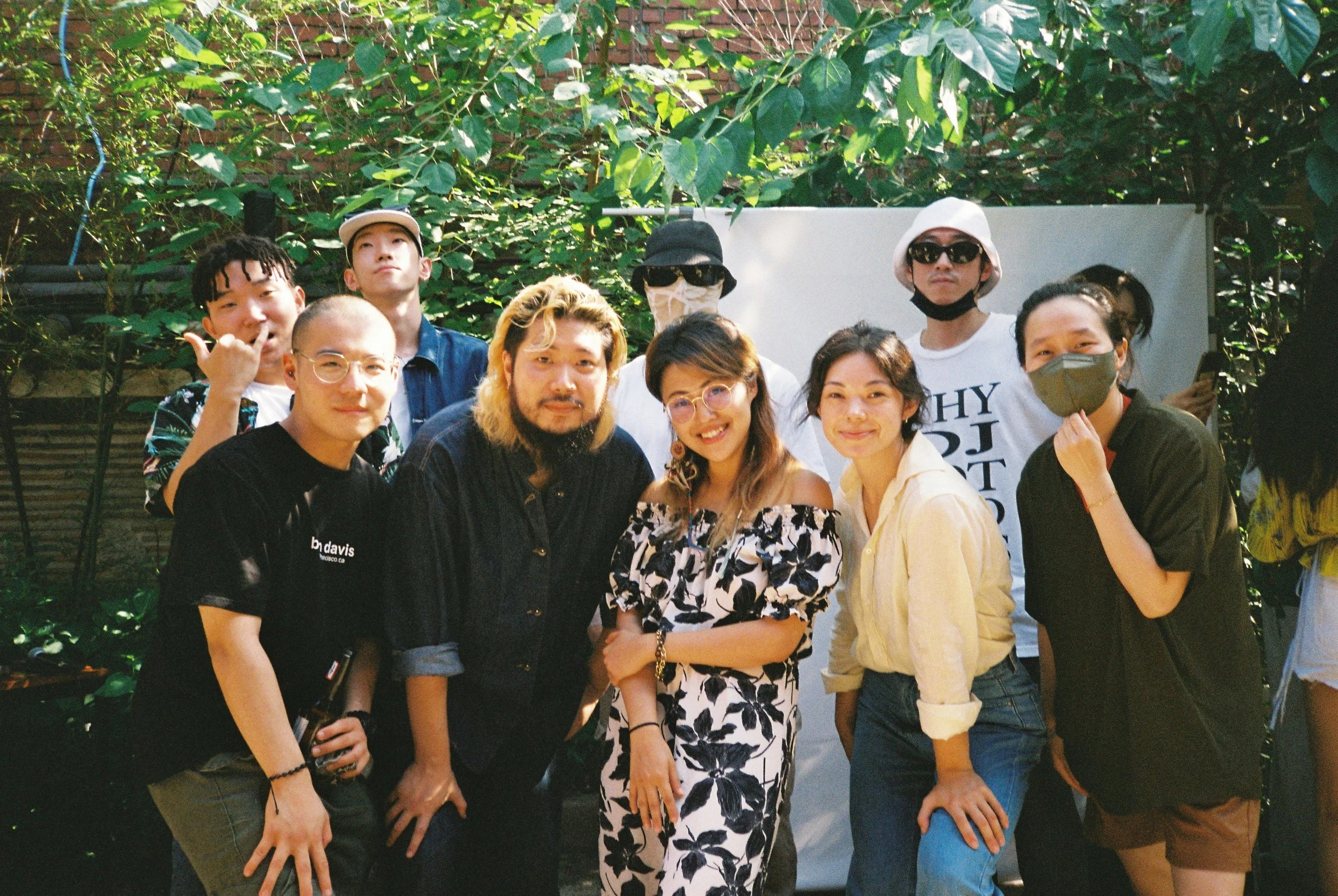
Mingle 2022
Ppangse’s aim is to build community. Murals, markers, stickers, all of this is her way of connecting people.“Through my work, strangers become neighbours.” For her projects, she often throws parties, and since 2017, she’s hosted an annual multidisciplinary art event called Mingle. Meant to break down every boundary that comes with art, it includes different generations, experience levels, and genres. It’s her favourite way to foster harmony. In general, audiences really enjoy seeing graffiti. Elderly spectators understand spray paint as a tool, but are amazed it can be used for art. She also does graffiti classes for students as young as elementary school. An especially moving experience was watching a younger student cry when class was over because he wanted to do it again right away. So she indulged him with more graffiti, but it was also eye-opening for her. She wants to share her work as much as she can “because it’s not just graffiti, it’s art. Art is not a part of daily life in Korea; it’s special. So some people feel intimidated or burdened trying to engage with art.” Though she’s done lots of gallery work, she’s more comfortable working in the streets, rain or shine.
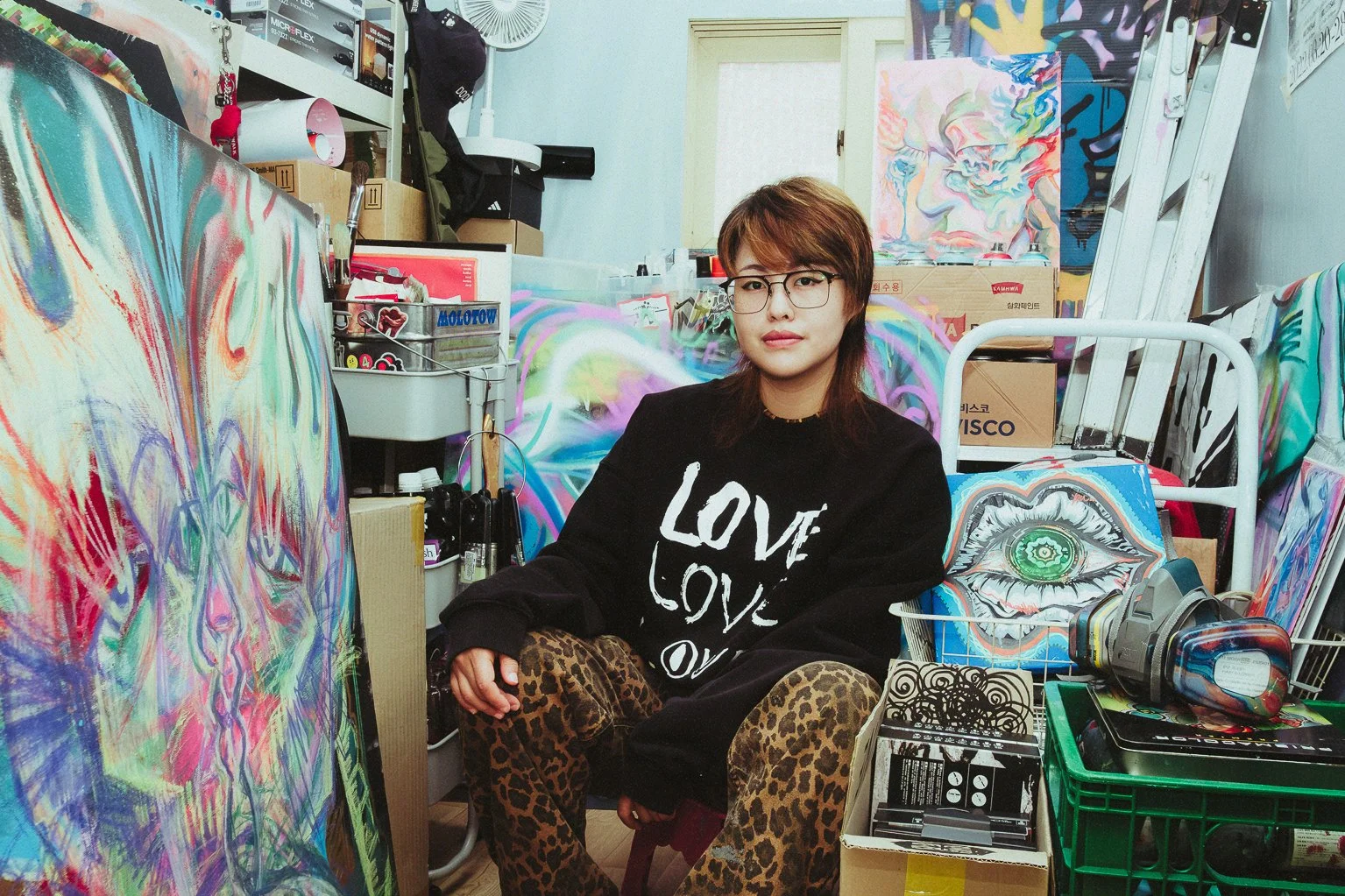
Ppangse didn’t expect her large project debut to be feminist. There was a project proposal programme designed to support social issues with young women. She was faced with a choice of where to implement the project: Seoul, where many political ideologies exist, and there is lots of artistic movement, or her hometown, one of Korea’s most conservative cities. In the end, she decided that Daegu needed this project more. She was nervous about the project; feminism is a volatile subject across the country, so choosing to create a direct political message was scary. But through this conflict, she realised “I was speaking as a woman, as a person, and I wanted to show the energy I wanted to see most personally as an artist.” She always enjoyed self-portraits as a woman, so it was a natural choice for her debut. Though that was 10 years ago, even now, when she shows up to a job, people are surprised she's a woman. Because of that project, she’s grown a lot. “Back then, that was a woman I deeply resonated with, and thanks to that activity, I've moved beyond myself more; people, earth, the universe, they keep moving, and I’m interested in the soul.” Despite how sensitive the topic still is in Korea, Ppangse wants to keep growing and presenting her work honestly.
Her reach is by no means limited to Daegu. Around Seoul, her sticker bombing and murals are also found around many clubs, restaurants, and streets. She has an ongoing project in Seoul with long-time friend Mr. Tongue titled “디스 컴퍼트” (a play on discomfort/this comfort, which sound the same in Korean). It’s about overcoming inconveniences and growing out of the uncomfortable. 5nail’s music as well as his eye for lighting make him a good partner when it comes to live painting and installations. Ppangse has also worked with many high-profile names thanks to Bluefast. On her work with various K-pop stars and Beenzino, she’s amazed at how these teams always work so efficiently and demand perfection. She’s not starstruck by any of it, though, and is more interested in working with musicians who fit her energy. Balming Tiger, Roots Redeem, CHS, and YAEJI - all have a kind of fun and friendly vibe that matches her. Someday she’d like to work with any of them for a pop-up, a music video, or anything in between.
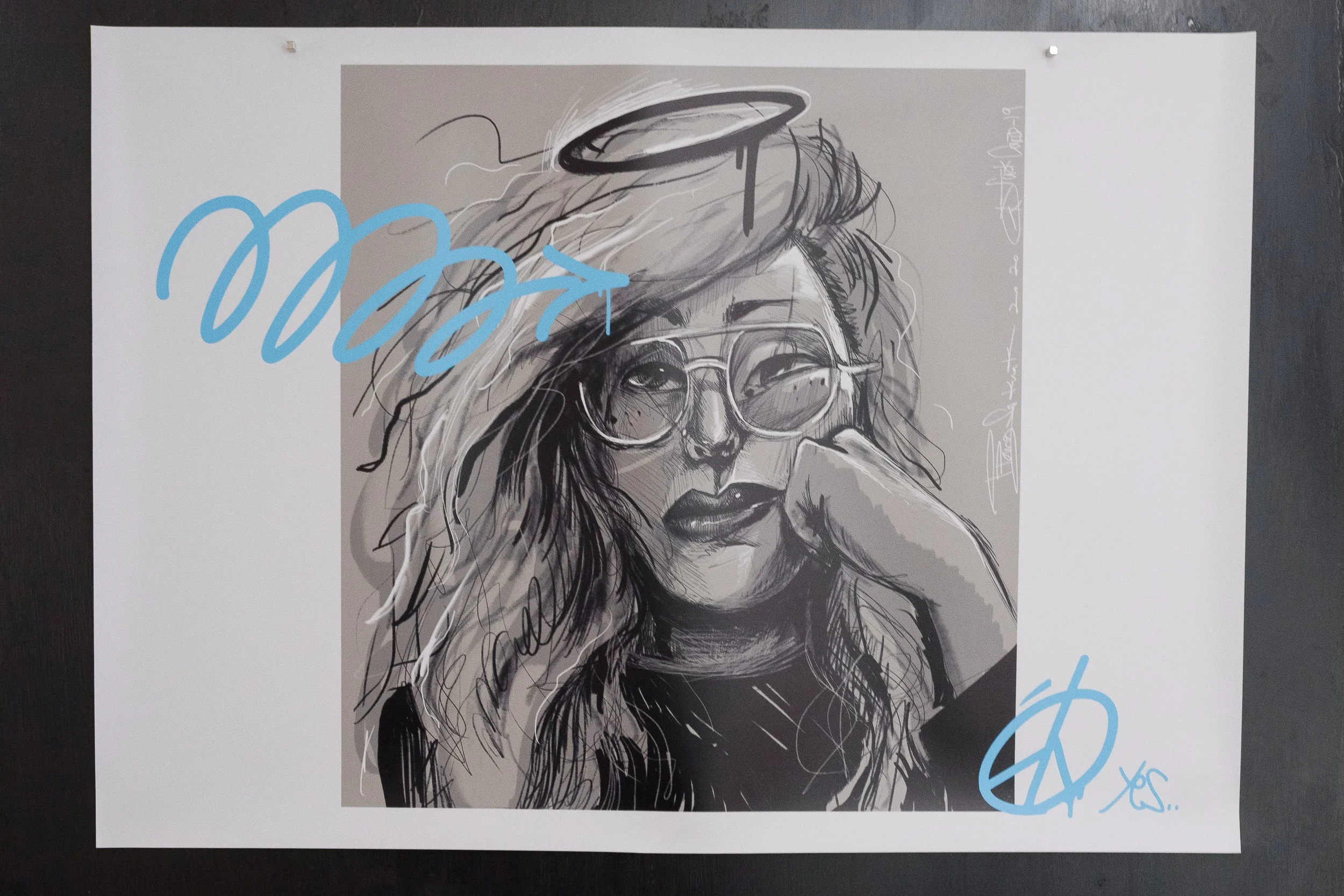
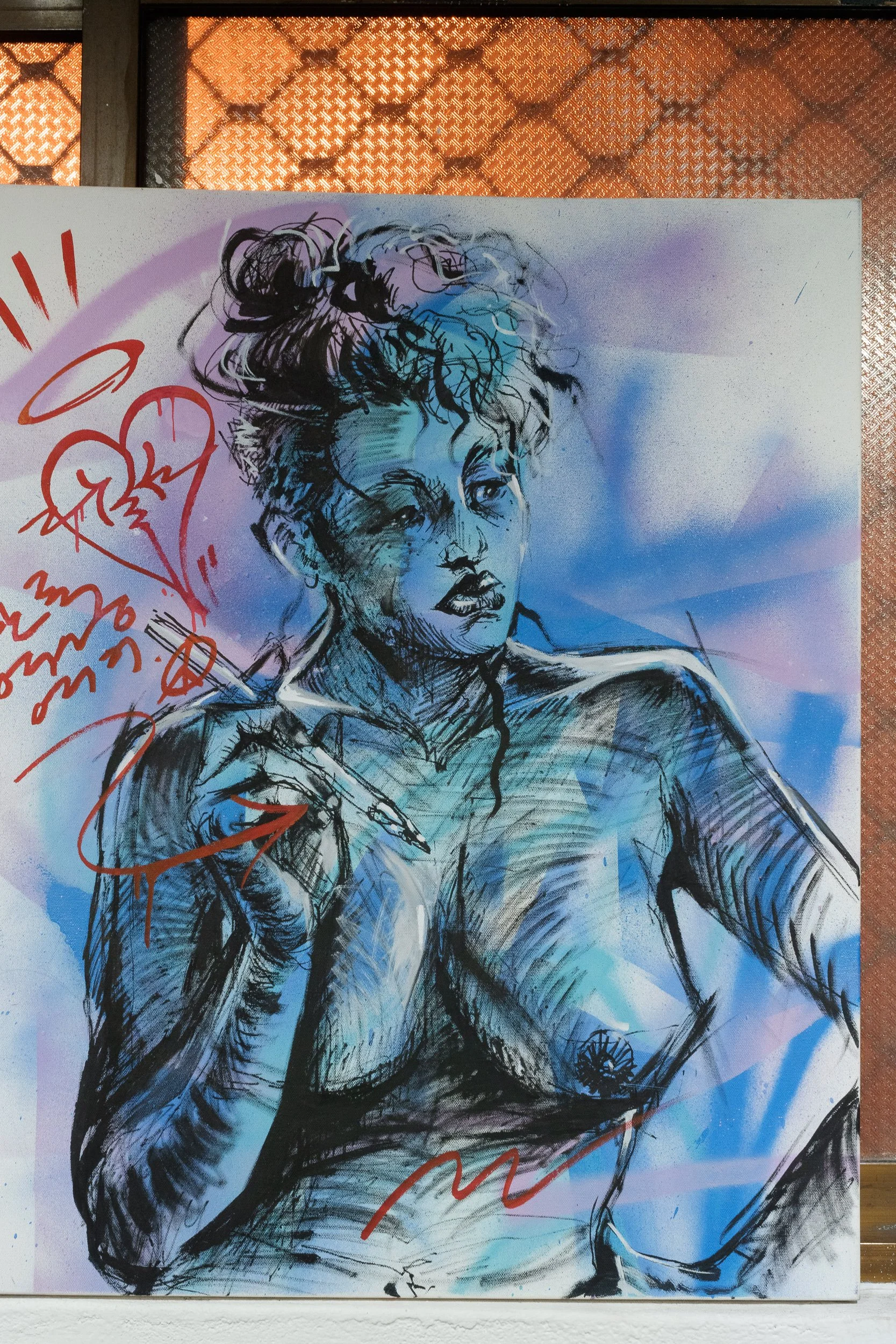
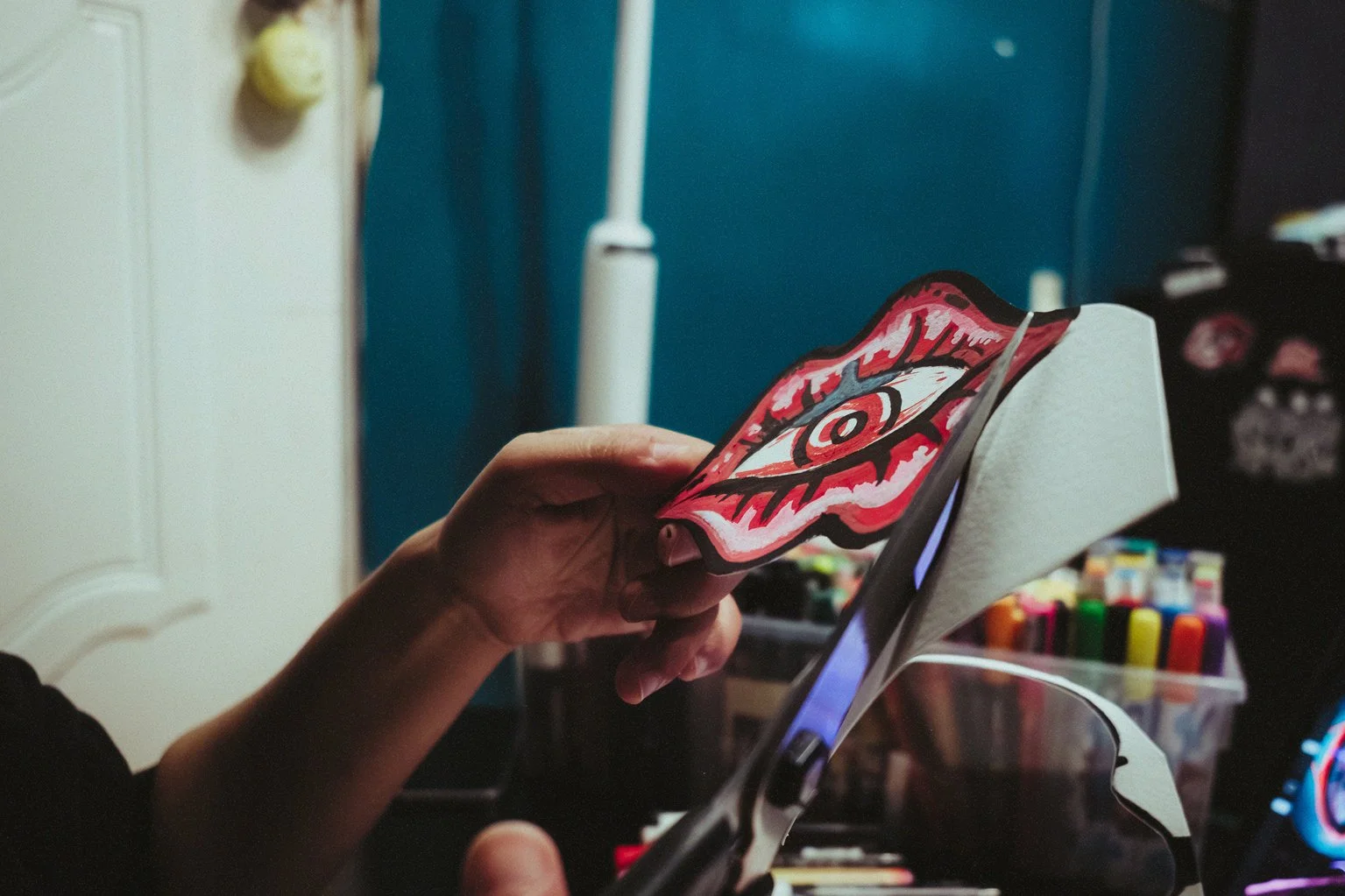
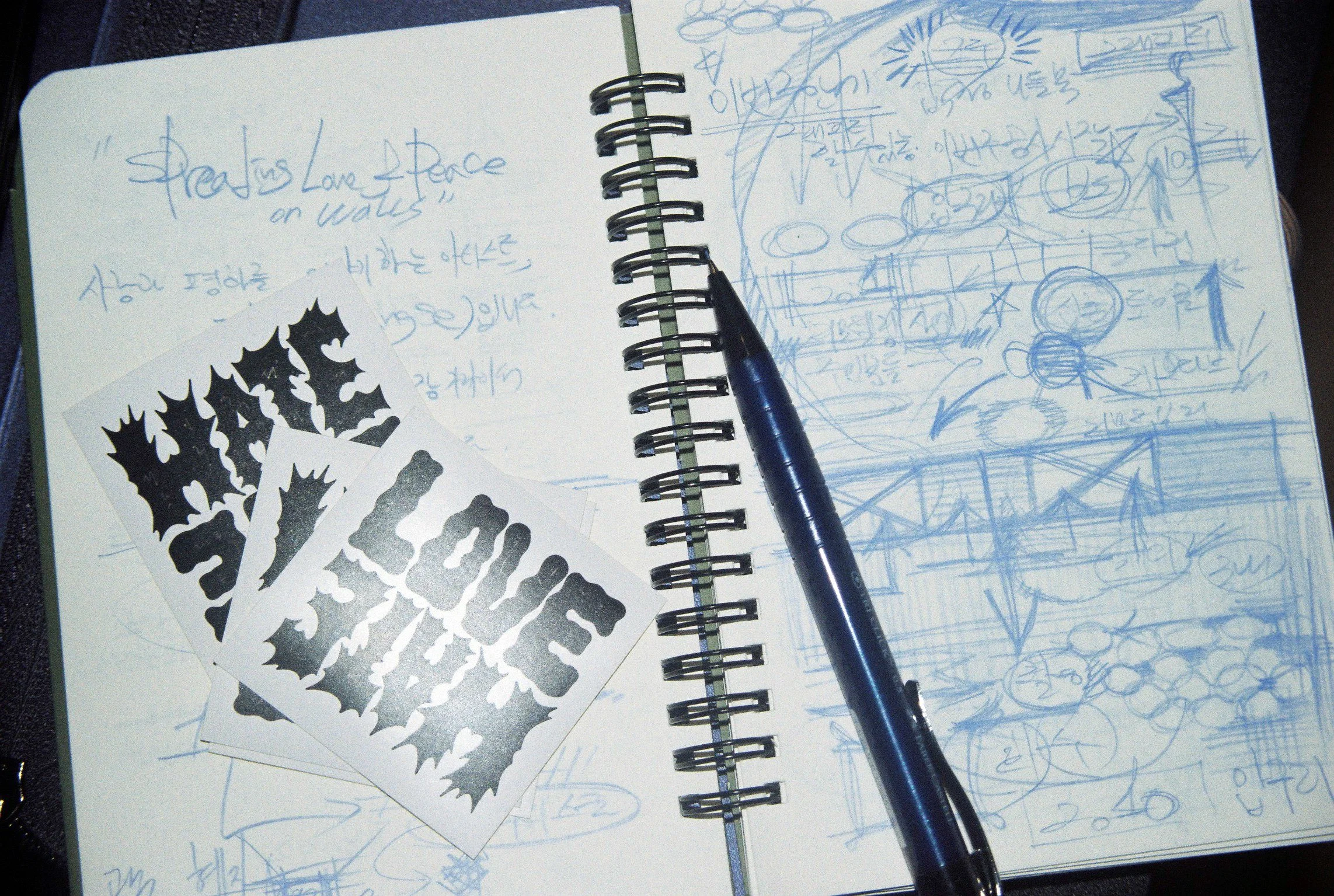
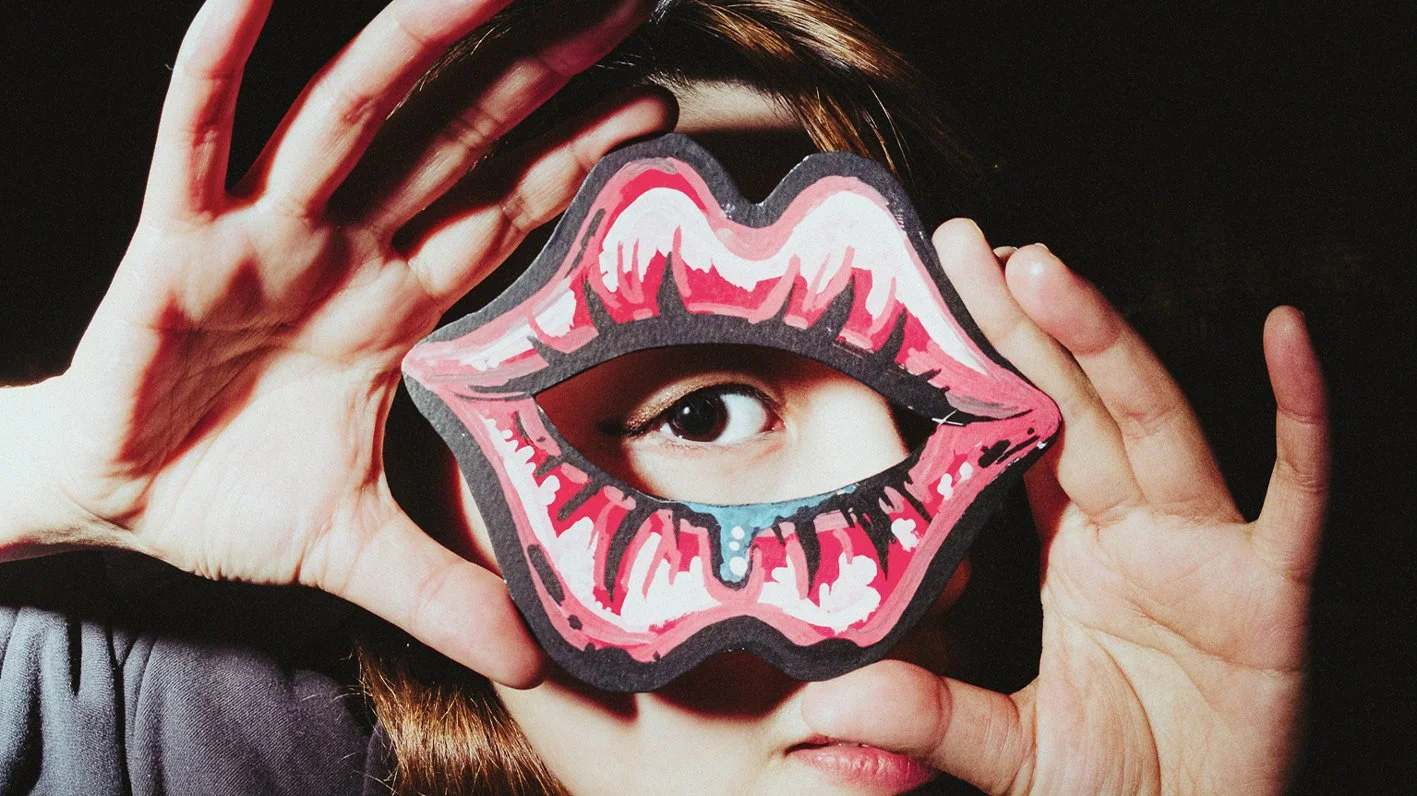
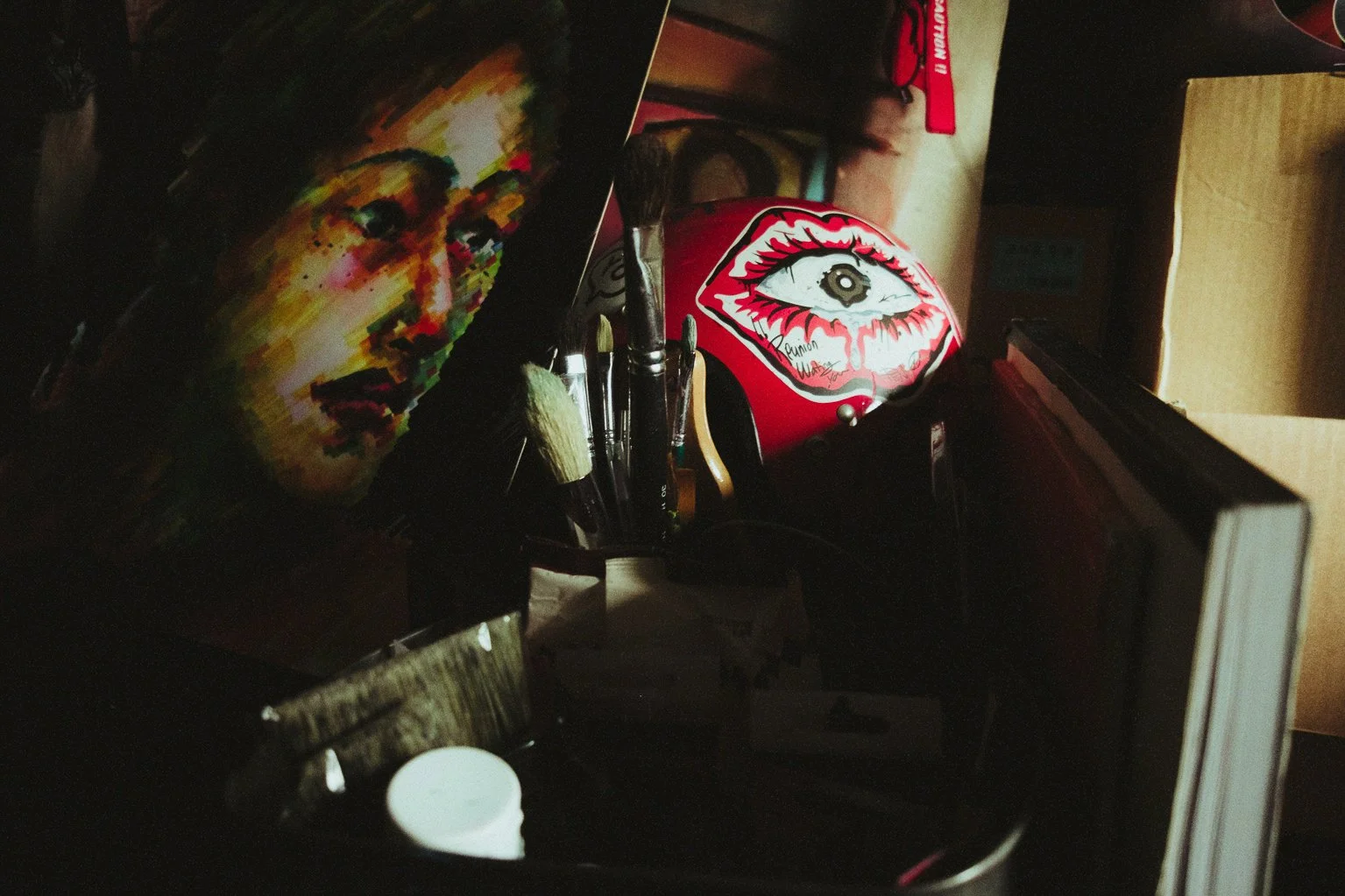
Ppangse has a small set of logos and art she keeps in rotation. The heart made of 2 faces kissing is her most famous piece, done in stickers as well as live painting and mural. Her second most recognisable piece is the Reunion Logo, which depicts a bright red mouth with a crying eye in the centre. The meaning is simply “you are what you see and say.” The reunion stickers actually have a functional purpose: When she first moved to Seoul, the stickers were like the bread crumb trails of Hansel and Gretel, a way to orient herself in a new city and to give her encouragement despite being alone. She changes this sticker annually to reflect changes she hopes to achieve for the year.
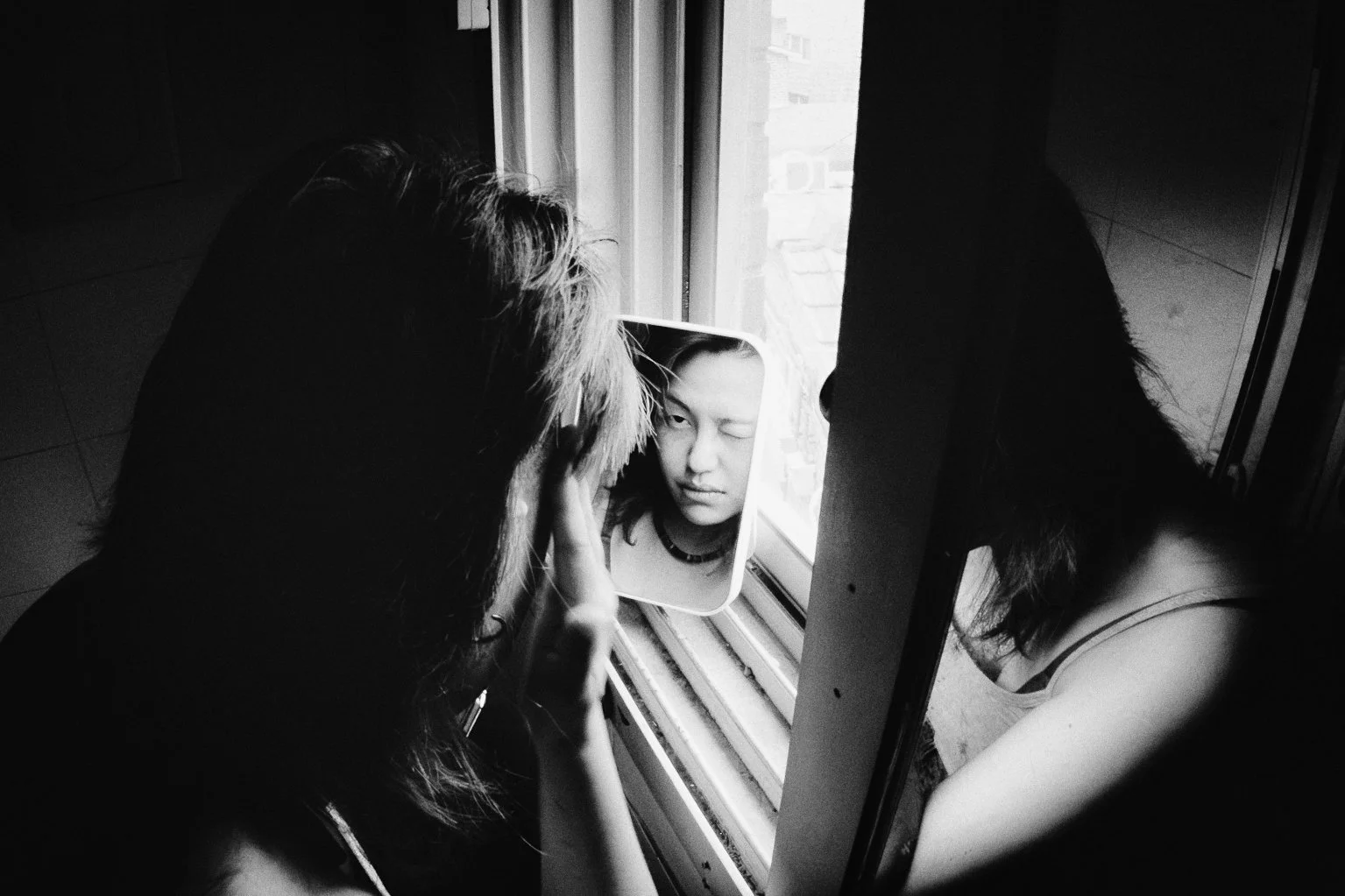
One of her lesser-known logo stickers that might surprise people is the Love/Hate sticker. For the longest time, she often talked about peace and love, but then one day she questioned what love really is. “I think people who love well also fight well. Fighting well means finding reconciliation. To meet people is to love them and sometimes confront them, but that’s how the relationship grows. Hating something takes energy and self.” Her other works include colourful self-portraits that she paints with different media in a variety of styles.
Ppangse lives to create, and her next journey will be abroad. In December, she and 5nail will return to Chiang Mai, Thailand. She first visited Thailand a year ago and was shocked by the artists there and the life they could live. They can “create high-quality art consistently 365 days a year”, so she asked to join some local artists during her stay, and it became her daily routine to draw and paint. She will also participate in The Hechyeomoyeo’s event there, which runs from January 24th to February 14th. After that, she has no return ticket. She encourages everyone to find art. “Food, clothing, shelter, food, shelter, and art. Everybody should doodle.”